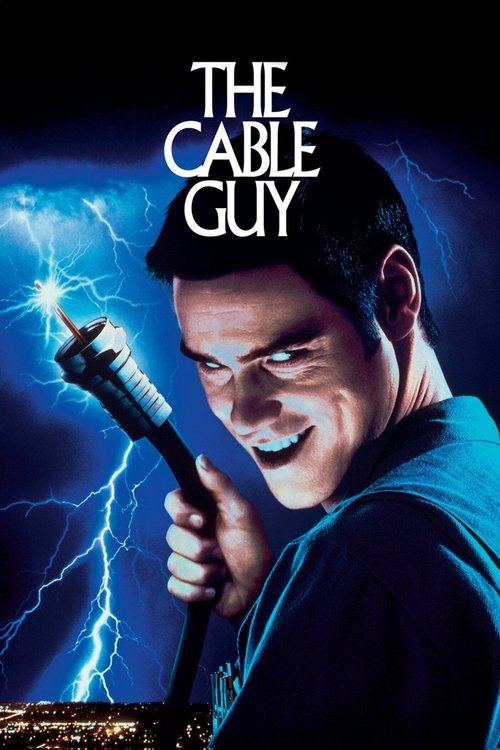
The Cable Guy
When recently single Steven moves into his new apartment, cable guy Chip comes to hook him up—and doesn't let go. Initially, Chip is just overzealous in his desire to be Steven's pal, but when Steven tries to end the 'friendship', Chip shows his dark side. He begins stalking Steven, who's left to fend for himself because no one else can believe Chip's capable of such behaviour.
Despite a moderate budget of $47.0M, The Cable Guy became a commercial success, earning $102.8M worldwide—a 119% return.
3 wins & 2 nominations


Plot Structure
Story beats plotted across runtime


Narrative Arc
Emotional journey through the story's key moments
Story Circle
Blueprint 15-beat structure
Arcplot Score Breakdown
Weighted: Precision (70%) + Arc (15%) + Theme (15%)
The Cable Guy (1996) exhibits strategically placed dramatic framework, characteristic of Ben Stiller's storytelling approach. This structural analysis examines how the film's 15-point plot structure maps to proven narrative frameworks across 1 hour and 36 minutes. With an Arcplot score of 6.6, the film balances conventional beats with creative variation.
Characters
Cast & narrative archetypes

Chip Douglas
Steven Kovacs
Robin Harris
Rick
Main Cast & Characters
Chip Douglas
Played by Jim Carrey
A lonely, obsessive cable installer who desperately seeks friendship through increasingly disturbing means.
Steven Kovacs
Played by Matthew Broderick
An architect who recently moved into a new apartment after a breakup, becomes the unwilling target of Chip's obsessive friendship.
Robin Harris
Played by Leslie Mann
Steven's ex-girlfriend who broke up with him after he hesitated on marriage, gradually reconciles with him throughout the film.
Rick
Played by Jack Black
Steven's crude, womanizing best friend who becomes one of Chip's victims.
Structural Analysis
The Status Quo at 1 minutes (1% through the runtime) establishes Steven Kovacs moves into a new apartment alone after his girlfriend Robin breaks up with him, establishing his isolated state and desire to reconnect with her.. Structural examination shows that this early placement immediately immerses viewers in the story world.
The inciting incident occurs at 12 minutes when The Cable Guy, calling himself Chip Douglas, arrives to install Steven's cable. His overly friendly, boundary-crossing behavior immediately disrupts Steven's quiet life when Chip insists on becoming friends.. At 12% through the film, this Disruption aligns precisely with traditional story structure. This beat shifts the emotional landscape, launching the protagonist into the central conflict.
The First Threshold at 23 minutes marks the transition into Act II, occurring at 24% of the runtime. This illustrates the protagonist's commitment to Steven accepts Chip's invitation to hang out at the satellite dish facility, actively choosing to pursue this friendship. He crosses into Chip's world by participating in their first real bonding experience., moving from reaction to action.
At 47 minutes, the Midpoint arrives at 49% of the runtime—precisely centered, creating perfect narrative symmetry. Notably, this crucial beat False victory turns sour: After Chip arranges a spectacular date for Steven and Robin, Chip shows up uninvited and behaves inappropriately. Steven realizes Chip's friendship comes with disturbing strings attached and tries to distance himself., fundamentally raising what's at risk. The emotional intensity shifts, dividing the narrative into clear before-and-after phases.
The Collapse moment at 72 minutes (75% through) represents the emotional nadir. Here, Steven is arrested and jailed for possession of stolen property that Chip planted. His life is in ruins—he's lost Robin, his job is in jeopardy, and he's been completely outmaneuvered by the Cable Guy. His normal life has effectively died., reveals the protagonist at their lowest point. This beat's placement in the final quarter sets up the climactic reversal.
The Second Threshold at 76 minutes initiates the final act resolution at 79% of the runtime. Steven learns Chip has kidnapped Robin and taken her to the satellite dish facility. He makes the active choice to confront Chip directly and rescue Robin, entering Act 3 with newfound determination to end this on his terms., demonstrating the transformation achieved throughout the journey.
Emotional Journey
The Cable Guy's emotional architecture traces a deliberate progression across 15 carefully calibrated beats.
Narrative Framework
This structural analysis employs a 15-point narrative structure framework that maps key story moments. By mapping The Cable Guy against these established plot points, we can identify how Ben Stiller utilizes or subverts traditional narrative conventions. The plot point approach reveals not only adherence to structural principles but also creative choices that distinguish The Cable Guy within the comedy genre.
Ben Stiller's Structural Approach
Among the 6 Ben Stiller films analyzed on Arcplot, the average structural score is 6.8, demonstrating varied approaches to story architecture. The Cable Guy takes a more unconventional approach compared to the director's typical style. For comparative analysis, explore the complete Ben Stiller filmography.
Comparative Analysis
Additional comedy films include The Bad Guys, Ella Enchanted and The Evening Star. For more Ben Stiller analyses, see Reality Bites, Tropic Thunder and Zoolander 2.
Plot Points by Act
Act I
SetupStatus Quo
Steven Kovacs moves into a new apartment alone after his girlfriend Robin breaks up with him, establishing his isolated state and desire to reconnect with her.
Theme
Steven's friend Rick advises him that the cable guy can hook him up with free premium channels, suggesting that shortcuts and manipulation are acceptable ways to get what you want—foreshadowing the film's exploration of boundaries and obsessive behavior.
Worldbuilding
Steven settles into his bachelor apartment, we learn about his breakup with Robin, his job as a floor planner, and his friend Rick. The Sam Sweet murder trial plays on TV throughout, establishing the media-saturated world.
Disruption
The Cable Guy, calling himself Chip Douglas, arrives to install Steven's cable. His overly friendly, boundary-crossing behavior immediately disrupts Steven's quiet life when Chip insists on becoming friends.
Resistance
Steven reluctantly engages with Chip's friendship overtures. Chip hooks up free cable and invites Steven to hang out. Steven debates whether to accept Chip's friendship, initially seeing potential benefit in having a new buddy.
Act II
ConfrontationFirst Threshold
Steven accepts Chip's invitation to hang out at the satellite dish facility, actively choosing to pursue this friendship. He crosses into Chip's world by participating in their first real bonding experience.
Mirror World
Steven reconnects with Robin at a family dinner that Chip helped arrange. Robin represents the healthy relationship Steven truly needs, contrasting with Chip's obsessive version of friendship—she embodies genuine human connection.
Premise
Steven enjoys the perks of Chip's friendship: the satellite dish adventure, Medieval Times jousting battle, karaoke night, upgraded cable packages, and basketball games. Chip's over-the-top gestures seem fun and helpful at first.
Midpoint
False victory turns sour: After Chip arranges a spectacular date for Steven and Robin, Chip shows up uninvited and behaves inappropriately. Steven realizes Chip's friendship comes with disturbing strings attached and tries to distance himself.
Opposition
Chip's behavior becomes increasingly sinister when rejected. He gets Steven's brother arrested, destroys his relationship with Robin by sending her a prostitute, sabotages his job, and frames Steven for stealing equipment. Each attempt to cut ties makes things worse.
Collapse
Steven is arrested and jailed for possession of stolen property that Chip planted. His life is in ruins—he's lost Robin, his job is in jeopardy, and he's been completely outmaneuvered by the Cable Guy. His normal life has effectively died.
Crisis
Steven processes the destruction Chip has wrought. He realizes he must confront Chip directly. Rick and his family react to the chaos, and Steven understands that Chip won't stop until he gets what he wants.
Act III
ResolutionSecond Threshold
Steven learns Chip has kidnapped Robin and taken her to the satellite dish facility. He makes the active choice to confront Chip directly and rescue Robin, entering Act 3 with newfound determination to end this on his terms.
Synthesis
Steven confronts Chip at the satellite dish. Chip reveals his tragic backstory—raised by television, neglected by his mother, desperate for human connection. Their physical fight culminates with Chip choosing to throw himself onto the dish to disable it.
Transformation
Chip's fall knocks out cable for the entire city. Families are shown turning off their TVs and connecting with each other. Steven and Robin embrace, reunited. The Cable Guy survives but is taken away, leaving Steven having learned the value of genuine human connection over mediated relationships.