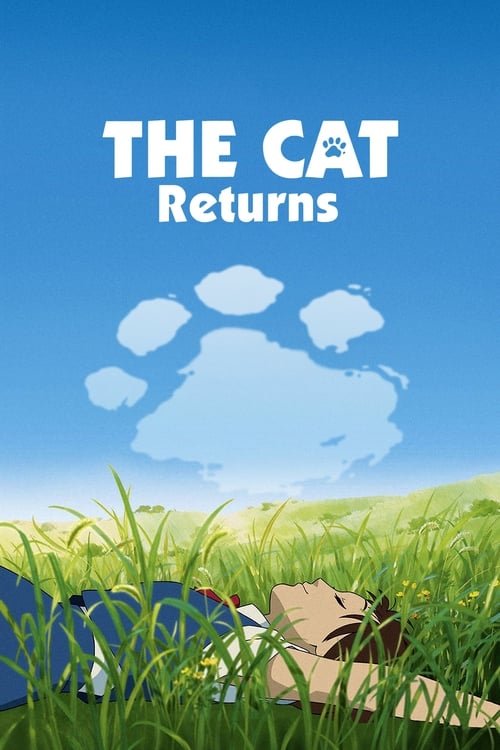
The Cat Returns
Young Haru rescues a cat from being run over, but soon learns it's no ordinary feline; it happens to be the Prince of the Cats.
The film earned $54.0M at the global box office.


Plot Structure
Story beats plotted across runtime


Narrative Arc
Emotional journey through the story's key moments
Story Circle
Blueprint 15-beat structure
Arcplot Score Breakdown
Weighted: Precision (70%) + Arc (15%) + Theme (15%)
The Cat Returns (2002) exemplifies meticulously timed narrative architecture, characteristic of Hiroyuki Morita's storytelling approach. This structural analysis examines how the film's 15-point plot structure maps to proven narrative frameworks across 1 hour and 15 minutes. With an Arcplot score of 7.4, the film balances conventional beats with creative variation.
Characters
Cast & narrative archetypes

Haru Yoshioka
Baron Humbert von Gikkingen
Muta
Toto
The Cat King
Prince Lune
Yuki
Natori
Main Cast & Characters
Haru Yoshioka
Played by Chizuru Ikewaki
A clumsy, insecure high school girl who saves a cat and gets pulled into the Cat Kingdom. She must find her confidence to escape being forced to marry the Cat Prince.
Baron Humbert von Gikkingen
Played by Yoshihiko Hakamada
An elegant cat figurine who comes to life, serving as Haru's guide and protector. A refined gentleman with unwavering courage and chivalry.
Muta
Played by Tetsu Watanabe
A large, grumpy white cat who reluctantly helps Haru. Despite his rough exterior, he's loyal and protective of his friends.
Toto
Played by Yosuke Saito
A wise crow who serves as Baron's assistant and aerial reconnaissance. He provides guidance and transportation for the group.
The Cat King
Played by Tetsuro Tamba
The vain, self-centered ruler of the Cat Kingdom who tries to force Haru to marry his son. He represents authority without wisdom.
Prince Lune
Played by Takayuki Yamada
The Cat Prince whom Haru saved, and who she's supposed to marry. He's kind-hearted but trapped by his father's expectations.
Yuki
Played by Aki Maeda
A beautiful white cat servant in the Cat Kingdom who secretly helps Haru escape. She's Lune's true love and shows quiet courage.
Natori
Played by Kenta Satoi
The Cat King's sinister advisor who orchestrates much of the plot to trap Haru. He represents manipulation and cunning.
Structural Analysis
The Status Quo at 1 minutes (1% through the runtime) establishes Haru is a clumsy, directionless high school girl who oversleeps and rushes to school. She lacks confidence and self-worth, unable to assert herself even to classmates.. Of particular interest, this early placement immediately immerses viewers in the story world.
The inciting incident occurs at 9 minutes when Haru impulsively saves a cat from being hit by a truck using her lacrosse stick. The cat stands on two legs, thanks her formally, and walks away - disrupting reality.. At 12% through the film, this Disruption aligns precisely with traditional story structure. This beat shifts the emotional landscape, launching the protagonist into the central conflict.
The First Threshold at 18 minutes marks the transition into Act II, occurring at 25% of the runtime. This illustrates the protagonist's commitment to Haru passively accepts Prince Lune's marriage proposal, unable to refuse despite her terror. She doesn't actively choose - she fails to say no, sealing her fate to enter the Cat Kingdom., moving from reaction to action.
At 37 minutes, the Midpoint arrives at 49% of the runtime—precisely centered, creating perfect narrative symmetry. Notably, this crucial beat Haru realizes she's growing cat ears and a tail - she's literally transforming into a cat. The fun is over; if she stays until dawn, she'll become a cat permanently. False defeat: the trap is real., fundamentally raising what's at risk. The emotional intensity shifts, dividing the narrative into clear before-and-after phases.
The Collapse moment at 56 minutes (75% through) represents the emotional nadir. Here, Haru nearly loses herself completely, forgetting why she wanted to be human. Her sense of self - her identity as Haru - is dying. She surrenders to becoming a cat, the death of who she was., reveals the protagonist at their lowest point. This beat's placement in the final quarter sets up the climactic reversal.
The Second Threshold at 60 minutes initiates the final act resolution at 79% of the runtime. Haru declares "I want to go home! I want to be myself!" - actively choosing her own identity for the first time. She synthesizes the Baron's confidence with her own will, finding her voice., demonstrating the transformation achieved throughout the journey.
Emotional Journey
The Cat Returns's emotional architecture traces a deliberate progression across 15 carefully calibrated beats.
Narrative Framework
This structural analysis employs structural analysis methodology used to understand storytelling architecture. By mapping The Cat Returns against these established plot points, we can identify how Hiroyuki Morita utilizes or subverts traditional narrative conventions. The plot point approach reveals not only adherence to structural principles but also creative choices that distinguish The Cat Returns within the adventure genre.
Comparative Analysis
Additional adventure films include The Black Stallion, The Bad Guys and Puss in Boots.
Plot Points by Act
Act I
SetupStatus Quo
Haru is a clumsy, directionless high school girl who oversleeps and rushes to school. She lacks confidence and self-worth, unable to assert herself even to classmates.
Theme
Hiromi tells Haru she needs to believe in herself and stop going along with what others want. The theme: finding your own voice and trusting yourself.
Worldbuilding
Establish Haru's mundane life: she's passive, awkward with her crush Machida, and feels invisible. She gives away her lunch when she can't say no.
Disruption
Haru impulsively saves a cat from being hit by a truck using her lacrosse stick. The cat stands on two legs, thanks her formally, and walks away - disrupting reality.
Resistance
The Cat Kingdom sends emissaries to reward Haru. She's overwhelmed by increasingly absurd gifts (cattails in her locker, mice, catnip). She debates accepting their invitation, feeling trapped by obligation.
Act II
ConfrontationFirst Threshold
Haru passively accepts Prince Lune's marriage proposal, unable to refuse despite her terror. She doesn't actively choose - she fails to say no, sealing her fate to enter the Cat Kingdom.
Mirror World
The Baron (cat figurine come to life) appears as a noble, confident protector. He embodies the self-assurance and decisiveness Haru lacks, promising to help her escape the Cat Kingdom.
Premise
Haru is whisked to the Cat Kingdom, a whimsical world where everything is cat-sized and cat-centered. Initially enchanted by the leisure and pampering, she explores this fantasy realm while slowly transforming into a cat.
Midpoint
Haru realizes she's growing cat ears and a tail - she's literally transforming into a cat. The fun is over; if she stays until dawn, she'll become a cat permanently. False defeat: the trap is real.
Opposition
The Cat King blocks every escape route. The Baron and friends are imprisoned. Haru's transformation accelerates. She's locked in the tower, and even begins forgetting her human life, losing her identity.
Collapse
Haru nearly loses herself completely, forgetting why she wanted to be human. Her sense of self - her identity as Haru - is dying. She surrenders to becoming a cat, the death of who she was.
Crisis
In the darkness of lost identity, Haru hears the Baron's voice reminding her of who she is. She processes the moment, wrestling between comfort and truth.
Act III
ResolutionSecond Threshold
Haru declares "I want to go home! I want to be myself!" - actively choosing her own identity for the first time. She synthesizes the Baron's confidence with her own will, finding her voice.
Synthesis
Haru actively escapes with the Baron's help, navigating the labyrinth herself. She confronts the Cat King, asserting her choice. Prince Lune reveals his true love, freeing Haru. She returns to the human world at dawn.
Transformation
Haru walks confidently to school, no longer rushing or apologizing. She greets the day with self-assurance, finally comfortable in her own skin. The once-invisible girl now knows who she is.