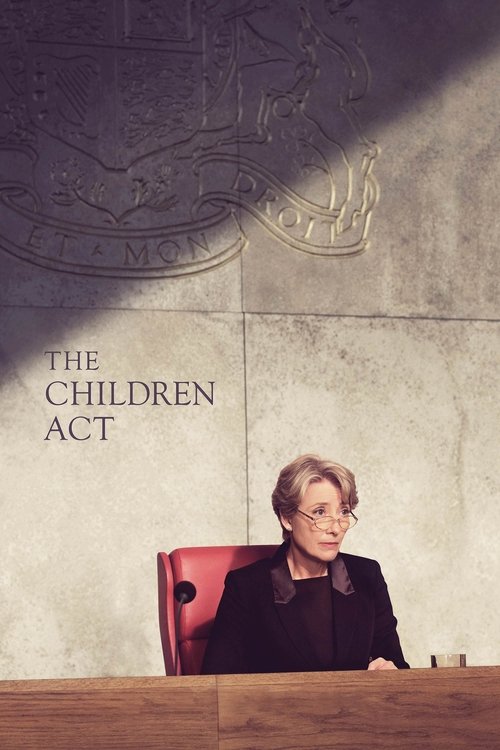
The Children Act
In the midst of a marital crisis, a High Court judge must decide if she should order a life-saving blood transfusion for a teen with cancer despite his family's refusal to accept medical treatment for religious reasons.
The film earned $17.7M at the global box office.
2 wins & 5 nominations


Plot Structure
Story beats plotted across runtime


Narrative Arc
Emotional journey through the story's key moments
Story Circle
Blueprint 15-beat structure
Arcplot Score Breakdown
Weighted: Precision (70%) + Arc (15%) + Theme (15%)
The Children Act (2018) demonstrates carefully calibrated plot construction, characteristic of Richard Eyre's storytelling approach. This structural analysis examines how the film's 15-point plot structure maps to proven narrative frameworks across 1 hour and 45 minutes. With an Arcplot score of 6.9, the film balances conventional beats with creative variation.
Characters
Cast & narrative archetypes

Fiona Maye
Adam Henry
Jack Maye
Main Cast & Characters
Fiona Maye
Played by Emma Thompson
A highly respected High Court judge specializing in family law who becomes emotionally entangled with a case involving a teenage Jehovah's Witness refusing life-saving treatment.
Adam Henry
Played by Fionn Whitehead
A brilliant 17-year-old leukemia patient and devout Jehovah's Witness who refuses blood transfusions on religious grounds, later developing an intense connection with the judge presiding over his case.
Jack Maye
Played by Stanley Tucci
Fiona's husband, a university professor who feels neglected in their marriage and seeks emotional and physical connection elsewhere.
Structural Analysis
The Status Quo at 1 minutes (1% through the runtime) establishes Fiona Maye, a distinguished High Court judge, is shown in her chambers, immersed in her work, embodying professional excellence but emotional distance. Her life is orderly, controlled, and defined by law.. Structural examination shows that this early placement immediately immerses viewers in the story world.
The inciting incident occurs at 13 minutes when Fiona receives an urgent case: Adam Henry, a 17-year-old Jehovah's Witness with leukemia, is refusing a blood transfusion that would save his life. The hospital seeks a court order to treat him against his and his parents' wishes.. At 12% through the film, this Disruption aligns precisely with traditional story structure. This beat shifts the emotional landscape, launching the protagonist into the central conflict.
The First Threshold at 26 minutes marks the transition into Act II, occurring at 25% of the runtime. This illustrates the protagonist's commitment to Fiona makes the unusual decision to visit Adam in the hospital herself rather than relying solely on written testimony. This active choice to step outside her judicial chambers and into the messy reality of human life marks her crossing into new territory., moving from reaction to action.
At 53 minutes, the Midpoint arrives at 50% of the runtime—precisely centered, creating perfect narrative symmetry. Significantly, this crucial beat Adam recovers and leaves the Jehovah's Witnesses, having lost his faith. Fiona returns to her work, seemingly successful in her ruling. This false victory masks the deeper consequences: Adam has become fixated on Fiona, and she has awakened feelings she cannot acknowledge., fundamentally raising what's at risk. The emotional intensity shifts, dividing the narrative into clear before-and-after phases.
The Collapse moment at 79 minutes (75% through) represents the emotional nadir. Here, In Newcastle, Adam kisses Fiona. She rejects him coldly and sends him away, retreating behind her judicial mask. This rejection devastates Adam, who has lost his faith, his family, and now the person he believed understood him. The whiff of death looms., illustrates the protagonist at their lowest point. This beat's placement in the final quarter sets up the climactic reversal.
The Second Threshold at 84 minutes initiates the final act resolution at 80% of the runtime. Fiona learns that Adam has died. After her rejection, he returned to his parents, and when he needed another transfusion, he refused it—this time successfully, as he was now 18. Her ruling saved his life only temporarily; her emotional rejection contributed to his death., demonstrating the transformation achieved throughout the journey.
Emotional Journey
The Children Act's emotional architecture traces a deliberate progression across 15 carefully calibrated beats.
Narrative Framework
This structural analysis employs a 15-point narrative structure framework that maps key story moments. By mapping The Children Act against these established plot points, we can identify how Richard Eyre utilizes or subverts traditional narrative conventions. The plot point approach reveals not only adherence to structural principles but also creative choices that distinguish The Children Act within the drama genre.
Richard Eyre's Structural Approach
Among the 2 Richard Eyre films analyzed on Arcplot, the average structural score is 7.0, reflecting strong command of classical structure. The Children Act takes a more unconventional approach compared to the director's typical style. For comparative analysis, explore the complete Richard Eyre filmography.
Comparative Analysis
Additional drama films include After Thomas, South Pacific and Dirty Dancing: Havana Nights. For more Richard Eyre analyses, see Notes on a Scandal.
Plot Points by Act
Act I
SetupStatus Quo
Fiona Maye, a distinguished High Court judge, is shown in her chambers, immersed in her work, embodying professional excellence but emotional distance. Her life is orderly, controlled, and defined by law.
Theme
Fiona's husband Jack confronts her about their sexless marriage, stating that she has become so absorbed in her work that she has forgotten how to live. He articulates the theme: the cost of sacrificing emotional life for professional duty.
Worldbuilding
We see Fiona's world: her prestigious position as a Family Division judge, her elegant London flat, her strained marriage to Jack, and her colleague Nigel who assists with cases. The tension between her public success and private emptiness is established.
Disruption
Fiona receives an urgent case: Adam Henry, a 17-year-old Jehovah's Witness with leukemia, is refusing a blood transfusion that would save his life. The hospital seeks a court order to treat him against his and his parents' wishes.
Resistance
Fiona debates the case with her clerk and reviews the legal precedents. She struggles with the conflict between religious freedom and the state's duty to protect minors. Jack announces he wants to have an affair, adding personal turmoil to her professional crisis.
Act II
ConfrontationFirst Threshold
Fiona makes the unusual decision to visit Adam in the hospital herself rather than relying solely on written testimony. This active choice to step outside her judicial chambers and into the messy reality of human life marks her crossing into new territory.
Mirror World
Fiona meets Adam at the hospital. He is intelligent, passionate about poetry and music, and surprisingly witty. They connect deeply when she plays piano and he sings. Adam represents everything vital and alive that Fiona has suppressed in herself.
Premise
Fiona navigates the case and her unexpected connection with Adam. She rules that the hospital can give him the transfusion, saving his life against his stated wishes. The ruling succeeds medically, and Adam survives, but the emotional aftermath begins to unfold.
Midpoint
Adam recovers and leaves the Jehovah's Witnesses, having lost his faith. Fiona returns to her work, seemingly successful in her ruling. This false victory masks the deeper consequences: Adam has become fixated on Fiona, and she has awakened feelings she cannot acknowledge.
Opposition
Adam begins sending Fiona letters and poems, seeking her guidance and affection. He shows up at her court, then follows her to Newcastle where she is on circuit. His obsession grows while Fiona struggles to maintain boundaries, torn between professional propriety and her awakened emotions.
Collapse
In Newcastle, Adam kisses Fiona. She rejects him coldly and sends him away, retreating behind her judicial mask. This rejection devastates Adam, who has lost his faith, his family, and now the person he believed understood him. The whiff of death looms.
Crisis
Fiona returns to London, haunted by her encounter with Adam. She tries to resume her normal life and reconcile with Jack, but she is emotionally shattered. She cannot escape the feeling that she has failed Adam in some fundamental way.
Act III
ResolutionSecond Threshold
Fiona learns that Adam has died. After her rejection, he returned to his parents, and when he needed another transfusion, he refused it—this time successfully, as he was now 18. Her ruling saved his life only temporarily; her emotional rejection contributed to his death.
Synthesis
Fiona confronts the full weight of her emotional repression. She visits Adam's grave, reads his final poem to her, and finally allows herself to grieve. She reconnects with Jack, not through grand gestures but through honest acknowledgment of her failings and humanity.
Transformation
Fiona weeps openly, finally releasing the emotions she has suppressed throughout her career and marriage. In her grief over Adam, she rediscovers her capacity to feel. The final image shows a woman transformed: still a judge, but now fully human, no longer hiding behind the law.