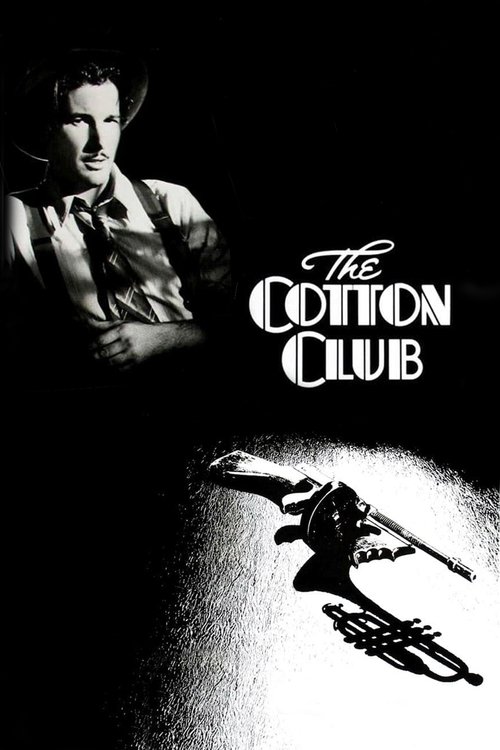
The Cotton Club
Harlem's legendary Cotton Club becomes a hotbed of passion and violence as the lives and loves of entertainers and gangsters collide.
The film financial setback against its respectable budget of $58.0M, earning $25.9M globally (-55% loss). While initial box office returns were modest, the film has gained appreciation for its compelling narrative within the crime genre.
Nominated for 2 Oscars. 1 win & 9 nominations


Plot Structure
Story beats plotted across runtime


Narrative Arc
Emotional journey through the story's key moments
Story Circle
Blueprint 15-beat structure
Arcplot Score Breakdown
Weighted: Precision (70%) + Arc (15%) + Theme (15%)
The Cotton Club (1984) showcases carefully calibrated story structure, characteristic of Francis Ford Coppola's storytelling approach. This structural analysis examines how the film's 15-point plot structure maps to proven narrative frameworks across 2 hours and 10 minutes. With an Arcplot score of 7.4, the film balances conventional beats with creative variation.
Characters
Cast & narrative archetypes

Dixie Dwyer
Sandman Williams
Vera Cicero
Dutch Schultz
Lila Rose Oliver
Owney Madden
Clay Williams
Frenchy Demange
Main Cast & Characters
Dixie Dwyer
Played by Richard Gere
A talented young cornet player who gets caught up in the mob world while trying to make it as a musician at the Cotton Club.
Sandman Williams
Played by Gregory Hines
A gifted tap dancer who rises to stardom at the Cotton Club while navigating racism and gangster violence in 1930s Harlem.
Vera Cicero
Played by Diane Lane
Dutch Schultz's beautiful mistress who falls in love with Dixie, creating dangerous romantic complications.
Dutch Schultz
Played by James Remar
A violent, volatile gangster who controls Harlem's numbers racket and becomes increasingly paranoid and dangerous.
Lila Rose Oliver
Played by Lonette McKee
A beautiful Cotton Club dancer and Sandman's love interest who dreams of a better life beyond Harlem.
Owney Madden
Played by Bob Hoskins
The sophisticated, cunning owner of the Cotton Club who maintains control through intelligence and connections.
Clay Williams
Played by Maurice Hines
Sandman's younger brother and dancing partner, trying to make it in show business.
Frenchy Demange
Played by Fred Gwynne
Dutch Schultz's right-hand man and enforcer, carrying out his boss's violent orders.
Structural Analysis
The Status Quo at 2 minutes (2% through the runtime) establishes Dixie Dwyer plays cornet in a speakeasy, a talented musician stuck playing for gangsters in Prohibition-era Harlem, while Sandman Williams performs as a dancer, both trapped in their respective positions within the racially divided world of 1928 New York.. Significantly, this early placement immediately immerses viewers in the story world.
The inciting incident occurs at 16 minutes when Dixie inadvertently saves mobster Dutch Schultz's life during a hit attempt, pulling him into the dangerous world of organized crime and catching the attention of powerful gangsters who will control his fate.. At 12% through the film, this Disruption aligns precisely with traditional story structure. This beat shifts the emotional landscape, launching the protagonist into the central conflict.
The First Threshold at 33 minutes marks the transition into Act II, occurring at 25% of the runtime. This demonstrates the protagonist's commitment to Dixie accepts a position in Dutch Schultz's organization and begins his involvement with Vera, choosing to enter the dangerous world of mob politics and forbidden romance, while Sandman commits to performing at the Cotton Club., moving from reaction to action.
At 65 minutes, the Midpoint arrives at 50% of the runtime—precisely centered, creating perfect narrative symmetry. The analysis reveals that this crucial beat The mob war intensifies as Dutch Schultz's rivalry with other gangsters escalates to violence, threatening everyone in their orbit. Dixie realizes he's in too deep, and Sandman faces brutal reminders of racial boundaries despite his success., fundamentally raising what's at risk. The emotional intensity shifts, dividing the narrative into clear before-and-after phases.
The Collapse moment at 98 minutes (75% through) represents the emotional nadir. Here, Dutch Schultz is assassinated in a brutal mob hit, the violence claims lives close to both Dixie and Sandman, and the dream of success in this world reveals its deadly cost - everything they've built is stained with blood and loss., shows the protagonist at their lowest point. This beat's placement in the final quarter sets up the climactic reversal.
The Second Threshold at 104 minutes initiates the final act resolution at 80% of the runtime. Both men realize they must reclaim their authentic selves - Dixie chooses love and music over mob power, Sandman commits to his art despite systemic barriers, understanding that integrity matters more than the corrupted version of success they'd been chasing., demonstrating the transformation achieved throughout the journey.
Emotional Journey
The Cotton Club's emotional architecture traces a deliberate progression across 15 carefully calibrated beats.
Narrative Framework
This structural analysis employs a 15-point narrative structure framework that maps key story moments. By mapping The Cotton Club against these established plot points, we can identify how Francis Ford Coppola utilizes or subverts traditional narrative conventions. The plot point approach reveals not only adherence to structural principles but also creative choices that distinguish The Cotton Club within the crime genre.
Francis Ford Coppola's Structural Approach
Among the 16 Francis Ford Coppola films analyzed on Arcplot, the average structural score is 6.5, demonstrating varied approaches to story architecture. The Cotton Club represents one of the director's most structurally precise works. For comparative analysis, explore the complete Francis Ford Coppola filmography.
Comparative Analysis
Additional crime films include The Bad Guys, Rustom and The Whole Ten Yards. For more Francis Ford Coppola analyses, see Apocalypse Now, The Conversation and The Godfather Part II.
Plot Points by Act
Act I
SetupStatus Quo
Dixie Dwyer plays cornet in a speakeasy, a talented musician stuck playing for gangsters in Prohibition-era Harlem, while Sandman Williams performs as a dancer, both trapped in their respective positions within the racially divided world of 1928 New York.
Theme
A character observes that in Harlem, "everybody's got to know their place" - establishing the film's exploration of racial barriers, social hierarchy, ambition, and the price of crossing boundaries in pursuit of dreams.
Worldbuilding
Introduction to the dual worlds of Harlem: the glamorous Cotton Club where Black performers entertain white audiences, the dangerous mob underworld, Dixie's relationship with his brother, and Sandman's aspirations as a dancer navigating the color line.
Disruption
Dixie inadvertently saves mobster Dutch Schultz's life during a hit attempt, pulling him into the dangerous world of organized crime and catching the attention of powerful gangsters who will control his fate.
Resistance
Dixie debates whether to accept Dutch Schultz's patronage and protection, while simultaneously being drawn to Vera Cicero, the gangster's moll. Sandman considers what he must sacrifice to advance his career at the Cotton Club despite racial restrictions.
Act II
ConfrontationFirst Threshold
Dixie accepts a position in Dutch Schultz's organization and begins his involvement with Vera, choosing to enter the dangerous world of mob politics and forbidden romance, while Sandman commits to performing at the Cotton Club.
Mirror World
Dixie's deepening relationship with Vera and Sandman's romance with Lila represent the thematic counterpoint - love and authentic connection existing within a world of strict boundaries, violence, and racial segregation.
Premise
The glitz and danger of Cotton Club life: spectacular musical numbers, Dixie's rise in the mob world while pursuing Vera, Sandman's success as a performer while facing racism, parallel stories of ambition and romance in a world of jazz, violence, and strict social codes.
Midpoint
The mob war intensifies as Dutch Schultz's rivalry with other gangsters escalates to violence, threatening everyone in their orbit. Dixie realizes he's in too deep, and Sandman faces brutal reminders of racial boundaries despite his success.
Opposition
Violence escalates on all fronts: gang warfare intensifies, Dixie's relationship with Vera becomes more dangerous as Dutch grows suspicious, racial tensions at the Cotton Club increase, and both protagonists find their worlds becoming more restrictive and threatening.
Collapse
Dutch Schultz is assassinated in a brutal mob hit, the violence claims lives close to both Dixie and Sandman, and the dream of success in this world reveals its deadly cost - everything they've built is stained with blood and loss.
Crisis
Dixie and Sandman separately process the violence and death surrounding them, questioning whether their ambitions were worth the price, confronting what they've become and what they've compromised in their pursuit of success.
Act III
ResolutionSecond Threshold
Both men realize they must reclaim their authentic selves - Dixie chooses love and music over mob power, Sandman commits to his art despite systemic barriers, understanding that integrity matters more than the corrupted version of success they'd been chasing.
Synthesis
Final resolution as both storylines conclude: Dixie extracts himself from the mob world and pursues a life with Vera on his own terms, Sandman continues performing with newfound dignity and purpose, both finding a way to exist authentically despite the constraints around them.
Transformation
The Cotton Club stage lit for another show, but now we see both Dixie and Sandman transformed - no longer trapped by others' definitions of their place, having survived the violence and found authentic paths forward, changed by their journey through this glittering, dangerous world.