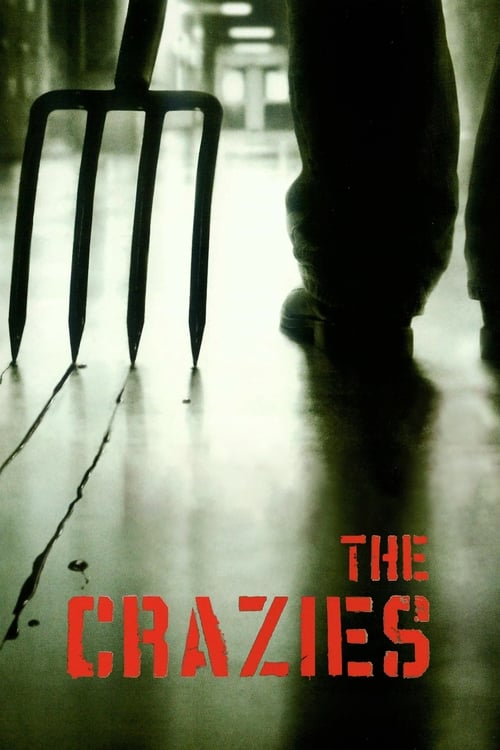
The Crazies
Four friends find themselves trapped in their small hometown after they discover their friends and neighbors going quickly and horrifically insane.
Despite a mid-range budget of $20.0M, The Crazies became a commercial success, earning $55.0M worldwide—a 175% return.


Plot Structure
Story beats plotted across runtime


Narrative Arc
Emotional journey through the story's key moments
Story Circle
Blueprint 15-beat structure
Arcplot Score Breakdown
Weighted: Precision (70%) + Arc (15%) + Theme (15%)
The Crazies (2010) showcases deliberately positioned dramatic framework, characteristic of Breck Eisner's storytelling approach. This structural analysis examines how the film's 15-point plot structure maps to proven narrative frameworks across 1 hour and 41 minutes. With an Arcplot score of 7.6, the film showcases strong structural fundamentals.
Characters
Cast & narrative archetypes

David Dutton
Judy Dutton
Russell Clank
Becca Darling
Private Billy Babcock
Main Cast & Characters
David Dutton
Played by Timothy Olyphant
Small-town sheriff who must protect his community when a biological weapon contaminates the water supply, turning residents into violent killers.
Judy Dutton
Played by Radha Mitchell
David's wife and the town's doctor, who uses her medical knowledge to survive while pregnant during the outbreak.
Russell Clank
Played by Joe Anderson
David's loyal deputy who helps protect the town and struggles with the moral implications of killing infected neighbors.
Becca Darling
Played by Danielle Panabaker
Judy's medical assistant who joins the group in their fight for survival against both infected and military forces.
Private Billy Babcock
Played by Preston Bailey
Young soldier from the town who is part of the military containment operation and shows conflict between duty and humanity.
Structural Analysis
The Status Quo at 1 minutes (1% through the runtime) establishes Small-town Sheriff David Dutton patrols the peaceful streets of Ogden Marsh, Iowa during a high school baseball game. His pregnant wife Judy works as the town doctor. Life is quiet, safe, and ordinary in this close-knit farming community.. Significantly, this early placement immediately immerses viewers in the story world.
The inciting incident occurs at 12 minutes when A local farmer burns down his house with his wife and son locked inside, then stands motionless in the flames. David and Russell investigate and discover multiple residents exhibiting bizarre, violent behavior. Something is fundamentally wrong in Ogden Marsh.. At 11% through the film, this Disruption aligns precisely with traditional story structure. This beat shifts the emotional landscape, launching the protagonist into the central conflict.
The First Threshold at 26 minutes marks the transition into Act II, occurring at 25% of the runtime. This illustrates the protagonist's commitment to The military forcibly evacuates the entire town. David, Judy, and Russell are separated and processed. David makes the active choice to escape military custody and rescue Judy rather than comply with the government quarantine., moving from reaction to action.
At 50 minutes, the Midpoint arrives at 49% of the runtime—precisely centered, creating perfect narrative symmetry. Structural examination shows that this crucial beat The group is trapped in the high school by infected townspeople. They fight off attackers in a brutal sequence. Russell reveals he's been infected - visible in his eyes. The stakes escalate: one of their own is turning, and escape seems impossible. False defeat., fundamentally raising what's at risk. The emotional intensity shifts, dividing the narrative into clear before-and-after phases.
The Collapse moment at 73 minutes (72% through) represents the emotional nadir. Here, Russell, fully infected and dangerous, must be killed by David - his friend and partner. David shoots Russell in a devastating moment of betrayal and loss. The whiff of death: David kills his best friend, the last connection to their old life. They are truly alone., indicates the protagonist at their lowest point. This beat's placement in the final quarter sets up the climactic reversal.
The Second Threshold at 79 minutes initiates the final act resolution at 78% of the runtime. David and Judy find a working truck and spot a path through the military cordon. New information: there's a small window before the bombing begins. They have a chance. David synthesizes his law enforcement skills with his newfound understanding that survival requires abandoning the system., demonstrating the transformation achieved throughout the journey.
Emotional Journey
The Crazies's emotional architecture traces a deliberate progression across 15 carefully calibrated beats.
Narrative Framework
This structural analysis employs systematic plot point analysis that identifies crucial turning points. By mapping The Crazies against these established plot points, we can identify how Breck Eisner utilizes or subverts traditional narrative conventions. The plot point approach reveals not only adherence to structural principles but also creative choices that distinguish The Crazies within the mystery genre.
Breck Eisner's Structural Approach
Among the 3 Breck Eisner films analyzed on Arcplot, the average structural score is 7.3, reflecting strong command of classical structure. The Crazies represents one of the director's most structurally precise works. For comparative analysis, explore the complete Breck Eisner filmography.
Comparative Analysis
Additional mystery films include Lone Star, The Wicker Man and A Soldier's Story. For more Breck Eisner analyses, see Sahara, The Last Witch Hunter.
Plot Points by Act
Act I
SetupStatus Quo
Small-town Sheriff David Dutton patrols the peaceful streets of Ogden Marsh, Iowa during a high school baseball game. His pregnant wife Judy works as the town doctor. Life is quiet, safe, and ordinary in this close-knit farming community.
Theme
At the baseball game, a local resident Rory Hamill walks onto the field carrying a shotgun, staring blankly. David quietly tells him "We take care of our own here" before disarming him. The theme of community trust and self-reliance is established.
Worldbuilding
Introduction to Ogden Marsh and its inhabitants: David and his deputy Russell, Judy at the medical clinic, the town's peaceful rhythms. David is forced to shoot Rory when he threatens lives. More townspeople begin acting strangely violent.
Disruption
A local farmer burns down his house with his wife and son locked inside, then stands motionless in the flames. David and Russell investigate and discover multiple residents exhibiting bizarre, violent behavior. Something is fundamentally wrong in Ogden Marsh.
Resistance
David investigates the town's water supply and discovers a crashed military plane in the marsh upstream. The military arrives and establishes a perimeter. David debates whether to trust the government response while trying to understand the spreading insanity.
Act II
ConfrontationFirst Threshold
The military forcibly evacuates the entire town. David, Judy, and Russell are separated and processed. David makes the active choice to escape military custody and rescue Judy rather than comply with the government quarantine.
Mirror World
David finds Judy strapped to a gurney in the containment facility. Their relationship - husband protecting pregnant wife - becomes the emotional core that contrasts with the military's cold, dehumanizing protocols. Trust and human connection versus institutional control.
Premise
David, Judy, Russell, and Becca escape and navigate through the infected town. Survival horror sequences: the car wash attack, encounters with infected townspeople, evading both the crazies and military kill squads. The promise of a tense escape thriller is delivered.
Midpoint
The group is trapped in the high school by infected townspeople. They fight off attackers in a brutal sequence. Russell reveals he's been infected - visible in his eyes. The stakes escalate: one of their own is turning, and escape seems impossible. False defeat.
Opposition
Russell's condition deteriorates as they continue fleeing. Becca is killed by infected. The military tightens the noose, preparing to sanitize the area. David and Judy's bond is tested as hope fades. Every escape route closes. Opposition from infected, military, and time itself.
Collapse
Russell, fully infected and dangerous, must be killed by David - his friend and partner. David shoots Russell in a devastating moment of betrayal and loss. The whiff of death: David kills his best friend, the last connection to their old life. They are truly alone.
Crisis
David and Judy process Russell's death in silence. They are exhausted, traumatized, and the military is preparing to incinerate the entire town. David questions whether they can survive, whether there's any point in continuing. Dark night before the final push.
Act III
ResolutionSecond Threshold
David and Judy find a working truck and spot a path through the military cordon. New information: there's a small window before the bombing begins. They have a chance. David synthesizes his law enforcement skills with his newfound understanding that survival requires abandoning the system.
Synthesis
David and Judy evade military patrols and infected townspeople in a desperate final escape. They steal a truck, crash through roadblocks, and race away as the military firebombs Ogden Marsh. They reach the perimeter just as the town is destroyed behind them.
Transformation
David and Judy rest in a field, believing they're safe. But satellite surveillance shows them tagged as infected. Military helicopters approach. The closing image mirrors the opening's small-town peace, but now they are fugitives, forever changed, marked for death by the system meant to protect them.