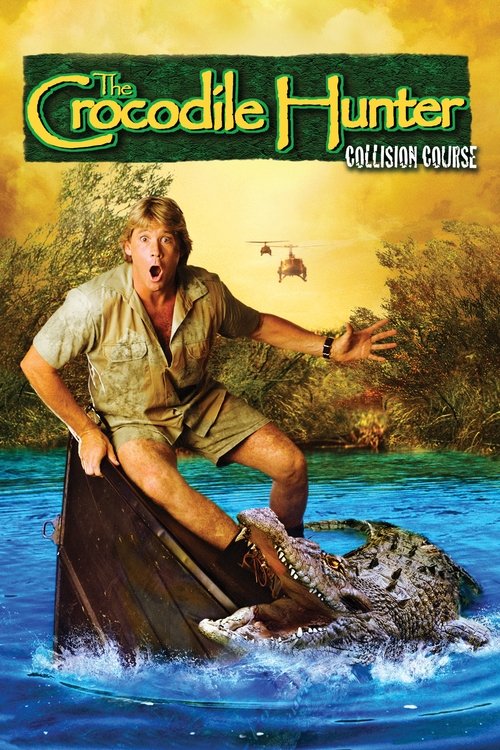
The Crocodile Hunter: Collision Course
Steve Irwin, AKA The Crocodile Hunter, has avoided the death-roll and saved a croc from poachers. But what he doesn't know is that the crocodile has swallowed a top secret U.S. satellite beacon, and the poachers are actually American special agents sent to retrieve it.
Despite its small-scale budget of $12.0M, The Crocodile Hunter: Collision Course became a solid performer, earning $33.1M worldwide—a 176% return.
1 win & 1 nomination


Plot Structure
Story beats plotted across runtime


Narrative Arc
Emotional journey through the story's key moments
Story Circle
Blueprint 15-beat structure
Arcplot Score Breakdown
Weighted: Precision (70%) + Arc (15%) + Theme (15%)
The Crocodile Hunter: Collision Course (2002) showcases precise narrative design, characteristic of John Stainton's storytelling approach. This structural analysis examines how the film's 15-point plot structure maps to proven narrative frameworks across 1 hour and 30 minutes. With an Arcplot score of 7.1, the film balances conventional beats with creative variation.
Characters
Cast & narrative archetypes

Steve Irwin
Terri Irwin
Sam Flynn
Robert Wheeler
Brozzie Drewitt
Jo Buckley
Main Cast & Characters
Steve Irwin
Played by Steve Irwin
Enthusiastic wildlife expert and conservationist who unknowingly becomes entangled in an international espionage plot while rescuing a crocodile.
Terri Irwin
Played by Terri Irwin
Steve's wife and partner in wildlife conservation, providing support and balance to his wild enthusiasm.
Sam Flynn
Played by Magda Szubanski
CIA agent tasked with retrieving a fallen satellite beacon that was swallowed by a crocodile.
Robert Wheeler
Played by David Wenham
CIA Deputy Director coordinating the satellite retrieval operation from headquarters.
Brozzie Drewitt
Played by Lachy Hulme
Local cattle rancher who wants the problem crocodile removed from his property.
Jo Buckley
Played by Kate Beahan
Australian Federal Police officer investigating the activities around the crocodile.
Structural Analysis
The Status Quo at 1 minutes (1% through the runtime) establishes Steve Irwin enthusiastically captures a crocodile in the Australian outback, demonstrating his fearless approach to wildlife and his perfect harmony with nature and his wife Terri.. Structural examination shows that this early placement immediately immerses viewers in the story world.
The inciting incident occurs at 10 minutes when A large crocodile swallows the fallen satellite beacon, unknowingly putting Steve and Terri in the crosshairs of both CIA agents and a rogue agent who want to retrieve it.. At 12% through the film, this Disruption aligns precisely with traditional story structure. This beat shifts the emotional landscape, launching the protagonist into the central conflict.
The First Threshold at 22 minutes marks the transition into Act II, occurring at 25% of the runtime. This indicates the protagonist's commitment to Steve and Terri commit to capturing the crocodile and set out on their expedition into the remote outback, actively choosing to enter the dangerous mission that will collide with the spy operation., moving from reaction to action.
At 44 minutes, the Midpoint arrives at 49% of the runtime—precisely centered, creating perfect narrative symmetry. The analysis reveals that this crucial beat Steve successfully captures the crocodile (false victory), but this actually puts him in greater danger as all parties now converge on him, and the rogue agent escalates his violent methods to retrieve the beacon., fundamentally raising what's at risk. The emotional intensity shifts, dividing the narrative into clear before-and-after phases.
The Collapse moment at 67 minutes (75% through) represents the emotional nadir. Here, The rogue agent directly threatens Steve and Terri with lethal force, and their beloved crocodile's life is in jeopardy. The innocence of their wildlife mission "dies" as they realize they're caught in a deadly international incident., reveals the protagonist at their lowest point. This beat's placement in the final quarter sets up the climactic reversal.
The Second Threshold at 72 minutes initiates the final act resolution at 80% of the runtime. Steve realizes that his wildlife expertise IS the solution - by working with the CIA agents instead of avoiding them, they can save the crocodile and stop the villain using his unique skills., demonstrating the transformation achieved throughout the journey.
Emotional Journey
The Crocodile Hunter: Collision Course's emotional architecture traces a deliberate progression across 15 carefully calibrated beats.
Narrative Framework
This structural analysis employs proven narrative structure principles that track dramatic progression. By mapping The Crocodile Hunter: Collision Course against these established plot points, we can identify how John Stainton utilizes or subverts traditional narrative conventions. The plot point approach reveals not only adherence to structural principles but also creative choices that distinguish The Crocodile Hunter: Collision Course within the family genre.
Comparative Analysis
Additional family films include The Black Stallion, The Bad Guys and Ella Enchanted.
Plot Points by Act
Act I
SetupStatus Quo
Steve Irwin enthusiastically captures a crocodile in the Australian outback, demonstrating his fearless approach to wildlife and his perfect harmony with nature and his wife Terri.
Theme
A ranger or colleague comments about respecting nature and working together, establishing the film's theme about cooperation between different worlds (wildlife conservation vs. human civilization).
Worldbuilding
Establishes Steve and Terri's daily life at the zoo and in the wild, their passion for animal rescue, and introduces the parallel world of CIA agents tracking a crashed satellite with important data.
Disruption
A large crocodile swallows the fallen satellite beacon, unknowingly putting Steve and Terri in the crosshairs of both CIA agents and a rogue agent who want to retrieve it.
Resistance
Steve and Terri decide to capture and relocate the crocodile as part of their normal conservation work, unaware of the international crisis. CIA agents debate how to approach the situation and begin surveillance.
Act II
ConfrontationFirst Threshold
Steve and Terri commit to capturing the crocodile and set out on their expedition into the remote outback, actively choosing to enter the dangerous mission that will collide with the spy operation.
Mirror World
Introduction of the CIA agents as the B-story, representing the "civilized" world that must learn to respect and work with Steve's "wild" approach rather than treating nature as an obstacle.
Premise
The fun premise delivers: Steve doing what he does best - tracking and capturing dangerous animals - while narrowly avoiding CIA agents and assassins, creating comedic near-misses and wildlife adventure set pieces.
Midpoint
Steve successfully captures the crocodile (false victory), but this actually puts him in greater danger as all parties now converge on him, and the rogue agent escalates his violent methods to retrieve the beacon.
Opposition
The danger intensifies as the rogue agent becomes more aggressive, CIA agents close in, and Steve and Terri face increasingly dangerous situations while trying to transport the crocodile to safety.
Collapse
The rogue agent directly threatens Steve and Terri with lethal force, and their beloved crocodile's life is in jeopardy. The innocence of their wildlife mission "dies" as they realize they're caught in a deadly international incident.
Crisis
Steve and Terri must process that their conservation work has been compromised and face the dark reality that they might lose everything - the crocodile, their mission, possibly their lives.
Act III
ResolutionSecond Threshold
Steve realizes that his wildlife expertise IS the solution - by working with the CIA agents instead of avoiding them, they can save the crocodile and stop the villain using his unique skills.
Synthesis
Steve and Terri team up with the CIA agents, combining wildlife skills with tactical support to confront the rogue agent, retrieve the beacon from the crocodile safely, and ensure the animal's wellbeing.
Transformation
Steve and Terri successfully release the crocodile into its new home, having proven that conservation and cooperation can coexist with the modern world. The CIA agents depart with newfound respect for wildlife work.