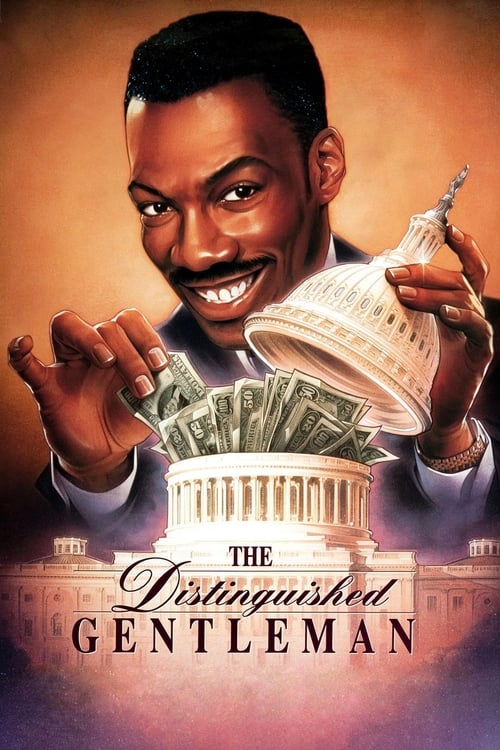
The Distinguished Gentleman
A Florida con man uses the recent death of the long time Congressman from his district, who he just happens to share a last name with, to get elected to his version of paradise, the U.S. Congress, where the money flows from lobbyists.
The film struggled financially against its mid-range budget of $50.0M, earning $46.7M globally (-7% loss).


Plot Structure
Story beats plotted across runtime


Narrative Arc
Emotional journey through the story's key moments
Story Circle
Blueprint 15-beat structure
Arcplot Score Breakdown
Weighted: Precision (70%) + Arc (15%) + Theme (15%)
The Distinguished Gentleman (1992) exemplifies meticulously timed narrative architecture, characteristic of Jonathan Lynn's storytelling approach. This structural analysis examines how the film's 15-point plot structure maps to proven narrative frameworks across 1 hour and 52 minutes. With an Arcplot score of 7.0, the film balances conventional beats with creative variation.
Characters
Cast & narrative archetypes

Thomas Jefferson Johnson
Miss Loretta
Dick Dodge
Celia Kirby
Terry Corrigan
Olaf Andersen
Arthur Reinhardt
Main Cast & Characters
Thomas Jefferson Johnson
Played by Eddie Murphy
A smooth-talking con artist who gets elected to Congress by using a deceased congressman's name and transforms from selfish grifter to principled politician.
Miss Loretta
Played by Lane Smith
A veteran congressional aide who becomes Thomas's mentor, teaching him how Congress actually works and guiding his moral awakening.
Dick Dodge
Played by James Garner
A corrupt veteran congressman who runs the power brokerage system and becomes Thomas's primary antagonist when Thomas threatens his schemes.
Celia Kirby
Played by Victoria Rowell
An idealistic lobbyist working on power line safety who becomes Thomas's love interest and moral compass, inspiring his transformation.
Terry Corrigan
Played by Grant Shaud
Thomas's cynical campaign manager and partner in the original con who represents the temptation to stay corrupt.
Olaf Andersen
Played by Kevin McCarthy
A committee chairman and Dodge's ally who helps maintain the corrupt system in Congress.
Arthur Reinhardt
Played by Charles S. Dutton
A powerful lobbyist representing corporate interests who tries to buy Thomas's vote.
Structural Analysis
The Status Quo at 1 minutes (1% through the runtime) establishes Thomas Jefferson Johnson runs a con operation pretending to be various officials to scam victims. He's a charismatic hustler living by charm and deception in his ordinary criminal world.. Of particular interest, this early placement immediately immerses viewers in the story world.
The inciting incident occurs at 13 minutes when Congressman Jeff Johnson dies suddenly of a heart attack during sex. This creates an unexpected opportunity that will disrupt Thomas's entire world.. At 12% through the film, this Disruption aligns precisely with traditional story structure. This beat shifts the emotional landscape, launching the protagonist into the central conflict.
The First Threshold at 29 minutes marks the transition into Act II, occurring at 26% of the runtime. This indicates the protagonist's commitment to Thomas wins the election and actively chooses to go to Washington D.C. He commits to entering the world of Congress, leaving his old life behind for this new adventure., moving from reaction to action.
At 55 minutes, the Midpoint arrives at 50% of the runtime—precisely centered, creating perfect narrative symmetry. Structural examination shows that this crucial beat Thomas successfully joins the powerful Energy and Commerce Committee and secures a lucrative deal with power company lobbyists. False victory - he thinks he's won the ultimate con, but the stakes are about to change dramatically., fundamentally raising what's at risk. The emotional intensity shifts, dividing the narrative into clear before-and-after phases.
The Collapse moment at 82 minutes (73% through) represents the emotional nadir. Here, The little girl dies from her cancer. Thomas attends the funeral and is confronted with the deadly consequences of the corruption he's been participating in. His dream of easy money dies with this child's death., demonstrates the protagonist at their lowest point. This beat's placement in the final quarter sets up the climactic reversal.
The Second Threshold at 88 minutes initiates the final act resolution at 79% of the runtime. Thomas decides to expose the corruption and fight for real change. He synthesizes his con-man skills with genuine purpose. He realizes he can use his talents for good - the ultimate con is making the system work for the people., demonstrating the transformation achieved throughout the journey.
Emotional Journey
The Distinguished Gentleman's emotional architecture traces a deliberate progression across 15 carefully calibrated beats.
Narrative Framework
This structural analysis employs a 15-point narrative structure framework that maps key story moments. By mapping The Distinguished Gentleman against these established plot points, we can identify how Jonathan Lynn utilizes or subverts traditional narrative conventions. The plot point approach reveals not only adherence to structural principles but also creative choices that distinguish The Distinguished Gentleman within the comedy genre.
Jonathan Lynn's Structural Approach
Among the 7 Jonathan Lynn films analyzed on Arcplot, the average structural score is 7.0, demonstrating varied approaches to story architecture. The Distinguished Gentleman represents one of the director's most structurally precise works. For comparative analysis, explore the complete Jonathan Lynn filmography.
Comparative Analysis
Additional comedy films include The Bad Guys, Ella Enchanted and The Evening Star. For more Jonathan Lynn analyses, see Clue, Sgt. Bilko and Greedy.
Plot Points by Act
Act I
SetupStatus Quo
Thomas Jefferson Johnson runs a con operation pretending to be various officials to scam victims. He's a charismatic hustler living by charm and deception in his ordinary criminal world.
Theme
During a con, someone mentions "the real crooks are in Congress" - establishing the film's central theme about corruption in politics and whether one man can make a difference in a broken system.
Worldbuilding
Setup of Thomas's con operations, his crew, his lifestyle. Introduces Florida Congressman Jeff Johnson who shares the same name. Establishes Thomas's world of small-time scams and his skill at reading people.
Disruption
Congressman Jeff Johnson dies suddenly of a heart attack during sex. This creates an unexpected opportunity that will disrupt Thomas's entire world.
Resistance
Thomas debates whether to run for Congress using the name recognition. His crew helps him navigate the campaign process. He learns the basics of running for office and begins to see politics as the ultimate con.
Act II
ConfrontationFirst Threshold
Thomas wins the election and actively chooses to go to Washington D.C. He commits to entering the world of Congress, leaving his old life behind for this new adventure.
Mirror World
Thomas meets Miss Loretta and other congressional staffers who represent the thematic opposite of his cynical worldview. She embodies genuine public service and will challenge his assumptions about why people enter politics.
Premise
The "fun and games" of Thomas navigating Congress. He learns the system, gets on committees, discovers how money and lobbyists control everything. He enjoys the perks while playing both sides for personal gain.
Midpoint
Thomas successfully joins the powerful Energy and Commerce Committee and secures a lucrative deal with power company lobbyists. False victory - he thinks he's won the ultimate con, but the stakes are about to change dramatically.
Opposition
Thomas meets a constituent whose daughter is dying from cancer caused by power lines. He begins investigating and discovers the corruption he's part of actually harms real people. The lobbyists and committee chairman pressure him to back off.
Collapse
The little girl dies from her cancer. Thomas attends the funeral and is confronted with the deadly consequences of the corruption he's been participating in. His dream of easy money dies with this child's death.
Crisis
Thomas wrestles with his conscience. He faces the choice between continuing the profitable con or actually doing something meaningful. Dark night as he processes what kind of person he wants to be.
Act III
ResolutionSecond Threshold
Thomas decides to expose the corruption and fight for real change. He synthesizes his con-man skills with genuine purpose. He realizes he can use his talents for good - the ultimate con is making the system work for the people.
Synthesis
Thomas orchestrates a brilliant plan to expose the power company corruption on the congressional floor. He outmaneuvers the lobbyists and corrupt congressmen, delivers a passionate speech, and forces a real investigation.
Transformation
Final image shows Thomas as a transformed congressman, now genuinely working for his constituents. He's still charming and clever, but now uses those skills for public service rather than personal gain. The con man has become a real representative.