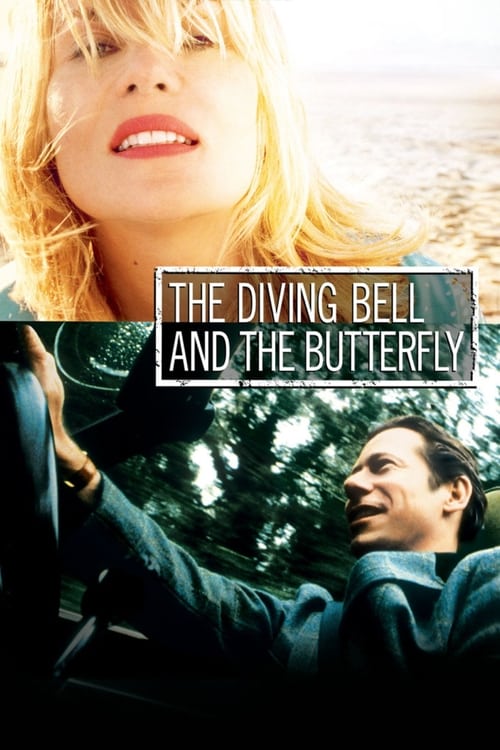
The Diving Bell and the Butterfly
Jean-Dominique Bauby, editor-in-chief of French fashion bible Elle magazine, has a devastating stroke at age 43. The damage to his brain stem results in locked-in syndrome, with which he is almost completely paralyzed and only able to communicate by blinking an eye. Bauby painstakingly dictates his memoir via the only means of expression left to him.
Working with a limited budget of $14.0M, the film achieved a modest success with $19.8M in global revenue (+41% profit margin).
Nominated for 4 Oscars. 68 wins & 106 nominations


Plot Structure
Story beats plotted across runtime


Narrative Arc
Emotional journey through the story's key moments
Story Circle
Blueprint 15-beat structure
Arcplot Score Breakdown
Weighted: Precision (70%) + Arc (15%) + Theme (15%)
The Diving Bell and the Butterfly (2007) exemplifies deliberately positioned dramatic framework, characteristic of Julian Schnabel's storytelling approach. This structural analysis examines how the film's 15-point plot structure maps to proven narrative frameworks across 1 hour and 52 minutes. With an Arcplot score of 6.3, the film takes an unconventional approach to traditional narrative frameworks.
Characters
Cast & narrative archetypes

Jean-Dominique Bauby
Céline Desmoulins
Henriette Durand
Claude
Céline
Joséphine
Dr. Lepage
Father
Main Cast & Characters
Jean-Dominique Bauby
Played by Mathieu Amalric
Former Elle magazine editor who suffers a massive stroke and becomes completely paralyzed except for his left eye, through which he dictates his memoir.
Céline Desmoulins
Played by Emmanuelle Seigner
Jean-Do's devoted speech therapist who helps him learn to communicate by blinking and encourages him to write his book.
Henriette Durand
Played by Marie-Josée Croze
Jean-Do's patient and compassionate transcriber who painstakingly records his book letter by letter through eye blinks.
Claude
Played by Olatz López Garmendia
Jean-Do's dedicated physical therapist who works with him on mobility exercises and provides emotional support.
Céline
Played by Emmanuelle Seigner
The mother of Jean-Do's children and his former partner, who remains supportive despite their separation.
Joséphine
Played by Marina Hands
Jean-Do's girlfriend at the time of his stroke, who struggles to cope with his condition and eventually distances herself.
Dr. Lepage
Played by Patrick Chesnais
Jean-Do's neurologist who explains his locked-in syndrome diagnosis and prognosis with clinical detachment.
Father
Played by Max von Sydow
Jean-Do's elderly, reclusive father who communicates with his son only by telephone, both trapped in their own forms of isolation.
Structural Analysis
The Status Quo at 1 minutes (1% through the runtime) establishes Jean-Dominique Bauby awakens in a hospital bed, his vision blurred and distorted, unable to move or speak. The opening image establishes his catastrophic new reality: completely paralyzed by locked-in syndrome, trapped inside his own body with only his left eye capable of movement.. Of particular interest, this early placement immediately immerses viewers in the story world.
The inciting incident occurs at 14 minutes when Henriette introduces the alphabet communication system: she will recite letters in frequency order, and Jean-Do will blink to select them. This is the tool that makes communication—and therefore authorship—possible, disrupting his isolation and offering a pathway forward.. At 12% through the film, this Disruption aligns precisely with traditional story structure. This beat shifts the emotional landscape, launching the protagonist into the central conflict.
The First Threshold at 29 minutes marks the transition into Act II, occurring at 26% of the runtime. This illustrates the protagonist's commitment to Publisher Levi visits and suggests Jean-Do write a book about his experience. Jean-Do actively chooses to accept this mission, deciding to dictate a memoir letter by painstaking letter. This is his conscious choice to create meaning from suffering and re-enter the world as an author., moving from reaction to action.
At 57 minutes, the Midpoint arrives at 51% of the runtime—precisely centered, creating perfect narrative symmetry. Notably, this crucial beat Jean-Do dictates the line "My diving bell becomes less oppressive, and my mind takes flight like a butterfly" and breaks down crying. This false victory moment reveals the emotional cost of his achievement—he is succeeding at communication but the contrast between his soaring imagination and his immobile body becomes unbearably painful., fundamentally raising what's at risk. The emotional intensity shifts, dividing the narrative into clear before-and-after phases.
The Collapse moment at 82 minutes (73% through) represents the emotional nadir. Here, Jean-Do has a devastating phone conversation with his father, who is also trapped and isolated in his apartment. They share their loneliness and inability to see each other. This is Jean-Do's "whiff of death"—the recognition that time is running out, connections are breaking, and he may die alone without reconciling his past., demonstrates the protagonist at their lowest point. This beat's placement in the final quarter sets up the climactic reversal.
The Second Threshold at 89 minutes initiates the final act resolution at 80% of the runtime. Jean-Do decides to finish the book as an act of love and testament—not for fame, but to leave something true for his children and to prove that consciousness and humanity persist even in a broken body. He synthesizes his past life with his present wisdom, accepting both his limitations and his creative power., demonstrating the transformation achieved throughout the journey.
Emotional Journey
The Diving Bell and the Butterfly's emotional architecture traces a deliberate progression across 15 carefully calibrated beats.
Narrative Framework
This structural analysis employs systematic plot point analysis that identifies crucial turning points. By mapping The Diving Bell and the Butterfly against these established plot points, we can identify how Julian Schnabel utilizes or subverts traditional narrative conventions. The plot point approach reveals not only adherence to structural principles but also creative choices that distinguish The Diving Bell and the Butterfly within the drama genre.
Julian Schnabel's Structural Approach
Among the 3 Julian Schnabel films analyzed on Arcplot, the average structural score is 6.9, demonstrating varied approaches to story architecture. The Diving Bell and the Butterfly takes a more unconventional approach compared to the director's typical style. For comparative analysis, explore the complete Julian Schnabel filmography.
Comparative Analysis
Additional drama films include After Thomas, South Pacific and Dirty Dancing: Havana Nights. For more Julian Schnabel analyses, see At Eternity's Gate, Before Night Falls.
Plot Points by Act
Act I
SetupStatus Quo
Jean-Dominique Bauby awakens in a hospital bed, his vision blurred and distorted, unable to move or speak. The opening image establishes his catastrophic new reality: completely paralyzed by locked-in syndrome, trapped inside his own body with only his left eye capable of movement.
Theme
Speech therapist Henriette tells Jean-Do: "You can be a prisoner or you can be free. It's your choice." This line encapsulates the film's central theme about the freedom of imagination and memory even when the body is imprisoned.
Worldbuilding
Through Jean-Do's subjective POV, we learn the rules of his locked-in world: he can only blink his left eye, doctors examine him as medical curiosity, his father visits via phone, and we glimpse flashbacks of his former life as glamorous editor of Elle magazine. His internal monologue reveals his sharp wit and growing despair.
Disruption
Henriette introduces the alphabet communication system: she will recite letters in frequency order, and Jean-Do will blink to select them. This is the tool that makes communication—and therefore authorship—possible, disrupting his isolation and offering a pathway forward.
Resistance
Jean-Do resists the alphabet method and struggles with his new reality. Henriette patiently guides him through practice sessions. He has awkward encounters with his estranged wife Céline and their children. His internal world is rich with memories, fantasies, and bitter humor, but he debates whether life is worth living in this condition.
Act II
ConfrontationFirst Threshold
Publisher Levi visits and suggests Jean-Do write a book about his experience. Jean-Do actively chooses to accept this mission, deciding to dictate a memoir letter by painstaking letter. This is his conscious choice to create meaning from suffering and re-enter the world as an author.
Mirror World
Claude, the young transcriber, arrives to help Jean-Do write his book. She becomes his creative partner and the relationship that will teach him about connection, patience, and the power of communication. Her presence brings warmth and collaboration to his isolated existence.
Premise
The "promise of the premise": Jean-Do and Claude work together on the book, letter by letter. We experience the richness of his interior life through elaborate fantasy sequences (Empress Eugénie, trips to Lourdes, Hong Kong) and poignant memories (his father, his lovers, his children). The film explores the paradox of total physical imprisonment and total imaginative freedom.
Midpoint
Jean-Do dictates the line "My diving bell becomes less oppressive, and my mind takes flight like a butterfly" and breaks down crying. This false victory moment reveals the emotional cost of his achievement—he is succeeding at communication but the contrast between his soaring imagination and his immobile body becomes unbearably painful.
Opposition
The work becomes harder. Jean-Do confronts painful memories: his broken relationship with Céline, his neglect of his elderly father, his superficial past life. His ex-mistress visits, bringing guilt and regret. Physical complications increase the pressure. The weight of his past mistakes and current limitations close in on him as the book progresses.
Collapse
Jean-Do has a devastating phone conversation with his father, who is also trapped and isolated in his apartment. They share their loneliness and inability to see each other. This is Jean-Do's "whiff of death"—the recognition that time is running out, connections are breaking, and he may die alone without reconciling his past.
Crisis
Jean-Do processes his despair, floating through dark memories and regrets. He contemplates mortality and the meaning of his life. In his darkness, he works through his emotional pain, gradually finding a new understanding of what matters: not his former glory, but authentic connection and truth.
Act III
ResolutionSecond Threshold
Jean-Do decides to finish the book as an act of love and testament—not for fame, but to leave something true for his children and to prove that consciousness and humanity persist even in a broken body. He synthesizes his past life with his present wisdom, accepting both his limitations and his creative power.
Synthesis
Jean-Do completes the manuscript with Claude. He celebrates with his caregivers and family, experiencing genuine joy and connection. The book is finished, published, and becomes a sensation. The text reveals that Jean-Do died ten days after publication, but his work survives him—his consciousness preserved in art.
Transformation
The final image shows Jean-Do on the beach in his wheelchair, surrounded by caregivers and loved ones, as a butterfly lands near him. Where the opening showed him trapped and alone, the closing shows him connected and free despite unchanged physical circumstances—he has transformed his prison into a chrysalis.