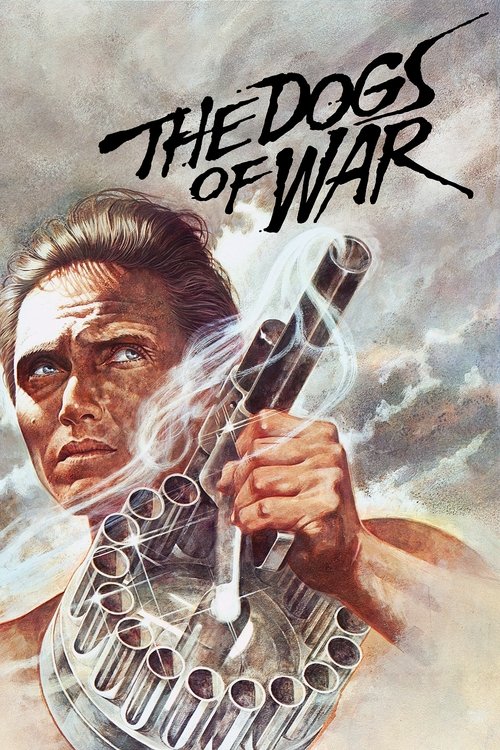
The Dogs of War
Mercenary soldiers Jamie and Drew are hired by a large corporation to liberate Zangaro, a small African nation, from an despot. Havoc ensues.
The film underperformed commercially against its tight budget of $8.0M, earning $5.5M globally (-31% loss). While initial box office returns were modest, the film has gained appreciation for its innovative storytelling within the thriller genre.


Plot Structure
Story beats plotted across runtime


Narrative Arc
Emotional journey through the story's key moments
Story Circle
Blueprint 15-beat structure
Arcplot Score Breakdown
Weighted: Precision (70%) + Arc (15%) + Theme (15%)
The Dogs of War (1980) demonstrates carefully calibrated story structure, characteristic of John Irvin's storytelling approach. This structural analysis examines how the film's 15-point plot structure maps to proven narrative frameworks across 1 hour and 58 minutes. With an Arcplot score of 6.6, the film balances conventional beats with creative variation.
Characters
Cast & narrative archetypes

Jamie Shannon
Drew
Terry
Michel
Roy Endean
Dr. Okoye
Jessie
Main Cast & Characters
Jamie Shannon
Played by Christopher Walken
Disillusioned mercenary hired to overthrow an African dictator. Pragmatic and morally conflicted professional soldier.
Drew
Played by Tom Berenger
Shannon's loyal friend and fellow mercenary. Reliable combat veteran and trusted companion.
Terry
Played by Colin Blakely
British mercenary and member of Shannon's team. Skilled soldier with dark humor.
Michel
Played by Jean-François Stévenin
French mercenary and explosives expert. Professional and calculating team member.
Roy Endean
Played by Hugh Millais
Ruthless corporate fixer who hires Shannon for the coup. Manipulative businessman with hidden agenda.
Dr. Okoye
Played by Winston Ntshona
Exiled African leader and voice of conscience. Imprisoned dissident who reveals the truth about tyranny.
Jessie
Played by JoBeth Williams
Shannon's girlfriend who struggles with his violent profession. Represents normal life and moral anchor.
Structural Analysis
The Status Quo at 1 minutes (1% through the runtime) establishes Jamie Shannon leads mercenaries in a brutal Central American combat mission, establishing his expertise as a professional soldier-for-hire operating in violent conflict zones.. Of particular interest, this early placement immediately immerses viewers in the story world.
The inciting incident occurs at 14 minutes when British mining executive Endean approaches Shannon with an unusual job: reconnaissance mission to the fictional African nation of Zangaro to assess the feasibility of a coup against dictator Kimba.. At 12% through the film, this Disruption aligns precisely with traditional story structure. This beat shifts the emotional landscape, launching the protagonist into the central conflict.
The First Threshold at 30 minutes marks the transition into Act II, occurring at 26% of the runtime. This demonstrates the protagonist's commitment to Shannon accepts Endean's offer to plan and execute the coup. He commits fully to organizing the overthrow of Kimba, assembling his team and designing the mission from scratch., moving from reaction to action.
At 60 minutes, the Midpoint arrives at 51% of the runtime—precisely centered, creating perfect narrative symmetry. Significantly, this crucial beat Shannon discovers the truth: Endean's employers don't want democracy for Zangaro—they want to install puppet leader Colonel Bobi to exploit platinum deposits. Shannon realizes he's being used for corporate greed., fundamentally raising what's at risk. The emotional intensity shifts, dividing the narrative into clear before-and-after phases.
The Collapse moment at 87 minutes (73% through) represents the emotional nadir. Here, During the assault on Zangaro, Drew is mortally wounded. Shannon holds his dying friend, witnessing the ultimate cost of their profession. The "whiff of death" is literal—his closest comrade dies in his arms., shows the protagonist at their lowest point. This beat's placement in the final quarter sets up the climactic reversal.
The Second Threshold at 94 minutes initiates the final act resolution at 80% of the runtime. Shannon makes his choice: he will complete the mission, but on his own terms. Instead of installing Colonel Bobi, he decides to install Dr. Okoye, the legitimate opposition leader imprisoned by Kimba., demonstrating the transformation achieved throughout the journey.
Emotional Journey
The Dogs of War's emotional architecture traces a deliberate progression across 15 carefully calibrated beats.
Narrative Framework
This structural analysis employs systematic plot point analysis that identifies crucial turning points. By mapping The Dogs of War against these established plot points, we can identify how John Irvin utilizes or subverts traditional narrative conventions. The plot point approach reveals not only adherence to structural principles but also creative choices that distinguish The Dogs of War within the thriller genre.
John Irvin's Structural Approach
Among the 3 John Irvin films analyzed on Arcplot, the average structural score is 6.9, demonstrating varied approaches to story architecture. The Dogs of War takes a more unconventional approach compared to the director's typical style. For comparative analysis, explore the complete John Irvin filmography.
Comparative Analysis
Additional thriller films include The Warriors, Thunderball and Rustom. For more John Irvin analyses, see Next of Kin, Hamburger Hill.
Plot Points by Act
Act I
SetupStatus Quo
Jamie Shannon leads mercenaries in a brutal Central American combat mission, establishing his expertise as a professional soldier-for-hire operating in violent conflict zones.
Theme
A contact warns Shannon that mercenary work destroys men from the inside: "You can't do this forever without losing yourself." The cost of violence as profession.
Worldbuilding
Shannon returns home wounded, reconnects with ex-girlfriend Jessie, meets with his mercenary network. We see his world: the camaraderie of soldiers, the transactional nature of violence, the hollow spaces between missions.
Disruption
British mining executive Endean approaches Shannon with an unusual job: reconnaissance mission to the fictional African nation of Zangaro to assess the feasibility of a coup against dictator Kimba.
Resistance
Shannon debates accepting, researches Zangaro, and travels undercover as a nature photographer to assess the situation. He witnesses Kimba's brutality firsthand and is arrested, tortured, and barely escapes.
Act II
ConfrontationFirst Threshold
Shannon accepts Endean's offer to plan and execute the coup. He commits fully to organizing the overthrow of Kimba, assembling his team and designing the mission from scratch.
Mirror World
Shannon reconnects with old mercenary friend Drew, and we see the brotherhood among these soldiers. Drew represents the human cost—men who can't escape the life, bound by loyalty and trauma.
Premise
The mercenary operation in full swing: Shannon recruits specialists, acquires weapons through intricate deals, arranges transport, and plans every detail. We see the professional tradecraft of organizing a coup—logistics, intelligence, timing.
Midpoint
Shannon discovers the truth: Endean's employers don't want democracy for Zangaro—they want to install puppet leader Colonel Bobi to exploit platinum deposits. Shannon realizes he's being used for corporate greed.
Opposition
Despite his misgivings, Shannon continues mission prep. Complications mount: weapons deals nearly fall through, team members show strain, logistics become nightmarish. Shannon's internal conflict grows as the mission approaches.
Collapse
During the assault on Zangaro, Drew is mortally wounded. Shannon holds his dying friend, witnessing the ultimate cost of their profession. The "whiff of death" is literal—his closest comrade dies in his arms.
Crisis
Shannon completes the coup mechanically, grief-stricken. The mercenaries secure the capital and eliminate Kimba. Shannon must confront what he's become: a hired killer who just lost his last real human connection.
Act III
ResolutionSecond Threshold
Shannon makes his choice: he will complete the mission, but on his own terms. Instead of installing Colonel Bobi, he decides to install Dr. Okoye, the legitimate opposition leader imprisoned by Kimba.
Synthesis
Shannon executes his plan: frees Dr. Okoye from prison, installs him as president instead of Bobi, and ensures the mining company's puppet regime fails. He betrays his employers to serve justice—his final act of moral agency.
Transformation
Shannon departs Zangaro quietly, leaving chaos behind. Unlike the opening where he was a pure mercenary, he's now a man who chose principle over payment—but remains alone, forever marked by violence.