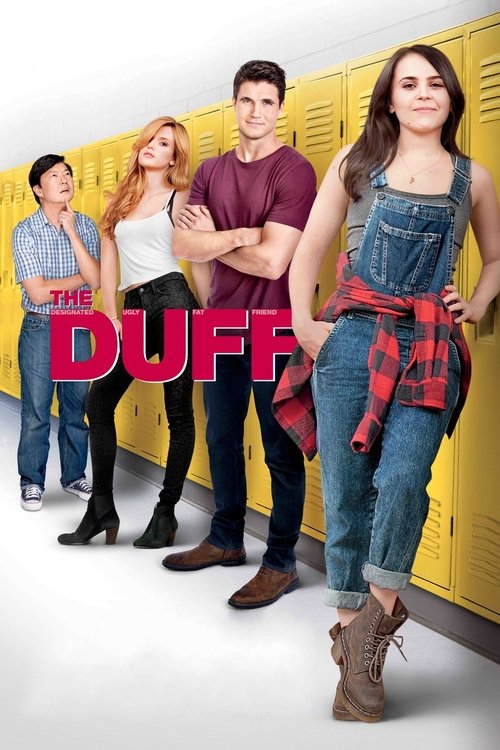
The DUFF
Bianca's universe turns upside down when she learns that her high school refers to her as a ‘DUFF' (Designated Ugly Fat Friend). Hoping to erase that label, she enlists the help of a charming jock and her favorite teacher. Together they'll face the school's mean girl and remind everyone that we are all someone's DUFF… and that's totally fine.
Despite its limited budget of $8.5M, The DUFF became a box office success, earning $43.5M worldwide—a 412% return. The film's compelling narrative connected with viewers, illustrating how strong storytelling can transcend budget limitations.
1 win & 8 nominations


Plot Structure
Story beats plotted across runtime


Narrative Arc
Emotional journey through the story's key moments
Story Circle
Blueprint 15-beat structure
Arcplot Score Breakdown
Weighted: Precision (70%) + Arc (15%) + Theme (15%)
The DUFF (2015) reveals meticulously timed story structure, characteristic of Ari Sandel's storytelling approach. This structural analysis examines how the film's 15-point plot structure maps to proven narrative frameworks across 1 hour and 40 minutes. With an Arcplot score of 7.0, the film balances conventional beats with creative variation.
Characters
Cast & narrative archetypes

Bianca Piper
Wesley Rush
Madison Morgan
Casey Cordero
Jess Harris
Toby Tucker
Dottie Piper
Main Cast & Characters
Bianca Piper
Played by Mae Whitman
A smart, opinionated high school senior who discovers she's the DUFF of her friend group and works to redefine herself.
Wesley Rush
Played by Robbie Amell
Popular jock and Bianca's neighbor who helps her transform while dealing with his own insecurities.
Madison Morgan
Played by Bella Thorne
The manipulative queen bee and social media obsessed mean girl who bullies Bianca.
Casey Cordero
Played by Bianca A. Santos
One of Bianca's best friends, fashion-forward and supportive despite the social drama.
Jess Harris
Played by Skyler Samuels
Bianca's other best friend, athletic and loyal but caught up in the DUFF revelation.
Toby Tucker
Played by Nick Eversman
Awkward, nerdy student who has a crush on Bianca and represents genuine connection.
Dottie Piper
Played by Allison Janney
Bianca's supportive, quirky mother who is a motivational author and encourages self-acceptance.
Structural Analysis
The Status Quo at 1 minutes (1% through the runtime) establishes Bianca Piper introduces her world through voiceover, explaining her friendship with her two beautiful best friends Jess and Casey while scrolling through social media. She presents herself as content in her role within the group.. Of particular interest, this early placement immediately immerses viewers in the story world.
The inciting incident occurs at 13 minutes when At a party, Wesley explains to Bianca that she is the DUFF - Designated Ugly Fat Friend - the approachable one that guys use to get to her hotter friends. This revelation shatters Bianca's self-image and her understanding of her place in the social hierarchy.. At 13% through the film, this Disruption is delayed, allowing extended setup of the story world. This beat shifts the emotional landscape, launching the protagonist into the central conflict.
The First Threshold at 25 minutes marks the transition into Act II, occurring at 25% of the runtime. This indicates the protagonist's commitment to Bianca makes a deal with Wesley: she'll help him pass science class if he helps her shed her DUFF status and teaches her how to talk to her crush Toby. This active choice to reinvent herself launches her transformation journey., moving from reaction to action.
At 50 minutes, the Midpoint arrives at 50% of the runtime—precisely centered, creating perfect narrative symmetry. Structural examination shows that this crucial beat Bianca successfully talks to Toby at a party and he seems genuinely interested in her. This false victory makes her believe she's transcended her DUFF status, but she's still seeking validation from others rather than finding it within herself., fundamentally raising what's at risk. The emotional intensity shifts, dividing the narrative into clear before-and-after phases.
The Collapse moment at 73 minutes (73% through) represents the emotional nadir. Here, Madison releases the humiliating video of Bianca online, which goes viral. Bianca becomes a laughingstock at school, her attempt at reinvention publicly destroyed. She discovers Toby only showed interest as a dare, and she's pushed Wesley away. Her social death is complete., reveals the protagonist at their lowest point. This beat's placement in the final quarter sets up the climactic reversal.
The Second Threshold at 79 minutes initiates the final act resolution at 79% of the runtime. Bianca has an epiphany: everyone is someone's DUFF in some context - labels only have power if you let them. She realizes she needs to embrace her authentic self and stop letting others' perceptions define her. She decides to take back control of her narrative., demonstrating the transformation achieved throughout the journey.
Emotional Journey
The DUFF's emotional architecture traces a deliberate progression across 15 carefully calibrated beats.
Narrative Framework
This structural analysis employs systematic plot point analysis that identifies crucial turning points. By mapping The DUFF against these established plot points, we can identify how Ari Sandel utilizes or subverts traditional narrative conventions. The plot point approach reveals not only adherence to structural principles but also creative choices that distinguish The DUFF within the romance genre.
Ari Sandel's Structural Approach
Among the 2 Ari Sandel films analyzed on Arcplot, the average structural score is 7.0, reflecting strong command of classical structure. The DUFF takes a more unconventional approach compared to the director's typical style. For comparative analysis, explore the complete Ari Sandel filmography.
Comparative Analysis
Additional romance films include South Pacific, Dirty Dancing: Havana Nights and The Evening Star. For more Ari Sandel analyses, see Goosebumps 2: Haunted Halloween.
Plot Points by Act
Act I
SetupStatus Quo
Bianca Piper introduces her world through voiceover, explaining her friendship with her two beautiful best friends Jess and Casey while scrolling through social media. She presents herself as content in her role within the group.
Theme
Wesley Rush, the popular jock neighbor, casually tells Bianca that people only approach her to get to her hotter friends - planting the seed that labels and social perception define how others see you, but not who you really are.
Worldbuilding
We meet Bianca's world: her supportive single mom, her two gorgeous best friends Jess and Casey, her crush Toby, the mean girl Madison Morgan, and her jock neighbor Wesley. Bianca appears comfortable in her social standing, unaware of how she's perceived.
Disruption
At a party, Wesley explains to Bianca that she is the DUFF - Designated Ugly Fat Friend - the approachable one that guys use to get to her hotter friends. This revelation shatters Bianca's self-image and her understanding of her place in the social hierarchy.
Resistance
Bianca spirals after learning she's a DUFF, unfriending Jess and Casey on social media and distancing herself from them. She debates whether to accept her new understanding of herself or fight against it, eventually realizing she needs help to reinvent herself.
Act II
ConfrontationFirst Threshold
Bianca makes a deal with Wesley: she'll help him pass science class if he helps her shed her DUFF status and teaches her how to talk to her crush Toby. This active choice to reinvent herself launches her transformation journey.
Mirror World
Wesley begins his mentorship, taking Bianca to the mall for a makeover montage. Their bickering dynamic reveals genuine connection beneath the surface - Wesley represents authenticity over performance, showing Bianca that confidence comes from within, not external validation.
Premise
Wesley coaches Bianca on dating, confidence, and social navigation. Fun training montages ensue as Bianca practices flirting, learns to dress differently, and gains confidence. She makes progress with Toby while developing unexpected chemistry with Wesley.
Midpoint
Bianca successfully talks to Toby at a party and he seems genuinely interested in her. This false victory makes her believe she's transcended her DUFF status, but she's still seeking validation from others rather than finding it within herself.
Opposition
Madison Morgan, the mean girl antagonist, grows jealous of Bianca's transformation and closeness with Wesley. She secretly films Bianca in an embarrassing changing room moment. Meanwhile, Bianca distances from Wesley as she pursues Toby, and tension builds with her estranged friends Jess and Casey.
Collapse
Madison releases the humiliating video of Bianca online, which goes viral. Bianca becomes a laughingstock at school, her attempt at reinvention publicly destroyed. She discovers Toby only showed interest as a dare, and she's pushed Wesley away. Her social death is complete.
Crisis
Bianca retreats into isolation and despair. Her mother offers comfort and perspective. Bianca processes what happened and begins to realize that seeking external validation was the problem - she lost herself trying to become someone else for others.
Act III
ResolutionSecond Threshold
Bianca has an epiphany: everyone is someone's DUFF in some context - labels only have power if you let them. She realizes she needs to embrace her authentic self and stop letting others' perceptions define her. She decides to take back control of her narrative.
Synthesis
Bianca attends homecoming confidently as herself. She publicly confronts Madison and reclaims the term DUFF, giving an empowering speech that resonates with other students. She reconciles with Jess and Casey, realizing true friendship transcends labels. She and Wesley finally acknowledge their real feelings for each other.
Transformation
Bianca and Wesley kiss at homecoming, now together as authentic partners. Unlike the opening where Bianca defined herself through others' eyes, she now stands confident in her own identity, no longer needing external validation. She's the same person but sees herself completely differently.