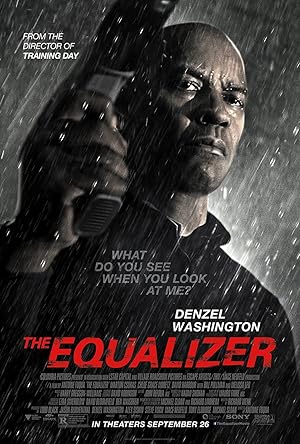
The Equalizer
Robert McCall is a former special service commando who faked his own death in hopes of living out a quiet life. Instead, he comes out of his self-imposed retirement to save a young girl, and finds his desire for justice reawakened after coming face-to-face with members of a brutal Russian gang. McCall becomes the go-to man when the helpless require the kind of vengeance they would never find without his skills.
Despite a moderate budget of $55.0M, The Equalizer became a commercial success, earning $192.3M worldwide—a 250% return.
1 win & 9 nominations


Plot Structure
Story beats plotted across runtime


Narrative Arc
Emotional journey through the story's key moments
Story Circle
Blueprint 15-beat structure
Arcplot Score Breakdown
Weighted: Precision (70%) + Arc (15%) + Theme (15%)
The Equalizer (2014) reveals precise story structure, characteristic of Antoine Fuqua's storytelling approach. This structural analysis examines how the film's 15-point plot structure maps to proven narrative frameworks across 2 hours and 12 minutes. With an Arcplot score of 6.3, the film takes an unconventional approach to traditional narrative frameworks.
Structural Analysis
The Status Quo at 1 minutes (1% through the runtime) establishes Robert McCall wakes in his sparse, meticulously organized apartment, following his rigid daily routine. He is a man living a carefully controlled, solitary existence, haunted by a past he has buried.. Significantly, this early placement immediately immerses viewers in the story world.
The inciting incident occurs at 16 minutes when Teri is brutally beaten by her pimp Slavi and hospitalized. McCall visits her in the hospital, seeing the consequences of the violence she endures under Russian mob control.. At 12% through the film, this Disruption aligns precisely with traditional story structure. This beat shifts the emotional landscape, launching the protagonist into the central conflict.
The First Threshold at 32 minutes marks the transition into Act II, occurring at 24% of the runtime. This indicates the protagonist's commitment to McCall returns to Slavi's office and systematically kills him and his four bodyguards in 28 seconds. He crosses back into his former life as a lethal operative, breaking his promise to his wife., moving from reaction to action.
At 66 minutes, the Midpoint arrives at 50% of the runtime—precisely centered, creating perfect narrative symmetry. Of particular interest, this crucial beat Teddy Rensen, a ruthless "fixer" for the Russian mafia, arrives in Boston to investigate. He traces the killings to the diner and begins hunting McCall, raising the stakes from local criminals to an international organized crime syndicate., fundamentally raising what's at risk. The emotional intensity shifts, dividing the narrative into clear before-and-after phases.
The Collapse moment at 99 minutes (75% through) represents the emotional nadir. Here, Teddy threatens to kill everyone at Home Mart if McCall doesn't surrender. McCall's attempt to live a normal life has endangered innocent people. His past has caught up with him, putting Ralphie and his coworkers in mortal danger., illustrates the protagonist at their lowest point. This beat's placement in the final quarter sets up the climactic reversal.
The Second Threshold at 106 minutes initiates the final act resolution at 80% of the runtime. McCall decides to confront Teddy and the Russians on his own terms. He lures them to Home Mart after hours, transforming the store into his battleground. He fully accepts his role as the Equalizer., demonstrating the transformation achieved throughout the journey.
Emotional Journey
The Equalizer's emotional architecture traces a deliberate progression across 15 carefully calibrated beats.
Narrative Framework
This structural analysis employs proven narrative structure principles that track dramatic progression. By mapping The Equalizer against these established plot points, we can identify how Antoine Fuqua utilizes or subverts traditional narrative conventions. The plot point approach reveals not only adherence to structural principles but also creative choices that distinguish The Equalizer within the action genre.
Antoine Fuqua's Structural Approach
Among the 11 Antoine Fuqua films analyzed on Arcplot, the average structural score is 7.1, reflecting strong command of classical structure. The Equalizer takes a more unconventional approach compared to the director's typical style. For comparative analysis, explore the complete Antoine Fuqua filmography.
Comparative Analysis
Additional action films include The Bad Guys, Puss in Boots and Venom: The Last Dance. For more Antoine Fuqua analyses, see The Equalizer 2, King Arthur and The Equalizer 3.
Plot Points by Act
Act I
SetupStatus Quo
Robert McCall wakes in his sparse, meticulously organized apartment, following his rigid daily routine. He is a man living a carefully controlled, solitary existence, haunted by a past he has buried.
Theme
Teri tells McCall about the book he's reading, "The Old Man and the Sea," and they discuss whether it's possible to change who you are. The theme emerges: can a man escape his violent past and become someone new?
Worldbuilding
McCall's methodical life unfolds: working at Home Mart, helping coworker Ralphie train for security guard certification, reading at the 24-hour diner where he befriends young prostitute Teri. His discipline masks a lethal skill set.
Disruption
Teri is brutally beaten by her pimp Slavi and hospitalized. McCall visits her in the hospital, seeing the consequences of the violence she endures under Russian mob control.
Resistance
McCall wrestles with whether to intervene. He attempts to buy Teri's freedom from Slavi with $9,800, but is mocked and dismissed. His internal debate intensifies as he confronts the promise he made to his late wife to leave his violent past behind.
Act II
ConfrontationFirst Threshold
McCall returns to Slavi's office and systematically kills him and his four bodyguards in 28 seconds. He crosses back into his former life as a lethal operative, breaking his promise to his wife.
Mirror World
McCall continues mentoring Ralphie, helping him study and train. Ralphie represents the positive change McCall can bring through guidance rather than violence, embodying the possibility of redemption through connection.
Premise
McCall becomes a vigilante equalizer, using his skills to help ordinary people victimized by criminals. He takes down corrupt cops extorting a restaurant owner and continues dismantling Slavi's operation while the Russian mob investigates.
Midpoint
Teddy Rensen, a ruthless "fixer" for the Russian mafia, arrives in Boston to investigate. He traces the killings to the diner and begins hunting McCall, raising the stakes from local criminals to an international organized crime syndicate.
Opposition
Teddy systematically hunts McCall, discovering his identity and background. McCall visits his former handler Susan to learn about Teddy. The Russians threaten everyone connected to McCall, including his Home Mart coworkers and Ralphie.
Collapse
Teddy threatens to kill everyone at Home Mart if McCall doesn't surrender. McCall's attempt to live a normal life has endangered innocent people. His past has caught up with him, putting Ralphie and his coworkers in mortal danger.
Crisis
McCall faces the consequences of his choices. He must decide whether to sacrifice himself or find another way. He realizes he cannot run from who he is—he must fully embrace his abilities to protect the innocent.
Act III
ResolutionSecond Threshold
McCall decides to confront Teddy and the Russians on his own terms. He lures them to Home Mart after hours, transforming the store into his battleground. He fully accepts his role as the Equalizer.
Synthesis
McCall uses his intimate knowledge of Home Mart to eliminate the Russian hit squad one by one using improvised weapons from store inventory. He finally confronts and kills Teddy with a nail gun, then travels to Moscow to destroy the crime boss Pushkin.
Transformation
McCall sits in the diner reading, at peace. He opens his laptop to a website offering his services to those in need: "Got a problem? Odds against you? Call the Equalizer." He has transformed from a man hiding from his past to one who embraces his purpose.