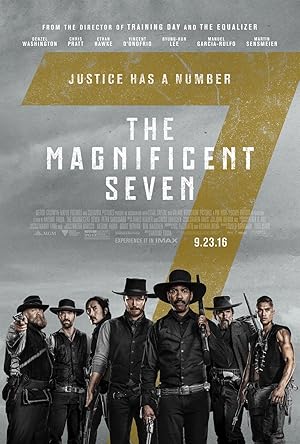
The Magnificent Seven
Director Antoine Fuqua brings his modern vision to a classic story in The Magnificent Seven. With the town of Rose Creek under the deadly control of industrialist Bartholomew Bogue, the desperate townspeople employ protection from seven outlaws, bounty hunters, gamblers and hired guns. As they prepare the town for the violent showdown that they know is coming, these seven mercenaries find themselves fighting for more than money.
Working with a considerable budget of $90.0M, the film achieved a respectable showing with $162.4M in global revenue (+80% profit margin).
5 wins & 12 nominations


Plot Structure
Story beats plotted across runtime


Narrative Arc
Emotional journey through the story's key moments
Story Circle
Blueprint 15-beat structure
Arcplot Score Breakdown
Weighted: Precision (70%) + Arc (15%) + Theme (15%)
The Magnificent Seven (2016) demonstrates precise story structure, characteristic of Antoine Fuqua's storytelling approach. This structural analysis examines how the film's 15-point plot structure maps to proven narrative frameworks across 2 hours and 12 minutes. With an Arcplot score of 7.4, the film balances conventional beats with creative variation.
Structural Analysis
The Status Quo at 2 minutes (2% through the runtime) establishes The mining town of Rose Creek is terrorized by robber baron Bartholomew Bogue, who burns their church and murders innocents to seize their land. The townspeople live in fear and oppression.. Significantly, this early placement immediately immerses viewers in the story world.
The inciting incident occurs at 16 minutes when Emma Cullen approaches Sam Chisolm in a saloon and offers him everything the town has to stop Bogue. She reveals the massacre and pleads for help against impossible odds.. At 12% through the film, this Disruption aligns precisely with traditional story structure. This beat shifts the emotional landscape, launching the protagonist into the central conflict.
The First Threshold at 32 minutes marks the transition into Act II, occurring at 25% of the runtime. This demonstrates the protagonist's commitment to The seven ride into Rose Creek together and make the active choice to confront Bogue's men. In a coordinated action, they kill 22 of Bogue's enforcers and liberate the town, committing fully to the fight., moving from reaction to action.
At 66 minutes, the Midpoint arrives at 50% of the runtime—precisely centered, creating perfect narrative symmetry. Of particular interest, this crucial beat Bogue's advance scout arrives with a small force to assess the town. The seven and townspeople repel them in a fierce battle, seeming victorious. But the scout escapes to report back, and they learn Bogue is coming with an army of 200 men. The stakes become impossibly high., fundamentally raising what's at risk. The emotional intensity shifts, dividing the narrative into clear before-and-after phases.
The Collapse moment at 98 minutes (74% through) represents the emotional nadir. Here, The night before battle, the remaining six face the certainty of death. Sam admits they're probably going to die. The weight of their choice and the impossibility of victory settles over them - a metaphorical death of hope., demonstrates the protagonist at their lowest point. This beat's placement in the final quarter sets up the climactic reversal.
The Second Threshold at 105 minutes initiates the final act resolution at 80% of the runtime. Dawn breaks. Goodnight Robicheaux returns, having conquered his fear, bringing new resolve. "What we lost in the fire, we found in the ashes." The seven are reunited and ride to face Bogue's army with acceptance of their sacrifice., demonstrating the transformation achieved throughout the journey.
Emotional Journey
The Magnificent Seven's emotional architecture traces a deliberate progression across 15 carefully calibrated beats.
Narrative Framework
This structural analysis employs structural analysis methodology used to understand storytelling architecture. By mapping The Magnificent Seven against these established plot points, we can identify how Antoine Fuqua utilizes or subverts traditional narrative conventions. The plot point approach reveals not only adherence to structural principles but also creative choices that distinguish The Magnificent Seven within the action genre.
Antoine Fuqua's Structural Approach
Among the 11 Antoine Fuqua films analyzed on Arcplot, the average structural score is 7.1, reflecting strong command of classical structure. The Magnificent Seven represents one of the director's most structurally precise works. For comparative analysis, explore the complete Antoine Fuqua filmography.
Comparative Analysis
Additional action films include The Bad Guys, Puss in Boots and Venom: The Last Dance. For more Antoine Fuqua analyses, see The Equalizer 2, King Arthur and The Equalizer 3.
Plot Points by Act
Act I
SetupStatus Quo
The mining town of Rose Creek is terrorized by robber baron Bartholomew Bogue, who burns their church and murders innocents to seize their land. The townspeople live in fear and oppression.
Theme
Emma Cullen's husband Matthew tells Bogue "What we have is yours" before being killed. The theme of sacrifice versus greed, and standing up for what's right even at great cost, is established.
Worldbuilding
Emma Cullen and Teddy Q escape Rose Creek after the massacre. We meet Sam Chisolm, a bounty hunter and warrant officer, as he captures fugitives. The world of the Old West, with its violence and rough justice, is established.
Disruption
Emma Cullen approaches Sam Chisolm in a saloon and offers him everything the town has to stop Bogue. She reveals the massacre and pleads for help against impossible odds.
Resistance
Sam initially resists but reveals he has personal history with Bogue. He recruits six other outcasts: gambler Josh Faraday, sharpshooter Goodnight Robicheaux, knife expert Billy Rocks, tracker Jack Horne, Mexican outlaw Vasquez, and Comanche warrior Red Harvest. Each has their own reasons and doubts.
Act II
ConfrontationFirst Threshold
The seven ride into Rose Creek together and make the active choice to confront Bogue's men. In a coordinated action, they kill 22 of Bogue's enforcers and liberate the town, committing fully to the fight.
Mirror World
The seven begin training the townspeople to fight. Emma Cullen emerges as a fierce partner who embodies the courage and sacrifice the story explores. The relationship between the mercenaries and the community deepens.
Premise
The promise of the premise: seven gunslingers training ordinary people to fight. Fortifications are built, bonds form between the seven and the townspeople. Camaraderie, humor, and preparation sequences deliver the classic Western appeal.
Midpoint
Bogue's advance scout arrives with a small force to assess the town. The seven and townspeople repel them in a fierce battle, seeming victorious. But the scout escapes to report back, and they learn Bogue is coming with an army of 200 men. The stakes become impossibly high.
Opposition
The seven realize they're likely riding to their deaths. Some townspeople flee. Goodnight Robicheaux, traumatized from the Civil War, abandons the group out of fear. Sam reveals his personal vendetta: Bogue murdered his family. Tension and doubt fracture the unity.
Collapse
The night before battle, the remaining six face the certainty of death. Sam admits they're probably going to die. The weight of their choice and the impossibility of victory settles over them - a metaphorical death of hope.
Crisis
The dark night before battle. Each member contemplates their fate. Goodnight rides alone in the wilderness, wrestling with his cowardice and trauma. The seven prepare their souls for what's coming.
Act III
ResolutionSecond Threshold
Dawn breaks. Goodnight Robicheaux returns, having conquered his fear, bringing new resolve. "What we lost in the fire, we found in the ashes." The seven are reunited and ride to face Bogue's army with acceptance of their sacrifice.
Synthesis
The climactic battle. Bogue's army of 200 attacks Rose Creek. Through strategy, courage, and sacrifice, the seven and townspeople fight back. Faraday, Robicheaux, Horne, Billy, and Vasquez die heroically. Sam kills Bogue in single combat. The town is saved at tremendous cost.
Transformation
The three survivors - Sam, Red Harvest, and Vasquez - ride away as the townspeople rebuild. Emma and the town are free, transformed from victims to defenders of their home. The seven are remembered not as mercenaries but as heroes who chose sacrifice over self-interest.