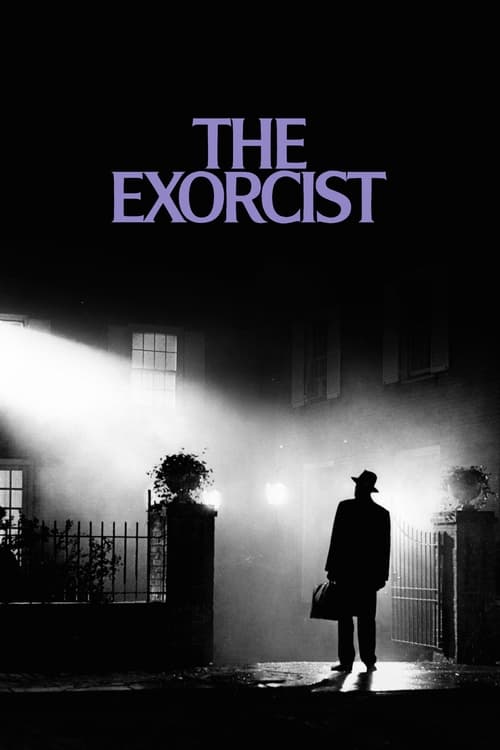
The Exorcist
When a mysterious entity possesses a young girl, her mother seeks the help of two Catholic priests to save her life.
Despite its small-scale budget of $12.0M, The Exorcist became a massive hit, earning $441.3M worldwide—a remarkable 3578% return. The film's distinctive approach connected with viewers, illustrating how strong storytelling can transcend budget limitations.
2 Oscars. 18 wins & 21 nominations


Plot Structure
Story beats plotted across runtime


Narrative Arc
Emotional journey through the story's key moments
Story Circle
Blueprint 15-beat structure
Characters
Cast & narrative archetypes

Father Damien Karras
Regan MacNeil
Chris MacNeil
Father Lankester Merrin
Lieutenant William Kinderman
Main Cast & Characters
Father Damien Karras
Played by Jason Miller
A Jesuit psychiatrist struggling with faith who becomes central to Regan's exorcism.
Regan MacNeil
Played by Linda Blair
A 12-year-old girl who becomes possessed by a demonic entity.
Chris MacNeil
Played by Ellen Burstyn
A famous actress and Regan's mother who desperately seeks help for her daughter.
Father Lankester Merrin
Played by Max von Sydow
An elderly exorcist priest with experience battling demonic forces.
Lieutenant William Kinderman
Played by Lee J. Cobb
A detective investigating the death of Burke Dennings.
Structural Analysis
The Status Quo at 1 minutes (1% through the runtime) establishes Father Merrin at the archaeological dig in Iraq unearths a demonic artifact - the Pazuzu amulet. The discovery portends an ancient evil awakening, establishing dread before we meet our protagonists.. The analysis reveals that this early placement immediately immerses viewers in the story world.
The inciting incident occurs at 15 minutes when Regan plays with a Ouija board and makes contact with "Captain Howdy." This seemingly innocent moment marks the demon's first intrusion into their lives, disrupting the MacNeil household's normalcy.. At 12% through the film, this Disruption aligns precisely with traditional story structure. This beat shifts the emotional landscape, launching the protagonist into the central conflict.
The First Threshold at 31 minutes marks the transition into Act II, occurring at 25% of the runtime. This reveals the protagonist's commitment to After exhausting all medical options and witnessing Regan's terrifying transformation - including the crucifix scene - Chris makes the desperate choice to seek help from the Church. She approaches Father Karras about an exorcism., moving from reaction to action.
At 61 minutes, the Midpoint arrives at 50% of the runtime—precisely centered, creating perfect narrative symmetry. Structural examination shows that this crucial beat Karras submits his request for an exorcism to the Church. The Bishop approves but assigns Father Merrin to lead. This false victory - getting permission - actually raises the stakes as we learn Merrin has encountered this demon before and barely survived., fundamentally raising what's at risk. The emotional intensity shifts, dividing the narrative into clear before-and-after phases.
The Collapse moment at 92 minutes (75% through) represents the emotional nadir. Here, Father Merrin dies of heart failure during the exorcism, leaving Karras alone to face the demon. The mentor is gone, hope seems lost, and the doubting priest must somehow find the faith to continue without guidance., illustrates the protagonist at their lowest point. This beat's placement in the final quarter sets up the climactic reversal.
The Second Threshold at 98 minutes initiates the final act resolution at 80% of the runtime. In a moment of desperate faith, Karras challenges the demon directly: "Take me! Come into me!" He chooses to sacrifice himself to save Regan - his doubt transforms into action through love and self-sacrifice., demonstrating the transformation achieved throughout the journey.
Emotional Journey
The Exorcist's emotional architecture traces a deliberate progression across 15 carefully calibrated beats.
Narrative Framework
This structural analysis employs systematic plot point analysis that identifies crucial turning points. By mapping The Exorcist against these established plot points, we can identify how William Friedkin utilizes or subverts traditional narrative conventions. The plot point approach reveals not only adherence to structural principles but also creative choices that distinguish The Exorcist within the horror genre.
William Friedkin's Structural Approach
Among the 10 William Friedkin films analyzed on Arcplot, the average structural score is 7.2, reflecting strong command of classical structure. The Exorcist exemplifies the director's characteristic narrative technique. For comparative analysis, explore the complete William Friedkin filmography.
Comparative Analysis
Additional horror films include Thinner, A Nightmare on Elm Street and Mary Reilly. For more William Friedkin analyses, see Cruising, Sorcerer and Jade.
Plot Points by Act
Act I
SetupStatus Quo
Father Merrin at the archaeological dig in Iraq unearths a demonic artifact - the Pazuzu amulet. The discovery portends an ancient evil awakening, establishing dread before we meet our protagonists.
Theme
Merrin's Iraqi colleague warns him about the statue: "Evil against evil." The theme of spiritual warfare and the necessity of faith to combat darkness is established through this ominous exchange.
Worldbuilding
We meet Chris MacNeil, a successful actress filming in Georgetown, and her daughter Regan. Father Karras is introduced as a Jesuit psychiatrist struggling with his faith after his mother's illness. Normal domestic life is established alongside Karras's spiritual doubt.
Disruption
Regan plays with a Ouija board and makes contact with "Captain Howdy." This seemingly innocent moment marks the demon's first intrusion into their lives, disrupting the MacNeil household's normalcy.
Resistance
Regan's behavior becomes increasingly disturbing - her bed shakes violently, she speaks in strange voices. Chris consults doctors and psychiatrists who find no medical explanation. Meanwhile, Karras tends to his dying mother and grapples with guilt and failing faith.
Act II
ConfrontationFirst Threshold
After exhausting all medical options and witnessing Regan's terrifying transformation - including the crucifix scene - Chris makes the desperate choice to seek help from the Church. She approaches Father Karras about an exorcism.
Mirror World
Karras visits the possessed Regan for the first time. The demon speaks in his dead mother's voice, attacking his deepest wound. This encounter forces Karras to confront his crisis of faith - the spiritual battle mirrors his internal struggle.
Premise
Karras investigates the possession, documenting Regan's supernatural abilities - speaking in tongues, impossible physical contortions, knowledge of hidden things. He struggles between his psychiatric training and mounting evidence of genuine demonic possession.
Midpoint
Karras submits his request for an exorcism to the Church. The Bishop approves but assigns Father Merrin to lead. This false victory - getting permission - actually raises the stakes as we learn Merrin has encountered this demon before and barely survived.
Opposition
The exorcism begins. Merrin and Karras perform the ritual while the demon fights back with horrifying power - projectile vomiting, levitation, 360-degree head rotation. The demon psychologically tortures both priests, exploiting Karras's guilt over his mother and testing Merrin's aging body.
Collapse
Father Merrin dies of heart failure during the exorcism, leaving Karras alone to face the demon. The mentor is gone, hope seems lost, and the doubting priest must somehow find the faith to continue without guidance.
Crisis
Karras attempts CPR on Merrin but it's too late. The demon mocks him, laughing at his failure. Karras is overwhelmed by grief, rage, and despair - his faith seemingly shattered completely at the moment he needs it most.
Act III
ResolutionSecond Threshold
In a moment of desperate faith, Karras challenges the demon directly: "Take me! Come into me!" He chooses to sacrifice himself to save Regan - his doubt transforms into action through love and self-sacrifice.
Synthesis
The demon enters Karras. For a moment he begins to strangle Regan, but he regains control just long enough to throw himself through the window. He tumbles down the infamous Georgetown steps, mortally wounded but successful in expelling the demon from Regan.
Transformation
Father Dyer gives last rites to the dying Karras, who squeezes his hand in acknowledgment. Regan, restored and innocent, has no memory of her ordeal. She kisses Father Dyer's collar before leaving Georgetown - an unconscious recognition of the faith that saved her.