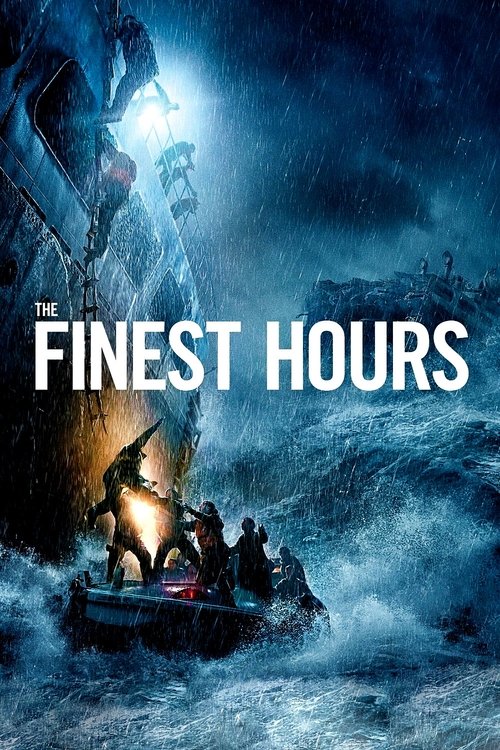
The Finest Hours
The Coast Guard makes a daring rescue attempt off the coast of Cape Cod after a pair of oil tankers are destroyed during a blizzard in 1952.
The film struggled financially against its substantial budget of $80.0M, earning $52.1M globally (-35% loss). While initial box office returns were modest, the film has gained appreciation for its compelling narrative within the action genre.


Plot Structure
Story beats plotted across runtime


Narrative Arc
Emotional journey through the story's key moments
Story Circle
Blueprint 15-beat structure
Arcplot Score Breakdown
Weighted: Precision (70%) + Arc (15%) + Theme (15%)
The Finest Hours (2016) exemplifies carefully calibrated narrative architecture, characteristic of Craig Gillespie's storytelling approach. This structural analysis examines how the film's 15-point plot structure maps to proven narrative frameworks across 1 hour and 57 minutes. With an Arcplot score of 7.4, the film balances conventional beats with creative variation.
Characters
Cast & narrative archetypes

Bernie Webber
Miriam Webber
Ray Sybert
Daniel Cluff
Richard Livesey
Andy Fitzgerald
Ervin Maske
Main Cast & Characters
Bernie Webber
Played by Chris Pine
A Coast Guard boatswain's mate who leads a daring rescue mission during a devastating nor'easter in 1952.
Miriam Webber
Played by Holliday Grainger
Bernie's fiancée who fights bureaucracy on shore to ensure the rescue mission launches despite opposition.
Ray Sybert
Played by Casey Affleck
The chief engineer aboard the SS Pendleton who takes charge after the tanker splits in two during the storm.
Daniel Cluff
Played by Eric Bana
A by-the-book Coast Guard officer who initially opposes the rescue mission as too dangerous.
Richard Livesey
Played by Ben Foster
A Coast Guard crewman who volunteers for the dangerous rescue mission with Bernie.
Andy Fitzgerald
Played by Kyle Gallner
A young Coast Guard crewman who joins the rescue mission despite his inexperience.
Ervin Maske
Played by John Magaro
A Coast Guard crewman who volunteers for Bernie's rescue crew.
Structural Analysis
The Status Quo at 1 minutes (1% through the runtime) establishes Bernie Webber and Miriam meet awkwardly at a dance in Chatham, Massachusetts. Bernie is shy and rule-following, setting up his character as someone who lacks confidence in his own judgment.. Structural examination shows that this early placement immediately immerses viewers in the story world.
The inciting incident occurs at 14 minutes when A massive nor'easter storm splits the oil tanker SS Pendleton in half, trapping over 30 men in the stern section. The crew realizes they are stranded in freezing waters with the ship sinking. Simultaneously, another tanker, the Fort Mercer, also breaks apart.. At 12% through the film, this Disruption aligns precisely with traditional story structure. This beat shifts the emotional landscape, launching the protagonist into the central conflict.
The First Threshold at 29 minutes marks the transition into Act II, occurring at 25% of the runtime. This indicates the protagonist's commitment to Bernie and his three-man crew launch the CG 36500 lifeboat across the treacherous Chatham Bar in near-impossible conditions. Despite knowing this could be a suicide mission, Bernie chooses to go. They barely survive crossing the bar, losing their compass in the process., moving from reaction to action.
At 59 minutes, the Midpoint arrives at 50% of the runtime—precisely centered, creating perfect narrative symmetry. Notably, this crucial beat Bernie's crew spots the Pendleton's lights through the storm - they've found the wreck against all odds. This false victory gives hope, but the real challenge of actually rescuing 32 men in a boat designed for 12 still lies ahead. Ray has successfully beached the stern on a shoal, buying time., fundamentally raising what's at risk. The emotional intensity shifts, dividing the narrative into clear before-and-after phases.
The Collapse moment at 88 minutes (75% through) represents the emotional nadir. Here, Tiny Myers, a beloved crew member who had helped others escape, falls into the sea and is lost to the freezing waters. His death devastates both crews. The Pendleton begins to break apart completely, and Bernie's overloaded boat is taking on water with 32 survivors aboard - far exceeding capacity., indicates the protagonist at their lowest point. This beat's placement in the final quarter sets up the climactic reversal.
The Second Threshold at 94 minutes initiates the final act resolution at 80% of the runtime. Bernie realizes he must trust his instincts to navigate home without instruments. A survivor who knows the waters helps him remember the sounds and patterns of the sea. Bernie synthesizes his seamanship with newfound self-trust, deciding to navigate by feeling the waves and listening to the ocean., demonstrating the transformation achieved throughout the journey.
Emotional Journey
The Finest Hours's emotional architecture traces a deliberate progression across 15 carefully calibrated beats.
Narrative Framework
This structural analysis employs systematic plot point analysis that identifies crucial turning points. By mapping The Finest Hours against these established plot points, we can identify how Craig Gillespie utilizes or subverts traditional narrative conventions. The plot point approach reveals not only adherence to structural principles but also creative choices that distinguish The Finest Hours within the action genre.
Craig Gillespie's Structural Approach
Among the 8 Craig Gillespie films analyzed on Arcplot, the average structural score is 7.2, reflecting strong command of classical structure. The Finest Hours represents one of the director's most structurally precise works. For comparative analysis, explore the complete Craig Gillespie filmography.
Comparative Analysis
Additional action films include The Bad Guys, Puss in Boots and Venom: The Last Dance. For more Craig Gillespie analyses, see Fright Night, Dumb Money and I, Tonya.
Plot Points by Act
Act I
SetupStatus Quo
Bernie Webber and Miriam meet awkwardly at a dance in Chatham, Massachusetts. Bernie is shy and rule-following, setting up his character as someone who lacks confidence in his own judgment.
Theme
Miriam tells Bernie that sometimes you have to do what you know is right, not just what you're told. This establishes the theme of trusting your own judgment over blind obedience to authority.
Worldbuilding
The world of 1952 Cape Cod is established: the tight-knit Coast Guard station, Bernie's relationship with Miriam developing, the harsh winter conditions, and Bernie's reputation being questioned after a previous failed rescue attempt. The crew dynamics and chain of command are shown.
Disruption
A massive nor'easter storm splits the oil tanker SS Pendleton in half, trapping over 30 men in the stern section. The crew realizes they are stranded in freezing waters with the ship sinking. Simultaneously, another tanker, the Fort Mercer, also breaks apart.
Resistance
Coast Guard scrambles to respond to both disasters with limited resources. Bernie debates whether to propose to Miriam. Chief Warrant Officer Cluff orders Bernie to take a small boat across the bar in impossible conditions. Bernie questions the order but prepares to follow it. Ray Sybert emerges as leader on the Pendleton, organizing the terrified crew.
Act II
ConfrontationFirst Threshold
Bernie and his three-man crew launch the CG 36500 lifeboat across the treacherous Chatham Bar in near-impossible conditions. Despite knowing this could be a suicide mission, Bernie chooses to go. They barely survive crossing the bar, losing their compass in the process.
Mirror World
Miriam, defying social conventions of the era, drives to the Coast Guard station to demand answers about Bernie's mission. Her courage and determination to fight for the man she loves mirrors the theme of trusting one's own judgment over what's expected.
Premise
The dual rescue narrative unfolds: Bernie's crew battles massive waves in their tiny lifeboat, navigating by instinct without a compass. On the Pendleton, Ray Sybert uses his engineering knowledge to keep the stern afloat and steerable. Both leaders must earn the trust of skeptical crews while facing impossible odds.
Midpoint
Bernie's crew spots the Pendleton's lights through the storm - they've found the wreck against all odds. This false victory gives hope, but the real challenge of actually rescuing 32 men in a boat designed for 12 still lies ahead. Ray has successfully beached the stern on a shoal, buying time.
Opposition
The rescue operation faces mounting obstacles: waves threaten to crush the lifeboat against the tanker, the Pendleton crew panics during evacuation, one man falls into the freezing water and nearly dies. Bernie must make repeated dangerous approaches to the ship. The town watches helplessly as conditions worsen.
Collapse
Tiny Myers, a beloved crew member who had helped others escape, falls into the sea and is lost to the freezing waters. His death devastates both crews. The Pendleton begins to break apart completely, and Bernie's overloaded boat is taking on water with 32 survivors aboard - far exceeding capacity.
Crisis
With Tiny's death weighing on everyone and the boat dangerously overloaded, Bernie faces the impossible journey back. He has no compass, no way to see through the storm, and a boat that could capsize at any moment. The men huddle together, some praying, all wondering if they'll survive.
Act III
ResolutionSecond Threshold
Bernie realizes he must trust his instincts to navigate home without instruments. A survivor who knows the waters helps him remember the sounds and patterns of the sea. Bernie synthesizes his seamanship with newfound self-trust, deciding to navigate by feeling the waves and listening to the ocean.
Synthesis
Bernie navigates blindly through the storm, trusting his instincts. The entire town of Chatham gathers at the shore with car headlights to guide them in. The overloaded lifeboat crosses the bar successfully. All 32 Pendleton survivors are brought safely to shore in what becomes the greatest small-boat rescue in Coast Guard history.
Transformation
Bernie reunites with Miriam on the dock as the town celebrates. He is no longer the timid man who needed permission for everything - he trusted himself when it mattered most. Text epilogue reveals Bernie and Miriam married and he received the Gold Lifesaving Medal, becoming a Coast Guard legend.