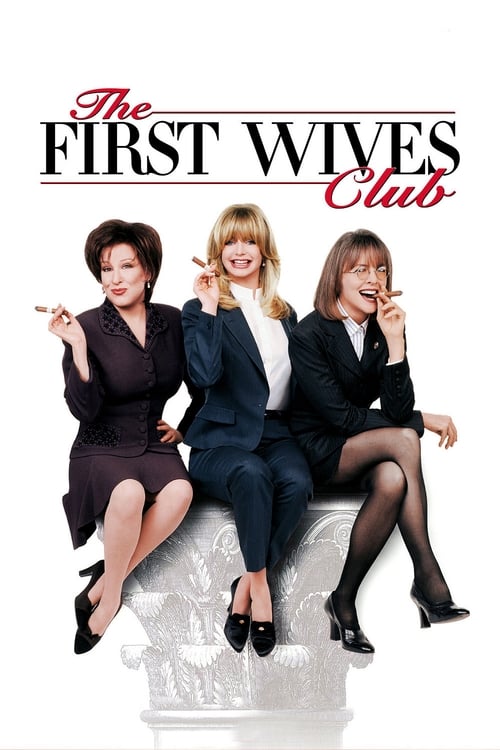
The First Wives Club
After years of helping their hubbies climb the ladder of success, three mid-life Manhattanites have been dumped for a newer, curvier model. But the trio is determined to turn their pain into gain. They come up with a cleverly devious plan to hit their exes where it really hurts - in the wallet!
Despite a respectable budget of $26.0M, The First Wives Club became a solid performer, earning $116.4M worldwide—a 348% return.
Nominated for 1 Oscar. 3 wins & 8 nominations


Plot Structure
Story beats plotted across runtime


Narrative Arc
Emotional journey through the story's key moments
Story Circle
Blueprint 15-beat structure
Arcplot Score Breakdown
Weighted: Precision (70%) + Arc (15%) + Theme (15%)
The First Wives Club (1996) exhibits deliberately positioned dramatic framework, characteristic of Hugh Wilson's storytelling approach. This structural analysis examines how the film's 15-point plot structure maps to proven narrative frameworks across 1 hour and 42 minutes. With an Arcplot score of 7.1, the film balances conventional beats with creative variation.
Characters
Cast & narrative archetypes

Annie MacDuggan
Brenda Morelli Cushman
Elise Elliot
Aaron Pardis
Morty Cushman
Bill Atchison
Cynthia Swann Griffin
Main Cast & Characters
Annie MacDuggan
Played by Diane Keaton
A timid, repressed interior designer dumped by her husband for a younger woman. Transforms from doormat to empowered woman seeking justice.
Brenda Morelli Cushman
Played by Bette Midler
A dowdy housewife abandoned by her electronics mogul husband after years of supporting his career. The emotional heart who reconnects the group.
Elise Elliot
Played by Goldie Hawn
A fading alcoholic movie star desperately clinging to youth, replaced by her producer husband for a younger actress. The most outwardly glamorous but deeply insecure.
Aaron Pardis
Played by Stephen Collins
Annie's ex-husband, an advertising executive who left her for his young client. Represents the entitled, unfaithful husband archetype.
Morty Cushman
Played by Dan Hedaya
Brenda's ex-husband, an electronics magnate who abandoned her for a younger woman after she supported him through college and his rise to wealth.
Bill Atchison
Played by Victor Garber
Elise's ex-husband, a Hollywood producer who replaced her with a younger actress. Cold and dismissive of Elise's contributions to his success.
Cynthia Swann Griffin
Played by Stockard Channing
The fourth member of their college group whose suicide at the film's opening catalyzes the reunion of the three main characters.
Structural Analysis
The Status Quo at 1 minutes (1% through the runtime) establishes 1969 graduation ceremony at Middlebury College. Four best friends - Annie, Brenda, Elise, and Cynthia - celebrate their futures together, full of hope and sisterhood. They vow to always be there for each other no matter what.. Of particular interest, this early placement immediately immerses viewers in the story world.
The inciting incident occurs at 11 minutes when Cynthia Swann Griffin jumps to her death from her penthouse apartment after her husband leaves her for a younger woman. Her suicide note explicitly blames her ex-husband, and this death reunites the three estranged friends at her funeral.. At 11% through the film, this Disruption aligns precisely with traditional story structure. This beat shifts the emotional landscape, launching the protagonist into the central conflict.
The First Threshold at 25 minutes marks the transition into Act II, occurring at 24% of the runtime. This reveals the protagonist's commitment to The three women make a pact at Cynthia's apartment. Inspired by her death and her earlier advice to "get everything," they actively choose to form the First Wives Club and seek revenge against their ex-husbands. Annie declares: "We're not just a club, we're a union!"., moving from reaction to action.
At 50 minutes, the Midpoint arrives at 49% of the runtime—precisely centered, creating perfect narrative symmetry. Notably, this crucial beat The women execute a coordinated strike against all three husbands simultaneously. They publicly humiliate them at key moments - disrupting Morty's business deal, exposing Bill's fraud, and sabotaging Elise's ex-husband's commercial. It seems like total victory - they've won!., fundamentally raising what's at risk. The emotional intensity shifts, dividing the narrative into clear before-and-after phases.
The Collapse moment at 75 minutes (73% through) represents the emotional nadir. Here, The First Wives Club falls apart. The women have a devastating fight where old resentments surface and they turn on each other viciously. They disband the club, and each woman is left alone, seemingly defeated. Their friendship - the one thing that gave them strength - is dead., demonstrates the protagonist at their lowest point. This beat's placement in the final quarter sets up the climactic reversal.
The Second Threshold at 81 minutes initiates the final act resolution at 80% of the runtime. The women reunite and reconcile. They realize the answer isn't just revenge - it's using their power to help other women. They synthesize Cynthia's lesson: channel their anger into creating something positive. They hatch a new plan that will defeat their exes AND create lasting change., demonstrating the transformation achieved throughout the journey.
Emotional Journey
The First Wives Club's emotional architecture traces a deliberate progression across 15 carefully calibrated beats.
Narrative Framework
This structural analysis employs structural analysis methodology used to understand storytelling architecture. By mapping The First Wives Club against these established plot points, we can identify how Hugh Wilson utilizes or subverts traditional narrative conventions. The plot point approach reveals not only adherence to structural principles but also creative choices that distinguish The First Wives Club within the comedy genre.
Hugh Wilson's Structural Approach
Among the 5 Hugh Wilson films analyzed on Arcplot, the average structural score is 7.1, reflecting strong command of classical structure. The First Wives Club exemplifies the director's characteristic narrative technique. For comparative analysis, explore the complete Hugh Wilson filmography.
Comparative Analysis
Additional comedy films include The Bad Guys, Ella Enchanted and The Evening Star. For more Hugh Wilson analyses, see Blast from the Past, Dudley Do-Right and Guarding Tess.
Plot Points by Act
Act I
SetupStatus Quo
1969 graduation ceremony at Middlebury College. Four best friends - Annie, Brenda, Elise, and Cynthia - celebrate their futures together, full of hope and sisterhood. They vow to always be there for each other no matter what.
Theme
At the reunion, Cynthia tells the women: "Don't get mad, get everything." This casual remark about divorce and revenge becomes the story's central philosophy - women reclaiming their power from men who discarded them.
Worldbuilding
Present day 1996. We meet the women in their current lives: Annie is a depressed housewife abandoned by her husband, Brenda is dominated by her unfaithful husband Morty, and Elise is an aging actress fighting to stay relevant. All three have been diminished by their marriages and the passage of time.
Disruption
Cynthia Swann Griffin jumps to her death from her penthouse apartment after her husband leaves her for a younger woman. Her suicide note explicitly blames her ex-husband, and this death reunites the three estranged friends at her funeral.
Resistance
At Cynthia's funeral and wake, the three women reconnect and share their stories of marital betrayal. They debate whether they should do something or just accept their fates. They discover they're all victims of the same pattern - successful men trading them in for younger women.
Act II
ConfrontationFirst Threshold
The three women make a pact at Cynthia's apartment. Inspired by her death and her earlier advice to "get everything," they actively choose to form the First Wives Club and seek revenge against their ex-husbands. Annie declares: "We're not just a club, we're a union!"
Mirror World
The women begin working with Cynthia's daughter and meet other discarded wives. This network of women becomes their support system and thematic mirror - showing them that sisterhood and female solidarity is the answer to male betrayal and society's devaluation of aging women.
Premise
The fun revenge portion. The women dig up dirt on their exes, sabotage their businesses and relationships, and discover their own power. Elise manipulates her producer ex-husband, Brenda confronts Morty's infidelity, and Annie gains confidence. They enjoy their growing strength and friendship.
Midpoint
The women execute a coordinated strike against all three husbands simultaneously. They publicly humiliate them at key moments - disrupting Morty's business deal, exposing Bill's fraud, and sabotaging Elise's ex-husband's commercial. It seems like total victory - they've won!
Opposition
The husbands fight back hard. They hire lawyers, threaten the women financially and legally, and try to turn them against each other. Internal conflicts arise as the women's different goals clash. Annie is tempted to reconcile, Brenda faces losing everything, and Elise's career hangs by a thread.
Collapse
The First Wives Club falls apart. The women have a devastating fight where old resentments surface and they turn on each other viciously. They disband the club, and each woman is left alone, seemingly defeated. Their friendship - the one thing that gave them strength - is dead.
Crisis
Each woman separately hits rock bottom and processes what they've lost. They realize that their revenge was less important than their friendship, and that they've betrayed Cynthia's real message. In their darkest moments, they each gain clarity about what truly matters.
Act III
ResolutionSecond Threshold
The women reunite and reconcile. They realize the answer isn't just revenge - it's using their power to help other women. They synthesize Cynthia's lesson: channel their anger into creating something positive. They hatch a new plan that will defeat their exes AND create lasting change.
Synthesis
The finale. The women execute their master plan - they blackmail their husbands into funding a crisis center for abused and discarded women, turning the Cynthia Griffin Center into a reality. They confront each husband, reclaim their dignity, and win on their own terms with grace and power.
Transformation
The grand opening of the Cynthia Griffin Center. The three women stand together, powerful and transformed, celebrating with dozens of other women they've helped. Unlike the opening image of naive young women, they are now wise, strong, and genuinely there for each other - and for all women.