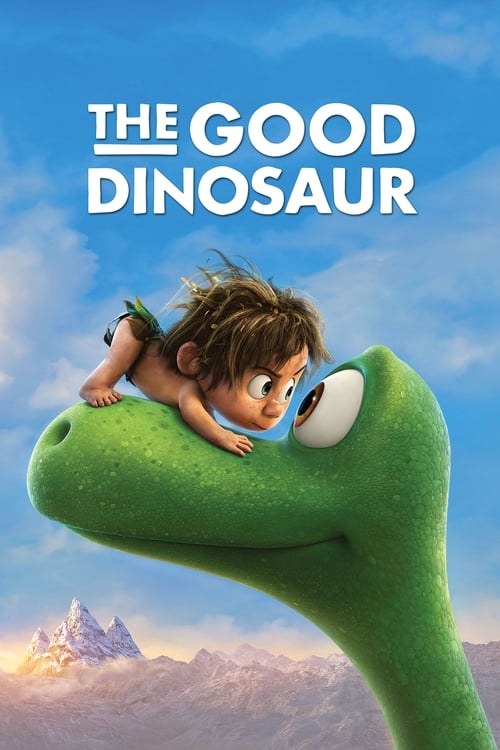
The Good Dinosaur
An epic journey into the world of dinosaurs where an Apatosaurus named Arlo makes an unlikely human friend.
Working with a enormous budget of $175.0M, the film achieved a steady performer with $332.2M in global revenue (+90% profit margin).
9 wins & 41 nominations


Plot Structure
Story beats plotted across runtime


Narrative Arc
Emotional journey through the story's key moments
Story Circle
Blueprint 15-beat structure
Arcplot Score Breakdown
Weighted: Precision (70%) + Arc (15%) + Theme (15%)
The Good Dinosaur (2015) reveals meticulously timed narrative design, characteristic of Peter Sohn's storytelling approach. This structural analysis examines how the film's 15-point plot structure maps to proven narrative frameworks across 1 hour and 33 minutes. With an Arcplot score of 7.5, the film showcases strong structural fundamentals.
Characters
Cast & narrative archetypes

Arlo
Spot
Poppa Henry
Momma Ida
Buck
Libby
Butch
Ramsey
Nash
Main Cast & Characters
Arlo
Played by Raymond Ochoa
A young, fearful Apatosaurus who must find his way home after being separated from his family.
Spot
Played by Jack Bright
A feral human boy who becomes Arlo's companion and friend on the journey home.
Poppa Henry
Played by Jeffrey Wright
Arlo's father, a strong and wise Apatosaurus who teaches his children about making their mark.
Momma Ida
Played by Frances McDormand
Arlo's loving and resilient mother who guides the family after tragedy strikes.
Buck
Played by Marcus Scribner
Arlo's older brother, strong and confident, who easily accomplishes his tasks.
Libby
Played by Maleah Nipay-Padilla
Arlo's older sister, energetic and capable, who finds her place quickly.
Butch
Played by Sam Elliott
A tough T-Rex rancher who teaches Arlo about facing fears and finding inner strength.
Ramsey
Played by Anna Paquin
Butch's daughter, a skilled and confident T-Rex who helps Arlo on his journey.
Nash
Played by A.J. Buckley
Butch's son, an enthusiastic young T-Rex who assists in herding longhorns.
Structural Analysis
The Status Quo at 1 minutes (1% through the runtime) establishes Arlo hatches as the smallest of three dinosaur siblings on a frontier farm. His siblings easily complete tasks while he struggles, establishing his fearful nature and desire to "make his mark" on the family silo.. Of particular interest, this early placement immediately immerses viewers in the story world.
The inciting incident occurs at 11 minutes when Arlo discovers the critter is a human boy but cannot bring himself to kill him. He frees the boy from the trap instead, disappointing Poppa. This failure sets in motion the tragic events to come.. At 11% through the film, this Disruption aligns precisely with traditional story structure. This beat shifts the emotional landscape, launching the protagonist into the central conflict.
The First Threshold at 22 minutes marks the transition into Act II, occurring at 24% of the runtime. This demonstrates the protagonist's commitment to Arlo spots the critter near the silo and, filled with rage and grief, chases him into the wilderness. He attacks the boy, but they both fall into a raging river. Arlo is swept far from home, beginning his journey in an unfamiliar world., moving from reaction to action.
At 48 minutes, the Midpoint arrives at 51% of the runtime—precisely centered, creating perfect narrative symmetry. Structural examination shows that this crucial beat Arlo and Spot encounter Butch and his T-Rex children who are searching for their stolen longhorns. Arlo helps them track rustlers using his keen sense of smell, successfully locating the herd. Butch praises Arlo, giving him his first taste of confidence and belonging., fundamentally raising what's at risk. The emotional intensity shifts, dividing the narrative into clear before-and-after phases.
The Collapse moment at 69 minutes (74% through) represents the emotional nadir. Here, A massive storm strikes—the same kind that killed Poppa. Arlo panics and freezes in terror. Spot is swept away in the flood. Arlo, paralyzed by his fear, cannot save him. He believes he has lost Spot just as he lost Poppa, hitting his emotional low point., indicates the protagonist at their lowest point. This beat's placement in the final quarter sets up the climactic reversal.
The Second Threshold at 74 minutes initiates the final act resolution at 80% of the runtime. Pterodactyls attack and carry Spot away. Arlo, remembering Poppa's words about seeing beauty on the other side of fear, charges after them. This is his active choice to be brave—not for himself, but for someone he loves. He embraces his fear to save Spot., demonstrating the transformation achieved throughout the journey.
Emotional Journey
The Good Dinosaur's emotional architecture traces a deliberate progression across 15 carefully calibrated beats.
Narrative Framework
This structural analysis employs systematic plot point analysis that identifies crucial turning points. By mapping The Good Dinosaur against these established plot points, we can identify how Peter Sohn utilizes or subverts traditional narrative conventions. The plot point approach reveals not only adherence to structural principles but also creative choices that distinguish The Good Dinosaur within the adventure genre.
Peter Sohn's Structural Approach
Among the 2 Peter Sohn films analyzed on Arcplot, the average structural score is 7.1, reflecting strong command of classical structure. The Good Dinosaur represents one of the director's most structurally precise works. For comparative analysis, explore the complete Peter Sohn filmography.
Comparative Analysis
Additional adventure films include The Black Stallion, The Bad Guys and Puss in Boots. For more Peter Sohn analyses, see Elemental.
Plot Points by Act
Act I
SetupStatus Quo
Arlo hatches as the smallest of three dinosaur siblings on a frontier farm. His siblings easily complete tasks while he struggles, establishing his fearful nature and desire to "make his mark" on the family silo.
Theme
Poppa tells Arlo: "Sometimes you gotta get through your fear to see the beauty on the other side." This encapsulates the film's central theme about courage requiring us to face our fears rather than avoid them.
Worldbuilding
Life on the farm is established. Arlo's siblings Buck and Libby earn their marks by completing important tasks. Arlo fails at multiple jobs. Poppa gives him a special task—guarding the corn silo from a critter—hoping to help him overcome his fears and earn his mark.
Disruption
Arlo discovers the critter is a human boy but cannot bring himself to kill him. He frees the boy from the trap instead, disappointing Poppa. This failure sets in motion the tragic events to come.
Resistance
Poppa takes Arlo on a journey to track the critter and face his fear. During a storm, Poppa protects Arlo from rising floodwaters. A massive wave sweeps Poppa away, killing him. Arlo blames himself and the critter for his father's death.
Act II
ConfrontationFirst Threshold
Arlo spots the critter near the silo and, filled with rage and grief, chases him into the wilderness. He attacks the boy, but they both fall into a raging river. Arlo is swept far from home, beginning his journey in an unfamiliar world.
Mirror World
After initial hostility, Arlo and the critter (whom he names Spot) begin bonding. Spot brings Arlo berries and demonstrates survival skills. Their relationship begins—Spot represents the courage and instinctive fearlessness Arlo lacks.
Premise
Arlo and Spot journey homeward through various adventures: encountering Forrest Woodbush and his pets, getting caught in a storm, meeting a Styracosaurus who teaches about facing fear, and hallucinating together after eating fermented fruit. Their bond deepens.
Midpoint
Arlo and Spot encounter Butch and his T-Rex children who are searching for their stolen longhorns. Arlo helps them track rustlers using his keen sense of smell, successfully locating the herd. Butch praises Arlo, giving him his first taste of confidence and belonging.
Opposition
The group battles Velociraptors to reclaim the longhorns. Arlo uses his fear constructively, completing the mission. Butch shares how he lost his family and found a new one, planting seeds about letting go. A storm approaches, triggering Arlo's trauma about losing Poppa.
Collapse
A massive storm strikes—the same kind that killed Poppa. Arlo panics and freezes in terror. Spot is swept away in the flood. Arlo, paralyzed by his fear, cannot save him. He believes he has lost Spot just as he lost Poppa, hitting his emotional low point.
Crisis
Arlo despairs, believing Spot is dead and that he is too weak to survive. He finds Spot alive but injured. Just then, a human family appears calling for Spot. Arlo realizes Spot could have a family—a real home. He must choose between his need and what's right for Spot.
Act III
ResolutionSecond Threshold
Pterodactyls attack and carry Spot away. Arlo, remembering Poppa's words about seeing beauty on the other side of fear, charges after them. This is his active choice to be brave—not for himself, but for someone he loves. He embraces his fear to save Spot.
Synthesis
Arlo battles the Pterodactyls using both his intelligence and newfound courage. He rescues Spot from the river, refusing to let fear stop him. They find Spot's human family. In a heartbreaking moment, Arlo draws a circle around Spot and the humans, telling Spot to go to his family. They part tearfully.
Transformation
Arlo returns home to Momma, Buck, and Libby. He places his mudprint on the family silo beside Poppa's, finally earning his mark. But unlike the opening, Arlo is no longer the fearful child—he has become brave, selfless, and capable, honoring his father's legacy.