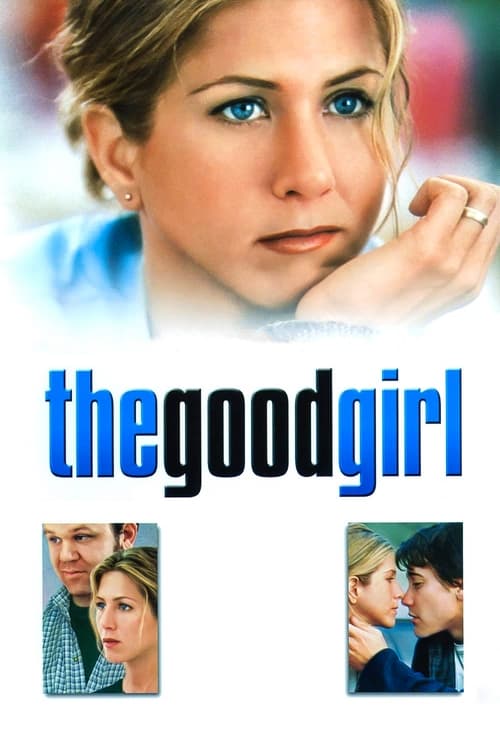
The Good Girl
A discount store clerk strikes up an affair with a stock boy who considers himself the incarnation of Holden Caulfield.
Despite its small-scale budget of $8.0M, The Good Girl became a commercial success, earning $16.9M worldwide—a 111% return.
5 wins & 16 nominations
Plot Structure
Story beats plotted across runtime


Narrative Arc
Emotional journey through the story's key moments
Story Circle
Blueprint 15-beat structure
Arcplot Score Breakdown
Weighted: Precision (70%) + Arc (15%) + Theme (15%)
The Good Girl (2002) showcases meticulously timed plot construction, characteristic of Miguel Arteta's storytelling approach. This structural analysis examines how the film's 15-point plot structure maps to proven narrative frameworks across 1 hour and 33 minutes. With an Arcplot score of 6.9, the film balances conventional beats with creative variation.
Characters
Cast & narrative archetypes

Justine Last
Holden Worther
Phil Last
Bubba
Corny
Main Cast & Characters
Justine Last
Played by Jennifer Aniston
A disillusioned retail clerk trapped in a loveless marriage who seeks escape through an affair with a younger coworker.
Holden Worther
Played by Jake Gyllenhaal
A sensitive, artistic young stockboy who idolizes Catcher in the Rye and becomes obsessed with Justine.
Phil Last
Played by John C. Reilly
Justine's unmotivated, pot-smoking husband who works as a house painter and lives in a state of arrested development.
Bubba
Played by Tim Blake Nelson
Phil's best friend and coworker, equally unmotivated and stuck in adolescent behavior patterns.
Corny
Played by Mike White
Phil's Bible-thumping wife who represents conventional religious morality and judges Justine.
Structural Analysis
The Status Quo at 1 minutes (1% through the runtime) establishes Justine's monotonous voiceover describes her soul-crushing routine at Retail Rodeo, establishing her deep dissatisfaction with her repetitive small-town existence and loveless marriage to pot-smoking Phil.. Of particular interest, this early placement immediately immerses viewers in the story world.
The inciting incident occurs at 11 minutes when Justine meets the new employee who introduces himself as Holden, after Holden Caulfield. His literary pretensions and brooding intensity immediately intrigue her, offering an escape from her monotonous existence.. At 12% through the film, this Disruption aligns precisely with traditional story structure. This beat shifts the emotional landscape, launching the protagonist into the central conflict.
The First Threshold at 24 minutes marks the transition into Act II, occurring at 26% of the runtime. This demonstrates the protagonist's commitment to Justine actively chooses to begin a sexual affair with Holden at a motel, crossing a moral threshold. This is her conscious decision to reject her suffocating life and pursue passion, setting the affair in motion., moving from reaction to action.
At 47 minutes, the Midpoint arrives at 51% of the runtime—precisely centered, creating perfect narrative symmetry. Significantly, this crucial beat Justine discovers she is pregnant and cannot determine whether Phil or Holden is the father. This false defeat raises the stakes dramatically - her secret life now threatens to become permanent, visible reality., fundamentally raising what's at risk. The emotional intensity shifts, dividing the narrative into clear before-and-after phases.
The Collapse moment at 70 minutes (75% through) represents the emotional nadir. Here, Holden robs the Retail Rodeo and flees, planning for Justine to join him. When police corner him at the motel, Holden - whose real name is Tom - kills himself rather than be captured. Justine's romantic fantasy ends in death., reveals the protagonist at their lowest point. This beat's placement in the final quarter sets up the climactic reversal.
The Second Threshold at 75 minutes initiates the final act resolution at 81% of the runtime. Justine makes the pragmatic decision to stay with Phil, claim the baby as his, and return to her ordinary life. She chooses survival and stability over romantic idealism, accepting the limitations of her existence., demonstrating the transformation achieved throughout the journey.
Emotional Journey
The Good Girl's emotional architecture traces a deliberate progression across 15 carefully calibrated beats.
Narrative Framework
This structural analysis employs structural analysis methodology used to understand storytelling architecture. By mapping The Good Girl against these established plot points, we can identify how Miguel Arteta utilizes or subverts traditional narrative conventions. The plot point approach reveals not only adherence to structural principles but also creative choices that distinguish The Good Girl within the drama genre.
Miguel Arteta's Structural Approach
Among the 6 Miguel Arteta films analyzed on Arcplot, the average structural score is 7.0, reflecting strong command of classical structure. The Good Girl takes a more unconventional approach compared to the director's typical style. For comparative analysis, explore the complete Miguel Arteta filmography.
Comparative Analysis
Additional drama films include After Thomas, South Pacific and Dirty Dancing: Havana Nights. For more Miguel Arteta analyses, see Cedar Rapids, Youth in Revolt and Like a Boss.
Plot Points by Act
Act I
SetupStatus Quo
Justine's monotonous voiceover describes her soul-crushing routine at Retail Rodeo, establishing her deep dissatisfaction with her repetitive small-town existence and loveless marriage to pot-smoking Phil.
Theme
Holden tells Justine that most people live lives of quiet desperation, quoting Thoreau - articulating the film's central question of whether breaking free from conformity leads to liberation or destruction.
Worldbuilding
The stifling world of small-town Texas retail is established: Justine's dead-end job at Retail Rodeo, her emotionally absent husband Phil who smokes pot with Bubba nightly, the eccentric coworkers, and the pervasive sense of trapped suburban ennui.
Disruption
Justine meets the new employee who introduces himself as Holden, after Holden Caulfield. His literary pretensions and brooding intensity immediately intrigue her, offering an escape from her monotonous existence.
Resistance
Justine and Holden develop an intellectual connection through break-time conversations. She reads his dark, self-pitying manuscript while wrestling with growing attraction. Meanwhile, her marriage remains stagnant and Phil remains oblivious.
Act II
ConfrontationFirst Threshold
Justine actively chooses to begin a sexual affair with Holden at a motel, crossing a moral threshold. This is her conscious decision to reject her suffocating life and pursue passion, setting the affair in motion.
Mirror World
The affair deepens as Justine and Holden create their secret world together. Holden represents the thematic mirror - a projection of Justine's desire for meaning, but also a warning of where unchecked romantic escapism leads.
Premise
Justine lives her double life - dutiful wife by night, passionate lover by day. The affair provides temporary escape and excitement as she and Holden meet secretly, but cracks begin showing as Holden grows increasingly possessive and unstable.
Midpoint
Justine discovers she is pregnant and cannot determine whether Phil or Holden is the father. This false defeat raises the stakes dramatically - her secret life now threatens to become permanent, visible reality.
Opposition
Everything closes in: Holden becomes obsessive and threatens to tell Phil. Security guard Bubba discovers the affair and blackmails Justine for sex. Holden pressures her to run away with him. Justine's attempts to end things only intensify the danger.
Collapse
Holden robs the Retail Rodeo and flees, planning for Justine to join him. When police corner him at the motel, Holden - whose real name is Tom - kills himself rather than be captured. Justine's romantic fantasy ends in death.
Crisis
Justine processes Holden's suicide and her role in his destruction. She must confront the consequences of her choices - a young man is dead, she carries a child of uncertain paternity, and she has betrayed everyone around her.
Act III
ResolutionSecond Threshold
Justine makes the pragmatic decision to stay with Phil, claim the baby as his, and return to her ordinary life. She chooses survival and stability over romantic idealism, accepting the limitations of her existence.
Synthesis
Justine navigates the aftermath: Bubba is dealt with when Phil and Bubba are arrested in an unrelated paint-huffing incident. She gives birth and settles into motherhood, having buried her secrets along with her affair.
Transformation
Justine holds her baby and returns to work at Retail Rodeo. Unlike the opening, she has found a tentative peace - not through escape but acceptance. Her transformation is ambiguous: compromise or wisdom, defeat or maturity.