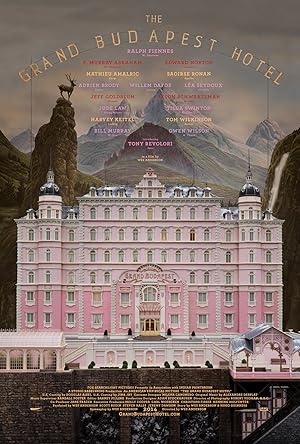
The Grand Budapest Hotel
This movie recounts the adventures of M. Gustave (Ralph Fiennes), a legendary concierge at a famous European hotel between the wars, and Zero Moustafa (Tony Revolori), the lobby boy who becomes his most trusted friend. The story involves the theft and recovery of a priceless Renaissance painting and the battle for an enormous family fortune - all against the backdrop of a suddenly and dramatically changing continent.
Despite a moderate budget of $30.0M, The Grand Budapest Hotel became a solid performer, earning $174.6M worldwide—a 482% return.
4 Oscars. 135 wins & 227 nominations
Matt Zoller Seitz
"Anderson's most visually sumptuous film is also his most melancholic, a bittersweet confection about friendship, loss, and the end of an era."Read Full Review


Plot Structure
Story beats plotted across runtime


Narrative Arc
Emotional journey through the story's key moments
Story Circle
Blueprint 15-beat structure
Arcplot Score Breakdown
Weighted: Precision (70%) + Arc (15%) + Theme (15%)
The Grand Budapest Hotel (2014) demonstrates carefully calibrated narrative design, characteristic of Wes Anderson's storytelling approach. This structural analysis examines how the film's 15-point plot structure maps to proven narrative frameworks across 1 hour and 39 minutes. With an Arcplot score of 6.5, the film balances conventional beats with creative variation.
Characters
Cast & narrative archetypes

M. Gustave H.
Zero Moustafa (Young)
Agatha
Dmitri Desgoffe-und-Taxis
Madame Céline Villeneuve Desgoffe-und-Taxis (Madame D.)
Henckels
J.G. Jopling
Deputy Kovacs
Zero Moustafa (Old)
Main Cast & Characters
M. Gustave H.
Played by Ralph Fiennes
The legendary concierge of The Grand Budapest Hotel, renowned for his impeccable service, refined tastes, and romantic liaisons with wealthy older guests.
Zero Moustafa (Young)
Played by Tony Revolori
The hotel's new lobby boy who becomes Gustave's trusted protégé and loyal friend throughout their adventures.
Agatha
Played by Saoirse Ronan
A kind-hearted baker at Mendl's patisserie who becomes Zero's beloved fiancée and assists in their escapades.
Dmitri Desgoffe-und-Taxis
Played by Adrien Brody
The ruthless and violent son of Madame D. who seeks to claim his inheritance and eliminate anyone in his way.
Madame Céline Villeneuve Desgoffe-und-Taxis (Madame D.)
Played by Tilda Swinton
An elderly dowager and Gustave's lover who bequeaths him a priceless painting upon her mysterious death.
Henckels
Played by Edward Norton
A sympathetic military officer who was once a lobby boy under Gustave and helps him in crucial moments.
J.G. Jopling
Played by Willem Dafoe
Dmitri's sadistic assassin who pursues Gustave and Zero with ruthless efficiency and cold brutality.
Deputy Kovacs
Played by Jeff Goldblum
Madame D.'s loyal lawyer who attempts to execute her will and protect Boy with Apple from Dmitri.
Zero Moustafa (Old)
Played by F. Murray Abraham
The elderly owner of The Grand Budapest Hotel who recounts his youthful adventures with Gustave to a curious author.
Structural Analysis
The Status Quo at 1 minutes (1% through the runtime) establishes A young woman visits a monument to a beloved author in a cemetery, establishing the framed narrative structure. The hotel in its decayed 1960s state is shown, setting up the contrast with its former glory.. Structural examination shows that this early placement immediately immerses viewers in the story world.
The inciting incident occurs at 9 minutes when Madame D., one of Gustave's elderly paramours, is found murdered after recently changing her will to bequeath the priceless painting "Boy with Apple" to Gustave, making him the prime suspect.. At 9% through the film, this Disruption arrives earlier than typical, accelerating the narrative momentum. This beat shifts the emotional landscape, launching the protagonist into the central conflict.
The First Threshold at 22 minutes marks the transition into Act II, occurring at 22% of the runtime. This shows the protagonist's commitment to Gustave is arrested and imprisoned for Madame D.'s murder. This irreversible moment forces Zero to actively choose to help clear his mentor's name, transforming from passive lobby boy to active participant in the adventure., moving from reaction to action.
At 44 minutes, the Midpoint arrives at 44% of the runtime—arriving early, accelerating into Act IIb complications. Structural examination shows that this crucial beat Gustave and Zero successfully escape prison and reunite with Agatha. False victory: they believe they can prove Gustave's innocence with Serge X.'s testimony about the second will, but this hope will soon be shattered. The stakes raise as war looms., fundamentally raising what's at risk. The emotional intensity shifts, dividing the narrative into clear before-and-after phases.
The Collapse moment at 64 minutes (65% through) represents the emotional nadir. Here, Jopling murders Serge and attacks the group. In the struggle, Jopling falls to his death, but their proof of innocence dies with Serge. The "whiff of death" is literal - their last hope extinguished, and violence has invaded their refined world., illustrates the protagonist at their lowest point. This beat's placement in the final quarter sets up the climactic reversal.
The Second Threshold at 71 minutes initiates the final act resolution at 72% of the runtime. Zero reveals the second will hidden inside "Boy with Apple" - the painting Gustave "stole" actually proves his innocence and bequeaths him the entire fortune, including the hotel. New information changes everything and provides path to resolution., demonstrating the transformation achieved throughout the journey.
Emotional Journey
The Grand Budapest Hotel's emotional architecture traces a deliberate progression across 15 carefully calibrated beats.
Narrative Framework
This structural analysis employs structural analysis methodology used to understand storytelling architecture. By mapping The Grand Budapest Hotel against these established plot points, we can identify how Wes Anderson utilizes or subverts traditional narrative conventions. The plot point approach reveals not only adherence to structural principles but also creative choices that distinguish The Grand Budapest Hotel within the comedy genre.
Wes Anderson's Structural Approach
Among the 12 Wes Anderson films analyzed on Arcplot, the average structural score is 6.3, demonstrating varied approaches to story architecture. The Grand Budapest Hotel represents one of the director's most structurally precise works. For comparative analysis, explore the complete Wes Anderson filmography.
Comparative Analysis
Additional comedy films include The Bad Guys, Ella Enchanted and The Evening Star. For more Wes Anderson analyses, see Asteroid City, The French Dispatch and Moonrise Kingdom.
Plot Points by Act
Act I
SetupStatus Quo
A young woman visits a monument to a beloved author in a cemetery, establishing the framed narrative structure. The hotel in its decayed 1960s state is shown, setting up the contrast with its former glory.
Theme
The Author states: "The hotel was once a place where the world came to play" - establishing themes of nostalgia, lost civilization, and the passage of elegance into decay.
Worldbuilding
Multi-layered frame narrative established through 1985 conversation between the Author and Zero Moustafa. Zero begins recounting his story of working at the Grand Budapest Hotel in 1932 under the legendary concierge M. Gustave.
Disruption
Madame D., one of Gustave's elderly paramours, is found murdered after recently changing her will to bequeath the priceless painting "Boy with Apple" to Gustave, making him the prime suspect.
Resistance
Gustave and Zero attend Madame D.'s wake and reading of the will at Schloss Lutz. Dmitri and family reject Gustave's inheritance. Gustave and Zero steal the painting and flee, pursued by Dmitri's henchman Jopling. They debate their next moves while on the run.
Act II
ConfrontationFirst Threshold
Gustave is arrested and imprisoned for Madame D.'s murder. This irreversible moment forces Zero to actively choose to help clear his mentor's name, transforming from passive lobby boy to active participant in the adventure.
Mirror World
Zero's relationship with Agatha deepens as she becomes his ally and co-conspirator. She represents loyalty, love, and the possibility of building something new amid the crumbling old world - embodying the film's themes of devotion and civilization.
Premise
The "fun and games" of the prison escape caper. The Society of Crossed Keys mobilizes to help Gustave. Agatha smuggles tools in pastries. Elaborate prison break executed with wit and style, showcasing the camaraderie and resourcefulness that define the hotel's world.
Midpoint
Gustave and Zero successfully escape prison and reunite with Agatha. False victory: they believe they can prove Gustave's innocence with Serge X.'s testimony about the second will, but this hope will soon be shattered. The stakes raise as war looms.
Opposition
The trio travels to find Serge X., but discover he's been murdered by Jopling. Dmitri closes in. Fascist forces rise, creating checkpoints and danger. The old world of elegance and civility crumbles around them as violence and authoritarianism take hold.
Collapse
Jopling murders Serge and attacks the group. In the struggle, Jopling falls to his death, but their proof of innocence dies with Serge. The "whiff of death" is literal - their last hope extinguished, and violence has invaded their refined world.
Crisis
Gustave faces his darkest moment, lamenting the loss of civilization and his way of life. He and Zero process their grief and despair. The old world is truly gone, and they must find meaning in what remains.
Act III
ResolutionSecond Threshold
Zero reveals the second will hidden inside "Boy with Apple" - the painting Gustave "stole" actually proves his innocence and bequeaths him the entire fortune, including the hotel. New information changes everything and provides path to resolution.
Synthesis
Gustave is exonerated and inherits the hotel. Zero and Agatha marry. Brief moment of triumph before tragedy: Gustave is killed by fascist soldiers, and later Agatha and her baby die from disease. Zero inherits everything but loses everyone he loves.
Transformation
Old Zero in 1985 sits alone in the decrepit hotel, having kept it as a memorial to Agatha. The closing image mirrors the opening but shows profound loss - the grand hotel is a tomb for a vanished world, maintained by devotion to love and memory.