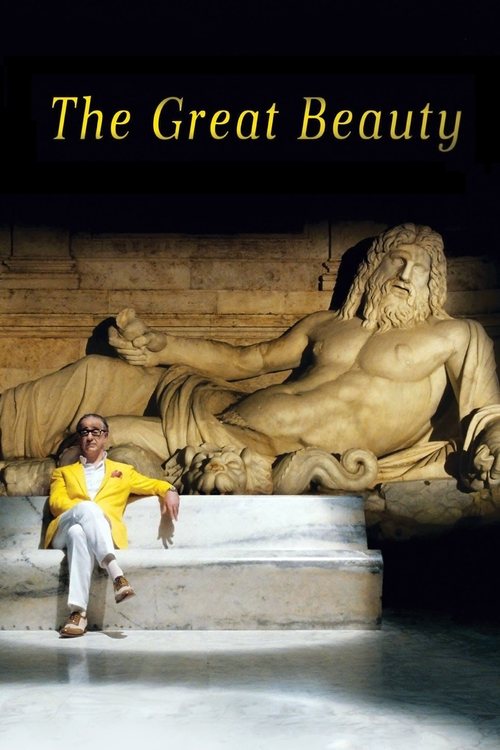
The Great Beauty
Jep Gambardella has seduced his way through the lavish nightlife of Rome for decades, but after his 65th birthday and a shock from the past, Jep looks past the nightclubs and parties to find a timeless landscape of absurd, exquisite beauty.
Despite its modest budget of $9.2M, The Great Beauty became a box office success, earning $24.9M worldwide—a 171% return.
1 Oscar. 60 wins & 78 nominations


Plot Structure
Story beats plotted across runtime


Narrative Arc
Emotional journey through the story's key moments
Story Circle
Blueprint 15-beat structure
Arcplot Score Breakdown
Weighted: Precision (70%) + Arc (15%) + Theme (15%)
The Great Beauty (2013) exemplifies meticulously timed narrative architecture, characteristic of Paolo Sorrentino's storytelling approach. This structural analysis examines how the film's 15-point plot structure maps to proven narrative frameworks across 2 hours and 22 minutes. With an Arcplot score of 6.9, the film balances conventional beats with creative variation.
Characters
Cast & narrative archetypes

Jep Gambardella
Ramona
Romano
Dadina
Sister Maria
Main Cast & Characters
Jep Gambardella
Played by Toni Servillo
A 65-year-old journalist and socialite who navigates Rome's high society while confronting the emptiness of his life and lost artistic potential.
Ramona
Played by Sabrina Ferilli
A mature stripper and Jep's occasional lover who represents fleeting sensual pleasure and physical beauty.
Romano
Played by Carlo Verdone
Jep's playwright friend who is struggling with creative failure and the burden of critical expectations.
Dadina
Played by Giovanna Vignola
A wealthy, eccentric socialite who throws extravagant parties and embodies the superficiality of Roman high society.
Sister Maria
Played by Giusi Merli
An elderly nun and humanitarian who serves as a spiritual counterpoint to Jep's decadent lifestyle.
Structural Analysis
The Status Quo at 2 minutes (1% through the runtime) establishes Jep's 65th birthday party on his Roman terrace overlooking the Colosseum. Lavish celebration establishes his world of beautiful surfaces, social performance, and spiritual emptiness. The glittering nightlife masks existential void.. Significantly, this early placement immediately immerses viewers in the story world.
The inciting incident occurs at 20 minutes when Jep receives news that Elisa, his first love from 40 years ago, has died. Her husband reveals she told him Jep was "the love of her life." This ruptures Jep's protective cynicism and forces confrontation with lost authenticity.. At 14% through the film, this Disruption is delayed, allowing extended setup of the story world. This beat shifts the emotional landscape, launching the protagonist into the central conflict.
The First Threshold at 40 minutes marks the transition into Act II, occurring at 28% of the runtime. This indicates the protagonist's commitment to Jep decides to actively examine his life rather than passively observe. He begins visiting memories—the beach where he met Elisa, old haunts. This is a subtle internal choice to engage with his past and search for meaning, shifting from pure cynicism to questioning., moving from reaction to action.
At 76 minutes, the Midpoint arrives at 54% of the runtime—slightly delayed, extending Act IIa tension. Of particular interest, this crucial beat Ramona suddenly disappears from Jep's life without explanation, abandoning him. This false defeat reveals Jep's capacity for genuine feeling beneath his armor. The one authentic connection in his present is severed, intensifying his isolation and search for meaning., fundamentally raising what's at risk. The emotional intensity shifts, dividing the narrative into clear before-and-after phases.
The Collapse moment at 106 minutes (75% through) represents the emotional nadir. Here, Jep visits his childhood friend in the hospital who is dying. The friend asks why Jep never wrote another novel after his first. Jep cannot answer. This confrontation with mortality and his own creative failure represents his darkest moment—65 years old with nothing authentic to show., illustrates the protagonist at their lowest point. This beat's placement in the final quarter sets up the climactic reversal.
The Second Threshold at 114 minutes initiates the final act resolution at 80% of the runtime. Sister Maria, a 104-year-old saint-like nun, arrives in Rome. Her genuine humility and spiritual presence offers Jep a vision of authentic beauty. She asks about his novel; he says it was about "the great beauty." She responds: "The root of all desire is sorrow." Jep understands., demonstrating the transformation achieved throughout the journey.
Emotional Journey
The Great Beauty's emotional architecture traces a deliberate progression across 15 carefully calibrated beats.
Narrative Framework
This structural analysis employs proven narrative structure principles that track dramatic progression. By mapping The Great Beauty against these established plot points, we can identify how Paolo Sorrentino utilizes or subverts traditional narrative conventions. The plot point approach reveals not only adherence to structural principles but also creative choices that distinguish The Great Beauty within the drama genre.
Paolo Sorrentino's Structural Approach
Among the 3 Paolo Sorrentino films analyzed on Arcplot, the average structural score is 6.8, demonstrating varied approaches to story architecture. The Great Beauty represents one of the director's most structurally precise works. For comparative analysis, explore the complete Paolo Sorrentino filmography.
Comparative Analysis
Additional drama films include After Thomas, South Pacific and Dirty Dancing: Havana Nights. For more Paolo Sorrentino analyses, see This Must Be the Place, Il Divo.
Plot Points by Act
Act I
SetupStatus Quo
Jep's 65th birthday party on his Roman terrace overlooking the Colosseum. Lavish celebration establishes his world of beautiful surfaces, social performance, and spiritual emptiness. The glittering nightlife masks existential void.
Theme
Jep states: "I was looking for the great beauty, but I never found it." This confession to friends establishes the thematic core—the search for authentic meaning and beauty beneath Rome's decadent surface.
Worldbuilding
Episodic introduction to Jep's world: endless parties, shallow intellectuals, performance artists, aging socialites. His work as a cultural journalist, his one published novel from decades ago, his observational detachment from life. Rome's baroque beauty contrasts with spiritual decay.
Disruption
Jep receives news that Elisa, his first love from 40 years ago, has died. Her husband reveals she told him Jep was "the love of her life." This ruptures Jep's protective cynicism and forces confrontation with lost authenticity.
Resistance
Jep processes the news through his usual diversions—more parties, interviews with artists and stripper-nuns, conversations with his editor about writing again. He resists genuine emotion, maintaining ironic distance. Encounters with aging actress and performance artist Talia reveal emptiness of his circle.
Act II
ConfrontationFirst Threshold
Jep decides to actively examine his life rather than passively observe. He begins visiting memories—the beach where he met Elisa, old haunts. This is a subtle internal choice to engage with his past and search for meaning, shifting from pure cynicism to questioning.
Mirror World
Ramona, the exotic dancer, becomes a recurring presence representing unguarded vitality and sensuality. Unlike the performative sophisticates, she offers genuine presence. She carries the thematic alternative to Jep's world of beautiful surfaces without substance.
Premise
Jep wanders through Rome's beauty and absurdity with new attention: the cardinal who loves cooking, the mother searching for her lost son, the artist who crashes into walls, the dwarf editor mourning his wife. Episodic encounters with life's comedy and tragedy, seeking authentic beauty.
Midpoint
Ramona suddenly disappears from Jep's life without explanation, abandoning him. This false defeat reveals Jep's capacity for genuine feeling beneath his armor. The one authentic connection in his present is severed, intensifying his isolation and search for meaning.
Opposition
Jep's encounters grow darker and more absurd: the socialite whose son committed suicide, the aging playwright's funeral, the pretentious artist and her mother, the cardinal's empty spirituality. Rome's beauty cannot mask the accumulating evidence of wasted lives and fraudulent meaning.
Collapse
Jep visits his childhood friend in the hospital who is dying. The friend asks why Jep never wrote another novel after his first. Jep cannot answer. This confrontation with mortality and his own creative failure represents his darkest moment—65 years old with nothing authentic to show.
Crisis
Jep withdraws into contemplation. Nighttime walks through empty Rome. Memories of Elisa and their pure young love on the beach. He sits alone with the weight of time wasted, beauty unappreciated, life unlived beneath the performance.
Act III
ResolutionSecond Threshold
Sister Maria, a 104-year-old saint-like nun, arrives in Rome. Her genuine humility and spiritual presence offers Jep a vision of authentic beauty. She asks about his novel; he says it was about "the great beauty." She responds: "The root of all desire is sorrow." Jep understands.
Synthesis
Jep narrates his realization: Rome's beauty, the parties, the surfaces—all were training to see the great beauty hidden beneath. He accepts his life not as waste but as necessary experience. The search itself was the meaning. He makes peace with Elisa, his past, himself.
Transformation
Jep stands on his terrace at dawn overlooking Rome, no longer cynical but quietly accepting. Voiceover: "This is how it always ends. With death. But first there was life, hidden beneath the blah blah blah." He sees the great beauty—in the totality of experience itself.