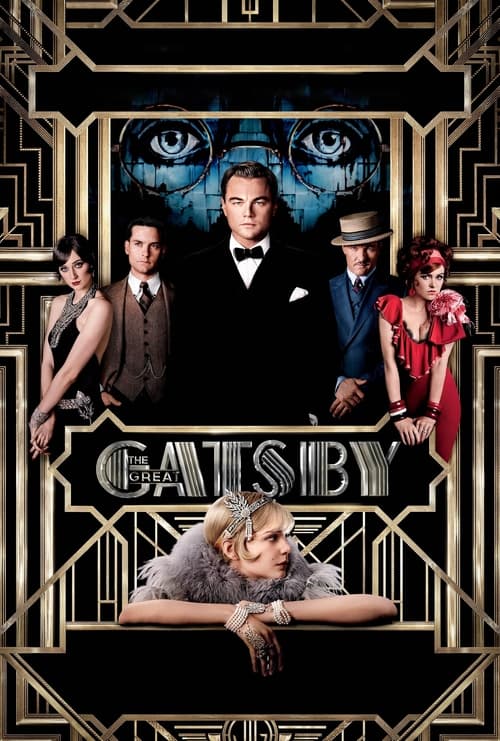
The Great Gatsby
A writer and wall street trader, Nick Carraway, finds himself drawn to the past and lifestyle of his mysterious millionaire neighbor, Jay Gatsby, amid the riotous parties of the Jazz Age.
Despite a substantial budget of $105.0M, The Great Gatsby became a financial success, earning $351.0M worldwide—a 234% return.
2 Oscars. 51 wins & 86 nominations


Plot Structure
Story beats plotted across runtime


Narrative Arc
Emotional journey through the story's key moments
Story Circle
Blueprint 15-beat structure
Characters
Cast & narrative archetypes

Nick Carraway
Jay Gatsby
Daisy Buchanan
Tom Buchanan
Jordan Baker
Myrtle Wilson
George Wilson
Main Cast & Characters
Nick Carraway
Played by Tobey Maguire
Bond salesman and narrator who becomes fascinated by his mysterious neighbor Gatsby
Jay Gatsby
Played by Leonardo DiCaprio
Mysterious millionaire who throws lavish parties while obsessively pursuing his lost love Daisy
Daisy Buchanan
Played by Carey Mulligan
Nick's cousin, a beautiful and shallow woman trapped in a loveless marriage
Tom Buchanan
Played by Joel Edgerton
Daisy's brutish, wealthy husband who embodies old money privilege and entitlement
Jordan Baker
Played by Elizabeth Debicki
Professional golfer and Daisy's cynical friend who becomes romantically involved with Nick
Myrtle Wilson
Played by Isla Fisher
Tom's working-class mistress who desperately seeks escape from her dreary life
George Wilson
Played by Jason Clarke
Myrtle's defeated husband, a struggling garage owner in the Valley of Ashes
Structural Analysis
The Status Quo at 1 minutes (1% through the runtime) establishes Nick Carraway in sanitarium, depressed and alcoholic, recounting his story to a doctor. Establishes his broken state and the journey that led him here.. Notably, this early placement immediately immerses viewers in the story world.
The inciting incident occurs at 16 minutes when Nick receives ornate invitation to Gatsby's legendary party - the first actual invitation Gatsby has ever sent. This pulls Nick into Gatsby's world and sets the story in motion.. At 11% through the film, this Disruption aligns precisely with traditional story structure. This beat shifts the emotional landscape, launching the protagonist into the central conflict.
The First Threshold at 36 minutes marks the transition into Act II, occurring at 25% of the runtime. This indicates the protagonist's commitment to Nick agrees to invite Daisy to tea at his cottage, enabling Gatsby's plan. This active choice makes Nick complicit in Gatsby's pursuit and commits him to the conspiracy., moving from reaction to action.
At 72 minutes, the Midpoint arrives at 50% of the runtime—precisely centered, creating perfect narrative symmetry. Significantly, this crucial beat Plaza Hotel confrontation setup begins. Tom grows suspicious of Gatsby and Daisy. False victory: Gatsby believes he's won Daisy back completely, but the stakes suddenly raise as Tom begins to investigate Gatsby's background and business dealings., fundamentally raising what's at risk. The emotional intensity shifts, dividing the narrative into clear before-and-after phases.
The Collapse moment at 104 minutes (73% through) represents the emotional nadir. Here, Daisy, driving Gatsby's car in distress, strikes and kills Myrtle Wilson (Tom's mistress). Literal death - the "whiff of death" is actual. Gatsby takes the blame to protect Daisy. His dream is dead; the past cannot be recaptured., demonstrates the protagonist at their lowest point. This beat's placement in the final quarter sets up the climactic reversal.
The Second Threshold at 114 minutes initiates the final act resolution at 79% of the runtime. George Wilson shoots Gatsby dead in his pool, then kills himself. The realization: Gatsby's dream was always an illusion. The past cannot be repeated. The cost of obsession is death., demonstrating the transformation achieved throughout the journey.
Emotional Journey
The Great Gatsby's emotional architecture traces a deliberate progression across 15 carefully calibrated beats.
Narrative Framework
This structural analysis employs proven narrative structure principles that track dramatic progression. By mapping The Great Gatsby against these established plot points, we can identify how Baz Luhrmann utilizes or subverts traditional narrative conventions. The plot point approach reveals not only adherence to structural principles but also creative choices that distinguish The Great Gatsby within the drama genre.
Baz Luhrmann's Structural Approach
Among the 6 Baz Luhrmann films analyzed on Arcplot, the average structural score is 6.7, demonstrating varied approaches to story architecture. The Great Gatsby exemplifies the director's characteristic narrative technique. For comparative analysis, explore the complete Baz Luhrmann filmography.
Comparative Analysis
Additional drama films include After Thomas, South Pacific and Dirty Dancing: Havana Nights. For more Baz Luhrmann analyses, see Romeo + Juliet, Australia and Elvis.
Plot Points by Act
Act I
SetupStatus Quo
Nick Carraway in sanitarium, depressed and alcoholic, recounting his story to a doctor. Establishes his broken state and the journey that led him here.
Theme
Doctor suggests Nick write his story. Theme stated: "The past can't repeat itself" vs Gatsby's belief that it can. The story explores whether we can recapture lost dreams.
Worldbuilding
Summer 1922: Nick moves to West Egg, Long Island. Meets cousin Daisy and her husband Tom Buchanan in East Egg. Introduced to Jordan Baker. Tom's racism and affair with Myrtle Wilson revealed. Nick sees mysterious neighbor Gatsby reaching toward green light across the bay.
Disruption
Nick receives ornate invitation to Gatsby's legendary party - the first actual invitation Gatsby has ever sent. This pulls Nick into Gatsby's world and sets the story in motion.
Resistance
Nick attends Gatsby's extravagant party, overwhelmed by excess and spectacle. Meets Gatsby face-to-face - a mysterious, charming figure surrounded by rumors. Gatsby takes special interest in Nick. Jordan reveals Gatsby and Daisy's past romance. Gatsby asks Nick to arrange tea with Daisy.
Act II
ConfrontationFirst Threshold
Nick agrees to invite Daisy to tea at his cottage, enabling Gatsby's plan. This active choice makes Nick complicit in Gatsby's pursuit and commits him to the conspiracy.
Mirror World
Gatsby and Daisy reunite at Nick's cottage. Awkward at first, then magical. Their love story becomes the emotional core - the Mirror World relationship that embodies the theme of recapturing the past.
Premise
Gatsby and Daisy's affair blossoms. Gatsby shows Daisy his mansion, his wealth, his devotion. Nick observes their rekindled romance. Gatsby reveals his past: poor James Gatz reinvented himself to be worthy of Daisy. The promise of the premise: can love and wealth rewrite history?
Midpoint
Plaza Hotel confrontation setup begins. Tom grows suspicious of Gatsby and Daisy. False victory: Gatsby believes he's won Daisy back completely, but the stakes suddenly raise as Tom begins to investigate Gatsby's background and business dealings.
Opposition
Sweltering day in the city. Tom confronts Gatsby at the Plaza Hotel, exposing his bootlegging and criminal ties. Daisy is torn, unable to deny she loved Tom. Tom wins by attacking Gatsby's legitimacy. Gatsby's dream crumbles as Daisy chooses security over romance.
Collapse
Daisy, driving Gatsby's car in distress, strikes and kills Myrtle Wilson (Tom's mistress). Literal death - the "whiff of death" is actual. Gatsby takes the blame to protect Daisy. His dream is dead; the past cannot be recaptured.
Crisis
Gatsby keeps vigil outside Daisy's house, hoping she'll call or leave Tom. She never does. Nick realizes the emptiness of Gatsby's dream. George Wilson, Myrtle's husband, grief-stricken and manipulated by Tom, seeks revenge. Gatsby waits alone by his pool.
Act III
ResolutionSecond Threshold
George Wilson shoots Gatsby dead in his pool, then kills himself. The realization: Gatsby's dream was always an illusion. The past cannot be repeated. The cost of obsession is death.
Synthesis
Gatsby's funeral - almost no one attends. Daisy and Tom flee, leaving destruction behind. Nick confronts Tom, who feels no remorse. Nick realizes the Buchanans are "careless people" who destroy lives and retreat into their money. Nick decides to leave New York, disillusioned with the East and its empty excess.
Transformation
Nick finishes writing his manuscript, titles it "The Great Gatsby." He's processed his trauma through storytelling. Final image: "Gatsby believed in the green light... So we beat on, boats against the current, borne back ceaselessly into the past." Nick transformed from naive observer to witness who understands the tragedy of impossible dreams.