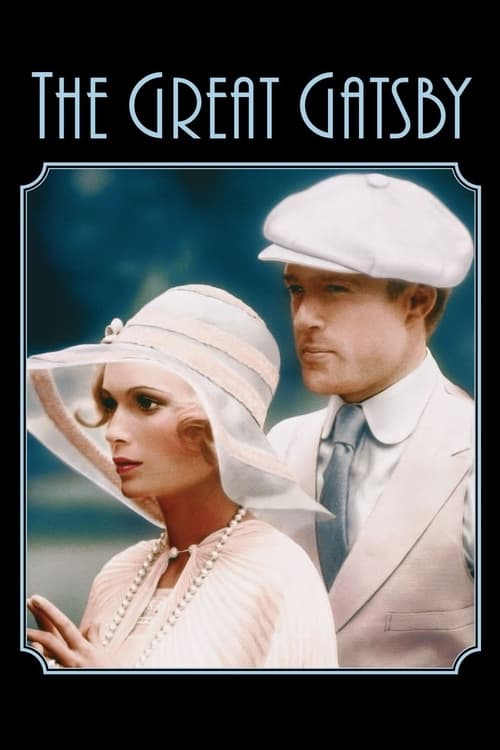
The Great Gatsby
Nick Carraway, a young Midwesterner now living on Long Island, finds himself fascinated by the mysterious past and lavish lifestyle of his neighbor, the nouveau riche Jay Gatsby. He is drawn into Gatsby's circle, becoming a witness to obsession and tragedy.
Despite its limited budget of $6.5M, The Great Gatsby became a commercial success, earning $26.5M worldwide—a 308% return. The film's unique voice connected with viewers, showing that strong storytelling can transcend budget limitations.
2 Oscars. 7 wins & 4 nominations


Plot Structure
Story beats plotted across runtime


Narrative Arc
Emotional journey through the story's key moments
Story Circle
Blueprint 15-beat structure
Arcplot Score Breakdown
Weighted: Precision (70%) + Arc (15%) + Theme (15%)
The Great Gatsby (1974) reveals carefully calibrated plot construction, characteristic of Jack Clayton's storytelling approach. This structural analysis examines how the film's 15-point plot structure maps to proven narrative frameworks across 2 hours and 24 minutes. With an Arcplot score of 6.8, the film balances conventional beats with creative variation.
Characters
Cast & narrative archetypes

Jay Gatsby
Nick Carraway
Daisy Buchanan
Tom Buchanan
Jordan Baker
Myrtle Wilson
George Wilson
Main Cast & Characters
Jay Gatsby
Played by Robert Redford
A mysterious millionaire who throws lavish parties in pursuit of his lost love Daisy Buchanan.
Nick Carraway
Played by Sam Waterston
The narrator and Gatsby's neighbor who becomes drawn into the world of the wealthy elite.
Daisy Buchanan
Played by Mia Farrow
Gatsby's former love, now married to Tom, torn between security and passion.
Tom Buchanan
Played by Bruce Dern
Daisy's wealthy, arrogant, and brutish husband who represents old money and established power.
Jordan Baker
Played by Lois Chiles
A professional golfer and Daisy's friend who becomes romantically involved with Nick.
Myrtle Wilson
Played by Karen Black
Tom's working-class mistress who dreams of a better life.
George Wilson
Played by Scott Wilson
Myrtle's defeated husband who owns a garage in the Valley of Ashes.
Structural Analysis
The Status Quo at 2 minutes (1% through the runtime) establishes Nick Carraway arrives in West Egg, establishing himself as an outsider observing the wealthy world of 1922 Long Island. He rents a small house next to Gatsby's mansion.. Of particular interest, this early placement immediately immerses viewers in the story world.
The inciting incident occurs at 16 minutes when Nick receives a personal invitation to one of Gatsby's legendary parties, making him one of the few actually invited. This draws him into Gatsby's orbit and the world of wealth and excess.. At 11% through the film, this Disruption aligns precisely with traditional story structure. This beat shifts the emotional landscape, launching the protagonist into the central conflict.
The First Threshold at 35 minutes marks the transition into Act II, occurring at 24% of the runtime. This demonstrates the protagonist's commitment to Nick agrees to arrange a reunion between Gatsby and Daisy at his cottage. This active choice makes him complicit in Gatsby's dream and sets the central relationship in motion., moving from reaction to action.
At 72 minutes, the Midpoint arrives at 50% of the runtime—precisely centered, creating perfect narrative symmetry. Notably, this crucial beat At the Plaza Hotel gathering, Gatsby believes he has won - Daisy seems ready to leave Tom. False victory: Gatsby's dream appears within reach, but the seeds of destruction are present in Daisy's hesitation., fundamentally raising what's at risk. The emotional intensity shifts, dividing the narrative into clear before-and-after phases.
The Collapse moment at 106 minutes (74% through) represents the emotional nadir. Here, Myrtle Wilson is killed when Daisy, driving Gatsby's car, strikes her. This literal death marks the collapse of Gatsby's dream and foreshadows his own fate. The American Dream dies in the road., demonstrates the protagonist at their lowest point. This beat's placement in the final quarter sets up the climactic reversal.
The Second Threshold at 113 minutes initiates the final act resolution at 79% of the runtime. George Wilson learns the yellow car belonged to Gatsby. This false information (Gatsby wasn't driving) sets the tragic finale in motion. Nick's realization that Gatsby's dream is doomed comes too late., demonstrating the transformation achieved throughout the journey.
Emotional Journey
The Great Gatsby's emotional architecture traces a deliberate progression across 15 carefully calibrated beats.
Narrative Framework
This structural analysis employs structural analysis methodology used to understand storytelling architecture. By mapping The Great Gatsby against these established plot points, we can identify how Jack Clayton utilizes or subverts traditional narrative conventions. The plot point approach reveals not only adherence to structural principles but also creative choices that distinguish The Great Gatsby within the drama genre.
Jack Clayton's Structural Approach
Among the 2 Jack Clayton films analyzed on Arcplot, the average structural score is 7.1, reflecting strong command of classical structure. The Great Gatsby takes a more unconventional approach compared to the director's typical style. For comparative analysis, explore the complete Jack Clayton filmography.
Comparative Analysis
Additional drama films include After Thomas, South Pacific and Dirty Dancing: Havana Nights. For more Jack Clayton analyses, see Something Wicked This Way Comes.
Plot Points by Act
Act I
SetupStatus Quo
Nick Carraway arrives in West Egg, establishing himself as an outsider observing the wealthy world of 1922 Long Island. He rents a small house next to Gatsby's mansion.
Theme
Tom Buchanan speaks dismissively about class and breeding at dinner, foreshadowing the story's exploration of the American Dream's corruption and the impossibility of recapturing the past.
Worldbuilding
Nick visits his cousin Daisy and her husband Tom in East Egg. We meet Jordan Baker, witness Tom and Daisy's troubled marriage, hear rumors of Gatsby's mysterious parties, and see Tom's affair with Myrtle Wilson.
Disruption
Nick receives a personal invitation to one of Gatsby's legendary parties, making him one of the few actually invited. This draws him into Gatsby's orbit and the world of wealth and excess.
Resistance
Nick attends Gatsby's extravagant party, searching for the host. He hears wild rumors about Gatsby's past. Jordan tells Nick about Gatsby and Daisy's romance five years ago, revealing Gatsby's true motivation.
Act II
ConfrontationFirst Threshold
Nick agrees to arrange a reunion between Gatsby and Daisy at his cottage. This active choice makes him complicit in Gatsby's dream and sets the central relationship in motion.
Mirror World
The reunion scene: Gatsby and Daisy meet again after five years. Their rekindled romance represents the thematic heart - the attempt to recapture the past and the seductive power of idealized love.
Premise
Gatsby and Daisy's affair flourishes. Gatsby shows Daisy his mansion and possessions, believing his wealth can win her back. Nick observes the illusion Gatsby has created, the promise of recaptured romance and achieved dreams.
Midpoint
At the Plaza Hotel gathering, Gatsby believes he has won - Daisy seems ready to leave Tom. False victory: Gatsby's dream appears within reach, but the seeds of destruction are present in Daisy's hesitation.
Opposition
Tom confronts Gatsby about the affair. Daisy wavers, unable to deny she once loved Tom. The confrontation exposes the impossibility of Gatsby's dream. Tension escalates as Tom reveals Gatsby's criminal connections.
Collapse
Myrtle Wilson is killed when Daisy, driving Gatsby's car, strikes her. This literal death marks the collapse of Gatsby's dream and foreshadows his own fate. The American Dream dies in the road.
Crisis
Gatsby keeps vigil outside Daisy's house, still protecting her despite being abandoned. Nick witnesses Gatsby's isolation. George Wilson mourns Myrtle, his grief turning to vengeance. The dark night descends.
Act III
ResolutionSecond Threshold
George Wilson learns the yellow car belonged to Gatsby. This false information (Gatsby wasn't driving) sets the tragic finale in motion. Nick's realization that Gatsby's dream is doomed comes too late.
Synthesis
George Wilson shoots Gatsby in his pool, then himself. Nick arranges the funeral, but almost no one attends - Gatsby dies alone, his dream revealed as hollow. Daisy and Tom retreat into their money and privilege.
Transformation
Nick stands at Gatsby's abandoned mansion, disillusioned with the East and its moral bankruptcy. He returns West, having witnessed the corruption of the American Dream and the tragic cost of romantic idealism.