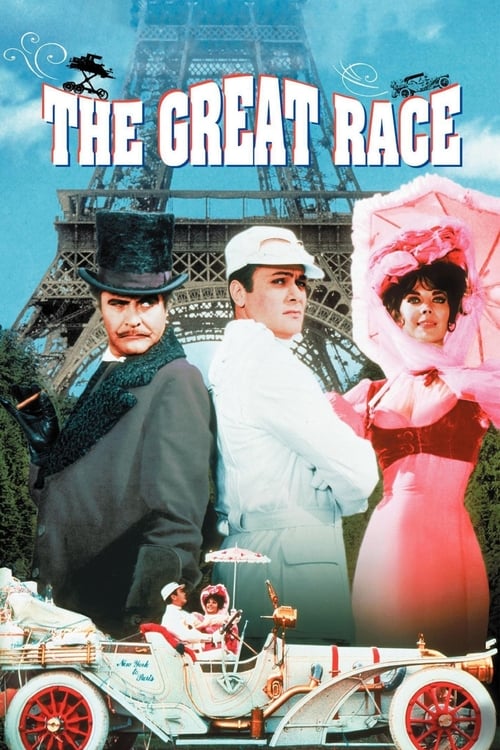
The Great Race
Professional daredevil and white-suited hero, The Great Leslie, convinces turn-of-the-century auto makers that a race from New York to Paris (westward across America, the Bering Straight and Russia) will help to promote automobile sales. Leslie's arch-rival, the mustached and black-attired Professor Fate vows to beat Leslie to the finish line in a car of Fate's own invention.
Despite its modest budget of $12.0M, The Great Race became a financial success, earning $25.3M worldwide—a 111% return.
1 Oscar. 3 wins & 14 nominations


Plot Structure
Story beats plotted across runtime


Narrative Arc
Emotional journey through the story's key moments
Story Circle
Blueprint 15-beat structure
Arcplot Score Breakdown
Weighted: Precision (70%) + Arc (15%) + Theme (15%)
The Great Race (1965) showcases meticulously timed narrative design, characteristic of Blake Edwards's storytelling approach. This structural analysis examines how the film's 15-point plot structure maps to proven narrative frameworks across 2 hours and 40 minutes. With an Arcplot score of 7.5, the film showcases strong structural fundamentals.
Characters
Cast & narrative archetypes

The Great Leslie
Professor Fate
Maggie DuBois
Max
Hezekiah Sturdy
Prince Hapnik
Main Cast & Characters
The Great Leslie
Played by Tony Curtis
A heroic, impeccably dressed daredevil and racer who represents chivalry and perfection, always dressed in white.
Professor Fate
Played by Jack Lemmon
Leslie's perpetually scheming rival, a melodramatic villain who always wears black and whose plans invariably backfire.
Maggie DuBois
Played by Natalie Wood
A pioneering suffragette and journalist determined to prove women's equality by competing in the great race.
Max
Played by Peter Falk
Professor Fate's loyal, long-suffering henchman and mechanic who endures endless abuse and mishaps.
Hezekiah Sturdy
Played by Keenan Wynn
Leslie's trusted mechanic and friend who supports him throughout the race with competence and loyalty.
Prince Hapnik
Played by Jack Lemmon
A European prince caught in political intrigue who bears an uncanny resemblance to Professor Fate.
Structural Analysis
The Status Quo at 2 minutes (1% through the runtime) establishes The Great Leslie performs a daring public stunt, establishing him as the world's greatest daredevil and perfect gentleman, always dressed in white. Meanwhile, Professor Fate schemes in his dark lair, the antithesis of Leslie's heroism.. The analysis reveals that this early placement immediately immerses viewers in the story world.
The inciting incident occurs at 18 minutes when The Great Race from New York to Paris is announced - an unprecedented automobile race across continents. This event creates the arena where all characters' goals will collide: Leslie's heroism will be tested, Fate can try to defeat his rival, and Maggie sees her chance to cover a major story.. At 12% through the film, this Disruption aligns precisely with traditional story structure. This beat shifts the emotional landscape, launching the protagonist into the central conflict.
The First Threshold at 39 minutes marks the transition into Act II, occurring at 24% of the runtime. This shows the protagonist's commitment to The race begins! The Great Race officially starts in New York with fanfare and crowds. Leslie, Professor Fate, Maggie, and other competitors launch into the adventure. All characters commit to the journey that will test them across thousands of miles., moving from reaction to action.
At 80 minutes, the Midpoint arrives at 50% of the runtime—precisely centered, creating perfect narrative symmetry. Of particular interest, this crucial beat The racers reach the Bering Strait and disaster strikes - they become stranded on an ice floe that breaks apart. This false defeat raises the stakes significantly. The race seems impossible to continue, and the competition becomes a matter of survival. Leslie must rescue everyone, including his rival., fundamentally raising what's at risk. The emotional intensity shifts, dividing the narrative into clear before-and-after phases.
The Collapse moment at 119 minutes (74% through) represents the emotional nadir. Here, Leslie is imprisoned in the palace dungeon, seemingly betrayed and trapped. His reputation is questioned, Maggie appears to have sided against him, and Professor Fate (as the prince) has the upper hand. The race appears lost, and Leslie's code of honor seems to have failed him. This is his darkest moment., shows the protagonist at their lowest point. This beat's placement in the final quarter sets up the climactic reversal.
The Second Threshold at 127 minutes initiates the final act resolution at 79% of the runtime. The truth is revealed and alliances clarify. Maggie helps Leslie escape, choosing love and integrity over her story. Professor Fate's dual identity is exposed. Leslie realizes that winning Maggie's respect and heart matters more than just winning the race. Armed with new understanding, they break free to continue the race., demonstrating the transformation achieved throughout the journey.
Emotional Journey
The Great Race's emotional architecture traces a deliberate progression across 15 carefully calibrated beats.
Narrative Framework
This structural analysis employs a 15-point narrative structure framework that maps key story moments. By mapping The Great Race against these established plot points, we can identify how Blake Edwards utilizes or subverts traditional narrative conventions. The plot point approach reveals not only adherence to structural principles but also creative choices that distinguish The Great Race within the comedy genre.
Blake Edwards's Structural Approach
Among the 15 Blake Edwards films analyzed on Arcplot, the average structural score is 7.1, reflecting strong command of classical structure. The Great Race represents one of the director's most structurally precise works. For comparative analysis, explore the complete Blake Edwards filmography.
Comparative Analysis
Additional comedy films include The Bad Guys, Ella Enchanted and The Evening Star. For more Blake Edwards analyses, see Revenge of the Pink Panther, Curse of the Pink Panther and 10.
Plot Points by Act
Act I
SetupStatus Quo
The Great Leslie performs a daring public stunt, establishing him as the world's greatest daredevil and perfect gentleman, always dressed in white. Meanwhile, Professor Fate schemes in his dark lair, the antithesis of Leslie's heroism.
Theme
A character remarks on the nature of heroism and villainy, establishing the theme that true character is revealed through competition and adversity. The statement about "a man's reputation" foreshadows the moral test ahead.
Worldbuilding
Introduction to early 1900s New York, the world of daredevil stunts and publicity. We meet Maggie DuBois, a suffragette fighting for women's rights who wants to prove herself as a serious journalist. Professor Fate's repeated failures to upstage Leslie establish the rivalry. The newspaper editor dismisses Maggie's ambitions.
Disruption
The Great Race from New York to Paris is announced - an unprecedented automobile race across continents. This event creates the arena where all characters' goals will collide: Leslie's heroism will be tested, Fate can try to defeat his rival, and Maggie sees her chance to cover a major story.
Resistance
Preparation for the race. Leslie prepares his pristine white car, the Leslie Special. Professor Fate builds the Hannibal Twin-8 with sabotage mechanisms. Maggie fights to be included as the reporter covering the race, facing resistance from the male establishment. Various competitors register. The stakes and rules are established.
Act II
ConfrontationFirst Threshold
The race begins! The Great Race officially starts in New York with fanfare and crowds. Leslie, Professor Fate, Maggie, and other competitors launch into the adventure. All characters commit to the journey that will test them across thousands of miles.
Mirror World
Maggie and Leslie begin their antagonistic relationship that will evolve into romance. She challenges his chivalrous attitudes toward women, while he maintains his gentlemanly code. Their banter establishes the B-story that will carry the theme of respect, equality, and true partnership.
Premise
The promise of the premise: an epic race across America with spectacular set pieces. Professor Fate's sabotage attempts backfire comically. The racers face challenges crossing the frontier, including weather, terrain, and mishaps. The massive barroom brawl in Boracho. Slapstick comedy and spectacular stunts deliver the fun the audience expects.
Midpoint
The racers reach the Bering Strait and disaster strikes - they become stranded on an ice floe that breaks apart. This false defeat raises the stakes significantly. The race seems impossible to continue, and the competition becomes a matter of survival. Leslie must rescue everyone, including his rival.
Opposition
After surviving the ice, the race continues to Europe where complications multiply. They arrive in the fictional kingdom of Carpania where political intrigue erupts. Professor Fate is mistaken for the Crown Prince (both played by Jack Lemmon) in an elaborate case of mistaken identity. Leslie and Maggie become entangled in palace conspiracies and revolution. The race takes a backseat to danger and romance.
Collapse
Leslie is imprisoned in the palace dungeon, seemingly betrayed and trapped. His reputation is questioned, Maggie appears to have sided against him, and Professor Fate (as the prince) has the upper hand. The race appears lost, and Leslie's code of honor seems to have failed him. This is his darkest moment.
Crisis
Leslie endures imprisonment while the political machinations continue above. He questions whether his principles matter in a world of deception and scheming. Meanwhile, Maggie realizes her true feelings and allegiances. The emotional low point before revelation and resolution.
Act III
ResolutionSecond Threshold
The truth is revealed and alliances clarify. Maggie helps Leslie escape, choosing love and integrity over her story. Professor Fate's dual identity is exposed. Leslie realizes that winning Maggie's respect and heart matters more than just winning the race. Armed with new understanding, they break free to continue the race.
Synthesis
The final push to Paris! An epic chase and race to the finish line. The famous pie fight scene in a Parisian bakery erupts into massive slapstick chaos. Professor Fate makes desperate final attempts to sabotage Leslie. The race concludes with Leslie demonstrating true character - he allows Fate to cross first when mechanical failure occurs, then pushes his own car across the line.
Transformation
Leslie and Maggie embrace as equals - he has learned to respect her independence, she has learned to appreciate his integrity. The Great Leslie remains heroic but is now complete with partnership and love. Even Professor Fate grudgingly acknowledges Leslie's character. The image mirrors the opening but shows growth: heroism isn't about perfection or winning, but about honor and connection.