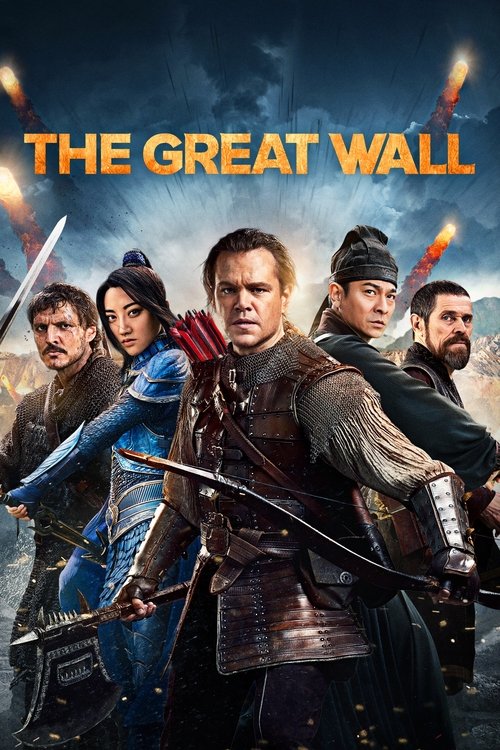
The Great Wall
European mercenaries searching for black powder become embroiled in the defense of the Great Wall of China against a horde of monstrous creatures.
Despite a enormous budget of $150.0M, The Great Wall became a solid performer, earning $332.0M worldwide—a 121% return. This commercial performance validated the ambitious narrative scope, confirming that audiences embrace innovative storytelling even at blockbuster scale.
3 wins & 2 nominations


Plot Structure
Story beats plotted across runtime


Narrative Arc
Emotional journey through the story's key moments
Story Circle
Blueprint 15-beat structure
Arcplot Score Breakdown
Weighted: Precision (70%) + Arc (15%) + Theme (15%)
The Great Wall (2016) showcases carefully calibrated dramatic framework, characteristic of Zhang Yimou's storytelling approach. This structural analysis examines how the film's 15-point plot structure maps to proven narrative frameworks across 1 hour and 43 minutes. With an Arcplot score of 7.4, the film balances conventional beats with creative variation.
Characters
Cast & narrative archetypes

William Garin
Commander Lin Mae
Pero Tovar
General Shao
Strategist Wang
Sir Ballard
Main Cast & Characters
William Garin
Played by Matt Damon
A European mercenary seeking black powder who becomes an ally to the Nameless Order defending China from monstrous Tao Tei creatures.
Commander Lin Mae
Played by Jing Tian
The skilled and disciplined leader of the Crane Corps, a female warrior who learns to trust William despite cultural differences.
Pero Tovar
Played by Pedro Pascal
William's cynical Spanish companion and fellow mercenary, focused on survival and profit rather than honor.
General Shao
Played by Zhang Hanyu
The strategic and honorable military commander of the Nameless Order who oversees the defense of the Great Wall.
Strategist Wang
Played by Andy Lau
The intelligent chief strategist and advisor to the Nameless Order who values knowledge and careful planning.
Sir Ballard
Played by Willem Dafoe
A European who has been imprisoned at the Wall for 25 years, desperate to escape with black powder.
Structural Analysis
The Status Quo at 1 minutes (1% through the runtime) establishes William and Tovar are mercenaries traveling the Silk Road in search of black powder, living by their wits and swords as sellswords in a foreign land.. The analysis reveals that this early placement immediately immerses viewers in the story world.
The inciting incident occurs at 13 minutes when The Tao Tie horde attacks the Great Wall in massive force during the day. William witnesses the scale of the threat and the organized sacrifice of the Nameless Order, particularly the Crane Corps who dive from the Wall on bungee cords.. At 13% through the film, this Disruption is delayed, allowing extended setup of the story world. This beat shifts the emotional landscape, launching the protagonist into the central conflict.
The First Threshold at 25 minutes marks the transition into Act II, occurring at 25% of the runtime. This reveals the protagonist's commitment to William chooses to stay and help the Nameless Order rather than escape with the black powder. He warns them of the Tao Tie's intelligence after observing their behavior, actively joining their cause., moving from reaction to action.
At 52 minutes, the Midpoint arrives at 51% of the runtime—precisely centered, creating perfect narrative symmetry. Structural examination shows that this crucial beat The Tao Tie breach the Wall using stealth tactics, infiltrating the capital city. What seemed like a defensive victory becomes a catastrophic defeat. The monsters are inside, heading for the Emperor, and the stakes escalate to the survival of all China., fundamentally raising what's at risk. The emotional intensity shifts, dividing the narrative into clear before-and-after phases.
The Collapse moment at 77 minutes (75% through) represents the emotional nadir. Here, General Shao dies heroically. The remaining forces are decimated. The Emperor is captured and dragged toward the Queen. All seems lost as the Tao Tie have won—they will feed the Emperor to the Queen and spawn infinite monsters across the world., demonstrates the protagonist at their lowest point. This beat's placement in the final quarter sets up the climactic reversal.
The Second Threshold at 82 minutes initiates the final act resolution at 80% of the runtime. William realizes they can use magnets to disorient the Tao Tie and delivers a plan to kill the Queen with a harpoon weapon. He synthesizes his Western archery skills with the Order's knowledge of the creatures' magnetic vulnerability. He fully commits to sacrifice for the greater good., demonstrating the transformation achieved throughout the journey.
Emotional Journey
The Great Wall's emotional architecture traces a deliberate progression across 15 carefully calibrated beats.
Narrative Framework
This structural analysis employs systematic plot point analysis that identifies crucial turning points. By mapping The Great Wall against these established plot points, we can identify how Zhang Yimou utilizes or subverts traditional narrative conventions. The plot point approach reveals not only adherence to structural principles but also creative choices that distinguish The Great Wall within the action genre.
Zhang Yimou's Structural Approach
Among the 11 Zhang Yimou films analyzed on Arcplot, the average structural score is 6.8, demonstrating varied approaches to story architecture. The Great Wall represents one of the director's most structurally precise works. For comparative analysis, explore the complete Zhang Yimou filmography.
Comparative Analysis
Additional action films include The Bad Guys, Puss in Boots and Venom: The Last Dance. For more Zhang Yimou analyses, see Full River Red, Cliff Walkers and The Flowers of War.
Plot Points by Act
Act I
SetupStatus Quo
William and Tovar are mercenaries traveling the Silk Road in search of black powder, living by their wits and swords as sellswords in a foreign land.
Theme
Commander Lin Mae speaks about trust and xin yong (trust/honor): "To fight for something bigger than yourself." The film's theme of moving from selfishness to sacrifice for a greater cause.
Worldbuilding
Establishment of William and Tovar as mercenaries pursued by bandits, their encounter with a mysterious creature, and their capture by the Nameless Order at the Great Wall. Introduction to the Wall's military structure and the legend of the Tao Tie.
Disruption
The Tao Tie horde attacks the Great Wall in massive force during the day. William witnesses the scale of the threat and the organized sacrifice of the Nameless Order, particularly the Crane Corps who dive from the Wall on bungee cords.
Resistance
William and Tovar debate escaping with the black powder versus staying. William is drawn to Lin Mae and the honor of the Order. General Shao recognizes William's combat skills. Ballard, another Westerner, encourages them to steal powder and flee.
Act II
ConfrontationFirst Threshold
William chooses to stay and help the Nameless Order rather than escape with the black powder. He warns them of the Tao Tie's intelligence after observing their behavior, actively joining their cause.
Mirror World
Lin Mae and William share a moment of connection. She explains the meaning of xin yong and her life dedicated to the Wall. This relationship represents the thematic counterpoint—trust, honor, and fighting for others versus William's mercenary selfishness.
Premise
William trains and fights alongside the Nameless Order. Spectacular battle sequences showcase the Wall's defenses: trebuchets, colored armor divisions, coordinated tactics. William uses his archery skills to help, earning respect. Investigation reveals the Tao Tie are controlled by a Queen.
Midpoint
The Tao Tie breach the Wall using stealth tactics, infiltrating the capital city. What seemed like a defensive victory becomes a catastrophic defeat. The monsters are inside, heading for the Emperor, and the stakes escalate to the survival of all China.
Opposition
Ballard betrays them and flees with black powder. The team pursues the Tao Tie to the capital where they've nested under the palace. General Shao is killed sacrificing himself. The remaining forces are overwhelmed, and the Emperor is about to be fed to the Queen to complete the Tao Tie's reproduction cycle.
Collapse
General Shao dies heroically. The remaining forces are decimated. The Emperor is captured and dragged toward the Queen. All seems lost as the Tao Tie have won—they will feed the Emperor to the Queen and spawn infinite monsters across the world.
Crisis
In the darkness of defeat, William processes what he's witnessed. He reflects on the sacrifice of the Nameless Order and what Lin Mae taught him about trust. He must decide who he wants to be: a mercenary who takes, or a warrior who gives.
Act III
ResolutionSecond Threshold
William realizes they can use magnets to disorient the Tao Tie and delivers a plan to kill the Queen with a harpoon weapon. He synthesizes his Western archery skills with the Order's knowledge of the creatures' magnetic vulnerability. He fully commits to sacrifice for the greater good.
Synthesis
William and the remaining warriors execute a desperate final assault on the tower where the Queen nests. Using magnets and coordinated sacrifice, they create an opening. William makes an impossible shot with a spear, killing the Queen. The Tao Tie army falls dormant. Victory through selfless cooperation.
Transformation
William is offered gold and black powder but chooses to take only what he needs. He departs the Wall with honor, having transformed from a selfish mercenary into a man who understands xin yong—trust, honor, and fighting for something greater than himself. Lin Mae watches him go with respect.