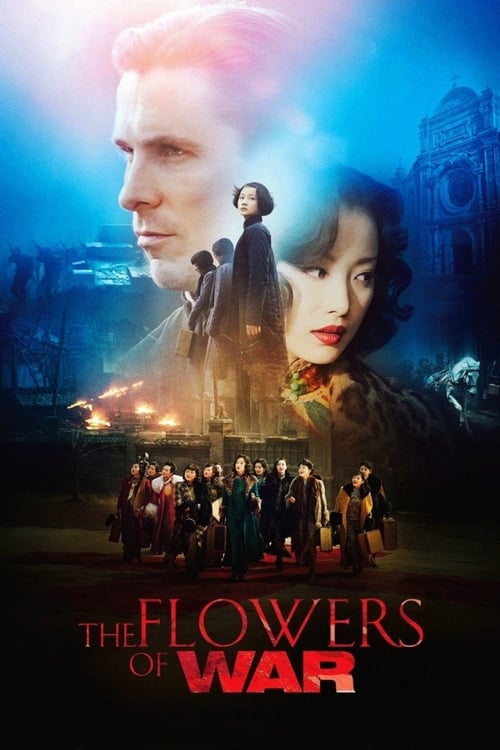
The Flowers of War
A Westerner finds refuge with a group of women in a church during Japan's rape of Nanking in 1937. Posing as a priest, he attempts to lead the women to safety.
Working with a considerable budget of $94.0M, the film achieved a modest success with $95.3M in global revenue (+1% profit margin).
15 wins & 16 nominations


Plot Structure
Story beats plotted across runtime


Narrative Arc
Emotional journey through the story's key moments
Story Circle
Blueprint 15-beat structure
Arcplot Score Breakdown
Weighted: Precision (70%) + Arc (15%) + Theme (15%)
The Flowers of War (2011) showcases deliberately positioned story structure, characteristic of Zhang Yimou's storytelling approach. This structural analysis examines how the film's 15-point plot structure maps to proven narrative frameworks across 2 hours and 26 minutes. With an Arcplot score of 6.8, the film balances conventional beats with creative variation.
Characters
Cast & narrative archetypes

John Miller
Yu Mo
Shu (George Chen)
Meng Shujuan
Major Li
Main Cast & Characters
John Miller
Played by Christian Bale
An American mortician who seeks refuge in a church during the Nanking Massacre, initially self-serving but becomes protector of women and children.
Yu Mo
Played by Ni Ni
The leader of the courtesans seeking shelter in the church, intelligent and compassionate, who ultimately sacrifices herself for the schoolgirls.
Shu (George Chen)
Played by Huang Tianyuan
A young student who pretends to be a priest and serves as translator, brave and determined to protect the refugees.
Meng Shujuan
Played by Zhang Xinyi
One of the schoolgirls sheltering in the church, mature and protective of the younger students.
Major Li
Played by Tong Dawei
A Chinese soldier who makes a last stand to protect civilians, embodying sacrifice and duty.
Structural Analysis
The Status Quo at 1 minutes (1% through the runtime) establishes Chaos engulfs Nanjing as Japanese forces invade. John Miller, an American mortician, navigates the war-torn streets seeking the cathedral where he's been hired to prepare a priest's body for burial, establishing a world already shattered by violence.. Structural examination shows that this early placement immediately immerses viewers in the story world.
The inciting incident occurs at 18 minutes when Japanese soldiers breach the cathedral grounds, hunting for women. The supposed sanctuary is violated, and the girls narrowly escape assault when Chinese soldiers, led by Major Li, sacrifice themselves to drive back the Japanese temporarily.. At 12% through the film, this Disruption aligns precisely with traditional story structure. This beat shifts the emotional landscape, launching the protagonist into the central conflict.
The First Threshold at 37 minutes marks the transition into Act II, occurring at 25% of the runtime. This reveals the protagonist's commitment to When Japanese soldiers return to assault the girls, John poses as the cathedral's priest, using his authority as a Westerner to demand they leave. He makes the choice to protect these strangers, accepting the responsibility and danger that comes with it., moving from reaction to action.
At 73 minutes, the Midpoint arrives at 50% of the runtime—precisely centered, creating perfect narrative symmetry. The analysis reveals that this crucial beat Colonel Hasegawa announces that the schoolgirls must perform at a Japanese victory celebration. The polite request is clearly a death sentence—everyone understands the girls will be taken as "comfort women." The fragile peace is shattered; there is no escape., fundamentally raising what's at risk. The emotional intensity shifts, dividing the narrative into clear before-and-after phases.
The Collapse moment at 110 minutes (75% through) represents the emotional nadir. Here, The schoolgirls decide to kill themselves rather than be taken. They climb to the bell tower, preparing to jump. All hope seems lost—there is no escape, no rescue, and death appears to be the only alternative to a fate worse than death., shows the protagonist at their lowest point. This beat's placement in the final quarter sets up the climactic reversal.
The Second Threshold at 117 minutes initiates the final act resolution at 80% of the runtime. The prostitutes commit to their self-sacrifice. John transforms them—cutting their hair, teaching them the school song, making them look like innocent girls. This fusion of John's skills and the women's courage creates the only possible path forward., demonstrating the transformation achieved throughout the journey.
Emotional Journey
The Flowers of War's emotional architecture traces a deliberate progression across 15 carefully calibrated beats.
Narrative Framework
This structural analysis employs proven narrative structure principles that track dramatic progression. By mapping The Flowers of War against these established plot points, we can identify how Zhang Yimou utilizes or subverts traditional narrative conventions. The plot point approach reveals not only adherence to structural principles but also creative choices that distinguish The Flowers of War within the drama genre.
Zhang Yimou's Structural Approach
Among the 11 Zhang Yimou films analyzed on Arcplot, the average structural score is 6.8, demonstrating varied approaches to story architecture. The Flowers of War takes a more unconventional approach compared to the director's typical style. For comparative analysis, explore the complete Zhang Yimou filmography.
Comparative Analysis
Additional drama films include After Thomas, South Pacific and Dirty Dancing: Havana Nights. For more Zhang Yimou analyses, see Full River Red, Cliff Walkers and One Second.
Plot Points by Act
Act I
SetupStatus Quo
Chaos engulfs Nanjing as Japanese forces invade. John Miller, an American mortician, navigates the war-torn streets seeking the cathedral where he's been hired to prepare a priest's body for burial, establishing a world already shattered by violence.
Theme
Young student Shu tells John that the cathedral is sanctuary, a sacred place meant to protect the innocent. This establishes the film's central theme: what makes a life worth saving, and who has the courage to protect the vulnerable.
Worldbuilding
The brutal reality of the Nanjing Massacre unfolds. John arrives at the cathedral to find it sheltering young schoolgirls under the care of the boy George. A group of prostitutes from the Qinhuai River district also seek refuge, creating immediate tension between the two groups.
Disruption
Japanese soldiers breach the cathedral grounds, hunting for women. The supposed sanctuary is violated, and the girls narrowly escape assault when Chinese soldiers, led by Major Li, sacrifice themselves to drive back the Japanese temporarily.
Resistance
John debates his involvement, initially wanting only payment and escape. The prostitutes hide in the cellar while the schoolgirls occupy the upper floors. John gradually recognizes the impossible situation: the Japanese will return, and only his Western face offers any hope of protection.
Act II
ConfrontationFirst Threshold
When Japanese soldiers return to assault the girls, John poses as the cathedral's priest, using his authority as a Westerner to demand they leave. He makes the choice to protect these strangers, accepting the responsibility and danger that comes with it.
Mirror World
John and Yu Mo, the leader of the prostitutes, share a meaningful connection. She represents another path to redemption—a woman who has been judged and dismissed by society yet possesses dignity and courage that challenges John's cynicism.
Premise
John maintains the priestly facade, negotiating with Japanese Colonel Hasegawa. The cathedral becomes a pressure cooker as the prostitutes and schoolgirls slowly develop understanding. John works to repair a truck that might offer escape while bonding with the children.
Midpoint
Colonel Hasegawa announces that the schoolgirls must perform at a Japanese victory celebration. The polite request is clearly a death sentence—everyone understands the girls will be taken as "comfort women." The fragile peace is shattered; there is no escape.
Opposition
Desperation mounts as John attempts to find a way out. Two prostitutes sneak out to retrieve guitar strings and are brutally murdered by Japanese soldiers. The girls contemplate mass suicide rather than face the celebration. John's repair of the truck fails as an escape route.
Collapse
The schoolgirls decide to kill themselves rather than be taken. They climb to the bell tower, preparing to jump. All hope seems lost—there is no escape, no rescue, and death appears to be the only alternative to a fate worse than death.
Crisis
In the darkest moment, as the girls prepare to die, the prostitutes emerge with an extraordinary offer. Yu Mo and her companions will go in place of the schoolgirls. They will disguise themselves as students and face whatever horrors await.
Act III
ResolutionSecond Threshold
The prostitutes commit to their self-sacrifice. John transforms them—cutting their hair, teaching them the school song, making them look like innocent girls. This fusion of John's skills and the women's courage creates the only possible path forward.
Synthesis
The transformation is completed overnight. The prostitutes, now disguised as schoolgirls, hide weapons in their clothes. In an emotional farewell, they board the Japanese trucks. John drives the real schoolgirls away in the repaired truck, finally becoming the savior he never intended to be.
Transformation
The schoolgirls escape Nanjing in John's truck. Shu narrates that she never learned what happened to the women who saved them. The cynical mortician has become a true priest—a man who shepherds the innocent from death to life, transformed by sacrifice he witnessed.