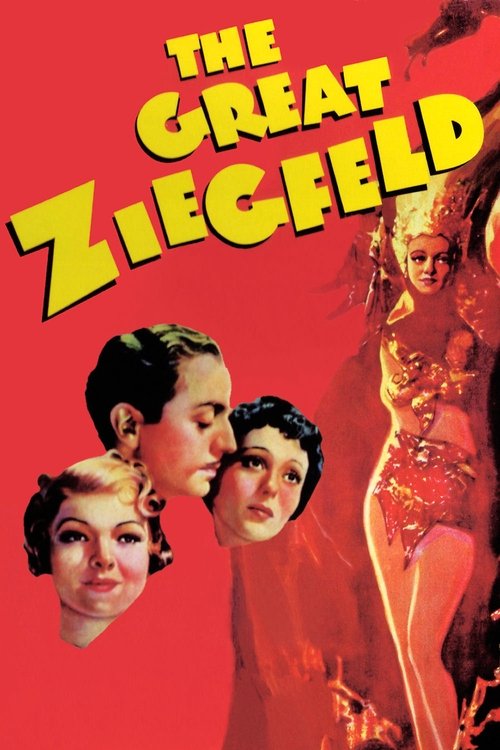
The Great Ziegfeld
At the 1893 Chicago World's Fair, sideshow barker Florenz Ziegfeld turns the tables on his more-successful neighbor Billings, and also steals his girlfriend. This pattern repeats throughout their lives, as Ziegfeld makes and loses many fortunes putting on ever-bigger, more spectacular shows
Despite its tight budget of $2.2M, The Great Ziegfeld became a box office success, earning $4.7M worldwide—a 114% return.
3 Oscars. 4 wins & 5 nominations


Plot Structure
Story beats plotted across runtime


Narrative Arc
Emotional journey through the story's key moments
Story Circle
Blueprint 15-beat structure
Arcplot Score Breakdown
Weighted: Precision (70%) + Arc (15%) + Theme (15%)
The Great Ziegfeld (1936) showcases deliberately positioned story structure, characteristic of Robert Z. Leonard's storytelling approach. This structural analysis examines how the film's 15-point plot structure maps to proven narrative frameworks across 3 hours and 5 minutes. With an Arcplot score of 7.3, the film balances conventional beats with creative variation.
Characters
Cast & narrative archetypes

Florenz Ziegfeld Jr.
Anna Held
Billie Burke
Jack Billings
Sandow
Audrey Dane
Main Cast & Characters
Florenz Ziegfeld Jr.
Played by William Powell
Ambitious showman who rises from carnival barker to Broadway impresario, building an empire through charm, vision, and risky financial gambles.
Anna Held
Played by Luise Rainer
French music hall star and Ziegfeld's first wife, a sophisticated performer who helps launch his career but struggles with his wandering eye.
Billie Burke
Played by Myrna Loy
Sweet-natured actress who becomes Ziegfeld's second wife, providing stability and loyalty through his greatest triumphs and eventual financial ruin.
Jack Billings
Played by Frank Morgan
Ziegfeld's loyal friend and musical director who provides steady support and occasional reality checks throughout his volatile career.
Sandow
Played by Nat Pendleton
Strong man performer whom Ziegfeld promotes in his early carnival days, representing his first major promotional success.
Audrey Dane
Played by Virginia Bruce
Tempestuous showgirl and temperamental star who tests Ziegfeld's patience and management skills with her demands and tantrums.
Structural Analysis
The Status Quo at 2 minutes (1% through the runtime) establishes Flo Ziegfeld works as a sideshow barker at the 1893 Chicago World's Fair, promoting Sandow the strongman with aggressive showmanship but limited resources, establishing his character as an ambitious but small-time promoter.. Of particular interest, this early placement immediately immerses viewers in the story world.
The inciting incident occurs at 21 minutes when Ziegfeld discovers Anna Held, a beautiful French singer performing in a small venue. He sees in her the potential to create a new kind of spectacular entertainment, disrupting his small-time carnival existence with a vision of legitimate theatrical grandeur.. At 11% through the film, this Disruption aligns precisely with traditional story structure. This beat shifts the emotional landscape, launching the protagonist into the central conflict.
The First Threshold at 47 minutes marks the transition into Act II, occurring at 25% of the runtime. This illustrates the protagonist's commitment to Ziegfeld and Anna Held marry and fully commit to building a theatrical empire together. He chooses to mortgage everything for his vision of a new kind of Broadway show, crossing into the world of legitimate theater and high-stakes showmanship., moving from reaction to action.
At 94 minutes, the Midpoint arrives at 51% of the runtime—precisely centered, creating perfect narrative symmetry. Notably, this crucial beat False defeat: Anna confronts Ziegfeld about his neglect of their marriage and his obsession with glorifying other women on stage. She leaves him, and despite his professional triumphs, his personal life crumbles. The stakes shift from "Can he succeed?" to "What will success cost him?"., fundamentally raising what's at risk. The emotional intensity shifts, dividing the narrative into clear before-and-after phases.
The Collapse moment at 140 minutes (76% through) represents the emotional nadir. Here, The stock market crashes in 1929, wiping out Ziegfeld's fortune. He loses everything he built, his health fails, and he becomes a broken man. The "whiff of death" is both literal (his declining health) and metaphorical (the death of an era, his dreams, his identity as a showman)., demonstrates the protagonist at their lowest point. This beat's placement in the final quarter sets up the climactic reversal.
The Second Threshold at 150 minutes initiates the final act resolution at 81% of the runtime. In his final moments, Ziegfeld has a vision/hallucination of another grand Follies production. He synthesizes his understanding: the shows were his art, his legacy, his true self-expression. He accepts both the glory and the cost of his choices., demonstrating the transformation achieved throughout the journey.
Emotional Journey
The Great Ziegfeld's emotional architecture traces a deliberate progression across 15 carefully calibrated beats.
Narrative Framework
This structural analysis employs structural analysis methodology used to understand storytelling architecture. By mapping The Great Ziegfeld against these established plot points, we can identify how Robert Z. Leonard utilizes or subverts traditional narrative conventions. The plot point approach reveals not only adherence to structural principles but also creative choices that distinguish The Great Ziegfeld within the music genre.
Comparative Analysis
Additional music films include South Pacific, Dirty Dancing: Havana Nights and Yesterday.
Plot Points by Act
Act I
SetupStatus Quo
Flo Ziegfeld works as a sideshow barker at the 1893 Chicago World's Fair, promoting Sandow the strongman with aggressive showmanship but limited resources, establishing his character as an ambitious but small-time promoter.
Theme
Billings tells Ziegfeld, "You're a gambler, Flo. You always will be," highlighting the central theme of ambition, risk-taking, and the cost of pursuing spectacle and glory at any price.
Worldbuilding
The world of turn-of-the-century show business is established: Ziegfeld's rivalry with Jack Billings, his bold promotional schemes with Sandow, his mounting debts, and his dream of creating something grander. We see his charm, ambition, and reckless spending habits.
Disruption
Ziegfeld discovers Anna Held, a beautiful French singer performing in a small venue. He sees in her the potential to create a new kind of spectacular entertainment, disrupting his small-time carnival existence with a vision of legitimate theatrical grandeur.
Resistance
Ziegfeld courts Anna Held both professionally and romantically, convincing her to come to America. He debates how to finance the venture, borrows heavily, and creates elaborate publicity stunts. Anna is hesitant about leaving Europe and uncertain about Ziegfeld's wild promises.
Act II
ConfrontationFirst Threshold
Ziegfeld and Anna Held marry and fully commit to building a theatrical empire together. He chooses to mortgage everything for his vision of a new kind of Broadway show, crossing into the world of legitimate theater and high-stakes showmanship.
Mirror World
Anna Held represents the personal/romantic subplot that carries the theme. She embodies both the beauty Ziegfeld glorifies and the human cost of his obsession with spectacle. Their relationship mirrors the central question: can love survive when married to ambition?
Premise
The promise of the premise: spectacular Ziegfeld Follies productions, lavish musical numbers, beautiful showgirls, and mounting success. Ziegfeld becomes the toast of Broadway, creating increasingly elaborate shows. We see the glamour, excess, and artistry the audience came to experience.
Midpoint
False defeat: Anna confronts Ziegfeld about his neglect of their marriage and his obsession with glorifying other women on stage. She leaves him, and despite his professional triumphs, his personal life crumbles. The stakes shift from "Can he succeed?" to "What will success cost him?"
Opposition
Ziegfeld continues producing increasingly expensive Follies, meets and marries actress Billie Burke, but faces mounting financial pressures. The 1929 stock market crash looms. His refusal to moderate his spending and his compulsion to outdo himself create escalating problems.
Collapse
The stock market crashes in 1929, wiping out Ziegfeld's fortune. He loses everything he built, his health fails, and he becomes a broken man. The "whiff of death" is both literal (his declining health) and metaphorical (the death of an era, his dreams, his identity as a showman).
Crisis
Ziegfeld lies ill and penniless, grappling with the loss of his empire. He processes what his ambition has cost him and what truly mattered. Billie Burke remains by his side, representing the love and loyalty that transcends the spectacle.
Act III
ResolutionSecond Threshold
In his final moments, Ziegfeld has a vision/hallucination of another grand Follies production. He synthesizes his understanding: the shows were his art, his legacy, his true self-expression. He accepts both the glory and the cost of his choices.
Synthesis
Ziegfeld's final vision unfolds as an ethereal, spectacular Follies number with a endless staircase of beautiful performers. The sequence serves as both his dying dream and the film's eulogy to his artistic legacy, resolving the tension between art and life.
Transformation
Ziegfeld dies peacefully, transformed from the scrappy carnival barker into a legend. The closing image shows his eternal vision of beauty and spectacle continuing beyond death, suggesting that while the man was mortal, the art and the dream live on.