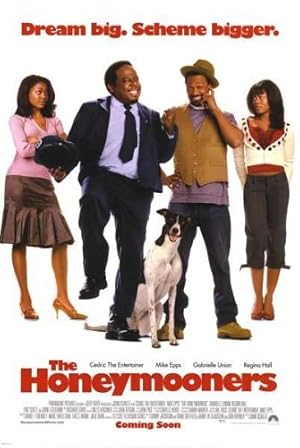
The Honeymooners
New York City bus driver Ralph Kramden and his feisty wife Alice struggle to make ends meet. Despite Ralph's many get-rich-quick schemes/motivational-speaker tape series, they've managed to save some money, and with their best friends Ed and Trixie Norton, they have almost enough money for a down-payment on a Brooklyn duplex. However, when Ralph decides to try to impress Alice by making up what he's lost and augmenting their savings with another of his crazy schemes, he winds up losing all their money and his marriage to boot--and it takes all his determination and love for Alice to get things on track again.
The film underperformed commercially against its respectable budget of $25.0M, earning $13.2M globally (-47% loss). While initial box office returns were modest, the film has gained appreciation for its bold vision within the comedy genre.
1 win & 3 nominations


Plot Structure
Story beats plotted across runtime


Narrative Arc
Emotional journey through the story's key moments
Story Circle
Blueprint 15-beat structure
Arcplot Score Breakdown
Weighted: Precision (70%) + Arc (15%) + Theme (15%)
The Honeymooners (2005) demonstrates carefully calibrated story structure, characteristic of John Schultz's storytelling approach. This structural analysis examines how the film's 15-point plot structure maps to proven narrative frameworks across 1 hour and 30 minutes. With an Arcplot score of 7.3, the film balances conventional beats with creative variation.
Structural Analysis
The Status Quo at 1 minutes (1% through the runtime) establishes Ralph Kramden works as a bus driver in 1950s Brooklyn, dreaming of making it big while living paycheck to paycheck with wife Alice in their cramped apartment.. The analysis reveals that this early placement immediately immerses viewers in the story world.
The inciting incident occurs at 11 minutes when Ralph discovers an opportunity for a major scheme - either a contest, inheritance, or business venture that could finally make him rich and change his life.. At 13% through the film, this Disruption is delayed, allowing extended setup of the story world. This beat shifts the emotional landscape, launching the protagonist into the central conflict.
The First Threshold at 23 minutes marks the transition into Act II, occurring at 25% of the runtime. This demonstrates the protagonist's commitment to Ralph commits fully to the scheme, likely investing money or quitting his job, crossing the point of no return despite Alice's warnings., moving from reaction to action.
At 45 minutes, the Midpoint arrives at 50% of the runtime—precisely centered, creating perfect narrative symmetry. Notably, this crucial beat False victory: The scheme appears to be working and Ralph seems on the verge of success, raising the stakes and making him more committed than ever., fundamentally raising what's at risk. The emotional intensity shifts, dividing the narrative into clear before-and-after phases.
The Collapse moment at 68 minutes (75% through) represents the emotional nadir. Here, The scheme falls apart completely. Ralph loses everything he invested. Alice may leave or their relationship hits rock bottom. Ralph faces the death of his dream., indicates the protagonist at their lowest point. This beat's placement in the final quarter sets up the climactic reversal.
The Second Threshold at 72 minutes initiates the final act resolution at 80% of the runtime. Ralph realizes that wealth isn't what matters - his wife, friends, and simple life are the real treasure. He gains clarity on how to make things right., demonstrating the transformation achieved throughout the journey.
Emotional Journey
The Honeymooners's emotional architecture traces a deliberate progression across 15 carefully calibrated beats.
Narrative Framework
This structural analysis employs a 15-point narrative structure framework that maps key story moments. By mapping The Honeymooners against these established plot points, we can identify how John Schultz utilizes or subverts traditional narrative conventions. The plot point approach reveals not only adherence to structural principles but also creative choices that distinguish The Honeymooners within the comedy genre.
John Schultz's Structural Approach
Among the 5 John Schultz films analyzed on Arcplot, the average structural score is 7.3, reflecting strong command of classical structure. The Honeymooners represents one of the director's most structurally precise works. For comparative analysis, explore the complete John Schultz filmography.
Comparative Analysis
Additional comedy films include The Bad Guys, Ella Enchanted and The Evening Star. For more John Schultz analyses, see Judy Moody and the Not Bummer Summer, Like Mike and Drive Me Crazy.
Plot Points by Act
Act I
SetupStatus Quo
Ralph Kramden works as a bus driver in 1950s Brooklyn, dreaming of making it big while living paycheck to paycheck with wife Alice in their cramped apartment.
Theme
Alice or Norton mentions that Ralph's schemes always fail because he's chasing money instead of appreciating what he has - his friends and family.
Worldbuilding
Establishment of Ralph and Norton's friendship, their wives Alice and Trixie, Ralph's job as a bus driver, their lower-class Brooklyn neighborhood, and Ralph's pattern of get-rich-quick schemes.
Disruption
Ralph discovers an opportunity for a major scheme - either a contest, inheritance, or business venture that could finally make him rich and change his life.
Resistance
Ralph debates pursuing the scheme with Norton. Alice expresses skepticism. Ralph tries to convince everyone it'll work this time, gathering information and making plans.
Act II
ConfrontationFirst Threshold
Ralph commits fully to the scheme, likely investing money or quitting his job, crossing the point of no return despite Alice's warnings.
Mirror World
Ralph and Alice's relationship becomes central as the scheme creates tension; or Ralph meets someone who represents what true success means (beyond money).
Premise
Ralph pursues the scheme with Norton's help, experiencing the ups and downs of their venture. Comic mishaps and misunderstandings as they navigate this new opportunity.
Midpoint
False victory: The scheme appears to be working and Ralph seems on the verge of success, raising the stakes and making him more committed than ever.
Opposition
Complications arise. The scheme begins to unravel. Ralph's relationship with Alice deteriorates. Antagonistic forces (competitors, authorities, or circumstances) close in.
Collapse
The scheme falls apart completely. Ralph loses everything he invested. Alice may leave or their relationship hits rock bottom. Ralph faces the death of his dream.
Crisis
Ralph wallows in defeat, reflecting on his failures. Norton may try to console him. Ralph confronts what he's lost and what truly matters.
Act III
ResolutionSecond Threshold
Ralph realizes that wealth isn't what matters - his wife, friends, and simple life are the real treasure. He gains clarity on how to make things right.
Synthesis
Ralph makes amends with Alice, apologizes for his foolishness, and demonstrates he's learned his lesson. He applies his new wisdom to resolve remaining conflicts.
Transformation
Ralph back driving his bus or in their apartment, but now content and appreciative of what he has. Mirrors the opening but shows he's changed - he's grateful instead of resentful.