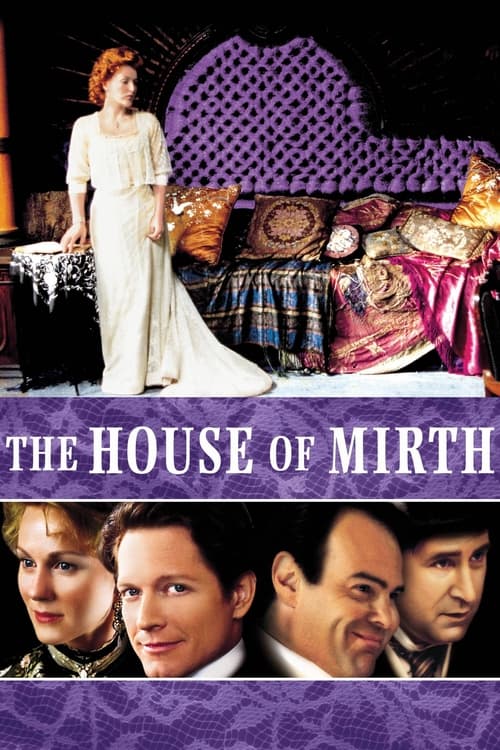
The House of Mirth
In early 20th century New York City, an impoverished socialite desperately seeks a suitable husband as she gradually finds herself betrayed by her friends and exiled from high society.
The film disappointed at the box office against its small-scale budget of $10.0M, earning $5.2M globally (-48% loss). While initial box office returns were modest, the film has gained appreciation for its unconventional structure within the drama genre.
Nominated for 2 BAFTA 6 wins & 29 nominations


Plot Structure
Story beats plotted across runtime


Narrative Arc
Emotional journey through the story's key moments
Story Circle
Blueprint 15-beat structure
Arcplot Score Breakdown
Weighted: Precision (70%) + Arc (15%) + Theme (15%)
The House of Mirth (2000) exemplifies precise dramatic framework, characteristic of Terence Davies's storytelling approach. This structural analysis examines how the film's 15-point plot structure maps to proven narrative frameworks across 2 hours and 15 minutes. With an Arcplot score of 7.1, the film balances conventional beats with creative variation.
Structural Analysis
The Status Quo at 1 minutes (1% through the runtime) establishes Lily Bart encounters Lawrence Selden at Grand Central Station, establishing her precarious position as a beautiful but unmarried woman of 29 navigating New York's Gilded Age society, dependent on wealthy relatives for her place in the world.. Significantly, this early placement immediately immerses viewers in the story world.
The inciting incident occurs at 16 minutes when Lily deliberately misses church to walk with Selden, sabotaging her careful cultivation of Percy Gryce. Bertha Dorset, threatened by Lily's beauty, poisons Gryce against her, beginning Lily's downward spiral as her best marriage prospect evaporates.. At 12% through the film, this Disruption aligns precisely with traditional story structure. This beat shifts the emotional landscape, launching the protagonist into the central conflict.
The First Threshold at 34 minutes marks the transition into Act II, occurring at 25% of the runtime. This indicates the protagonist's commitment to Lily accepts money from Gus Trenor, believing it to be investment returns. This Faustian bargain marks her active entry into moral compromise - she chooses financial relief over integrity, crossing a threshold from which she cannot return unscathed., moving from reaction to action.
At 68 minutes, the Midpoint arrives at 50% of the runtime—precisely centered, creating perfect narrative symmetry. Significantly, this crucial beat On the yacht at Monte Carlo, Bertha publicly accuses Lily of impropriety with George Dorset to deflect from her own adultery. This false defeat destroys Lily's reputation in one devastating moment - she is expelled from the Dorset party and by extension from society itself., fundamentally raising what's at risk. The emotional intensity shifts, dividing the narrative into clear before-and-after phases.
The Collapse moment at 101 minutes (75% through) represents the emotional nadir. Here, Lily is fired from the millinery shop, her last means of respectable employment gone. She holds Bertha's letters - the power to destroy her enemy and restore her reputation - but realizes using them would make her complicit in the very cruelty that destroyed her. A death of her former self and all hope of social restoration., demonstrates the protagonist at their lowest point. This beat's placement in the final quarter sets up the climactic reversal.
The Second Threshold at 108 minutes initiates the final act resolution at 80% of the runtime. Lily burns Bertha's letters, choosing moral integrity over revenge or restoration. She visits Selden one last time, and though they cannot fully express their love, there is a moment of understanding. She accepts her fate with dignity, achieving spiritual synthesis even as material hope dies., demonstrating the transformation achieved throughout the journey.
Emotional Journey
The House of Mirth's emotional architecture traces a deliberate progression across 15 carefully calibrated beats.
Narrative Framework
This structural analysis employs systematic plot point analysis that identifies crucial turning points. By mapping The House of Mirth against these established plot points, we can identify how Terence Davies utilizes or subverts traditional narrative conventions. The plot point approach reveals not only adherence to structural principles but also creative choices that distinguish The House of Mirth within the drama genre.
Comparative Analysis
Additional drama films include After Thomas, South Pacific and Dirty Dancing: Havana Nights.
Plot Points by Act
Act I
SetupStatus Quo
Lily Bart encounters Lawrence Selden at Grand Central Station, establishing her precarious position as a beautiful but unmarried woman of 29 navigating New York's Gilded Age society, dependent on wealthy relatives for her place in the world.
Theme
Selden remarks on the irony of Lily's situation, observing that she is "so evidently the victim of the civilization which had produced her" - articulating the theme that society's expectations destroy those who cannot fully embrace its corruption.
Worldbuilding
The elaborate social world of Gilded Age New York is established: the Trenor estate at Bellomont, the intricate rules of society, Lily's financial dependence on Aunt Peniston, and the marriage market where wealthy bachelors like Percy Gryce represent security while Selden represents something more genuine but impractical.
Disruption
Lily deliberately misses church to walk with Selden, sabotaging her careful cultivation of Percy Gryce. Bertha Dorset, threatened by Lily's beauty, poisons Gryce against her, beginning Lily's downward spiral as her best marriage prospect evaporates.
Resistance
Lily debates her options: she could pursue Selden but he lacks wealth; she accepts Gus Trenor's offer to invest money for her, not understanding the implicit bargain. She visits Selden's bachelor apartment again, further compromising her reputation, torn between heart and survival.
Act II
ConfrontationFirst Threshold
Lily accepts money from Gus Trenor, believing it to be investment returns. This Faustian bargain marks her active entry into moral compromise - she chooses financial relief over integrity, crossing a threshold from which she cannot return unscathed.
Mirror World
The tableaux vivants scene where Lily appears as Mrs. Lloyd - a moment of transcendent beauty where she and Selden connect wordlessly. This represents the possibility of authentic love and artistic truth versus society's shallow values, the path not taken.
Premise
Lily navigates society's treacherous waters: she joins the Dorsets on their Mediterranean yacht cruise, plays the social game with increasing desperation, and believes she might still secure her position. She acquires Bertha's compromising letters to Selden, gaining potential leverage.
Midpoint
On the yacht at Monte Carlo, Bertha publicly accuses Lily of impropriety with George Dorset to deflect from her own adultery. This false defeat destroys Lily's reputation in one devastating moment - she is expelled from the Dorset party and by extension from society itself.
Opposition
Lily's social exile accelerates: she is cut by former friends, disinherited by Aunt Peniston who dies believing the rumors, forced to work as a social secretary for the vulgar Mrs. Hatch, then as a milliner. Each attempt to recover fails as society closes ranks against her.
Collapse
Lily is fired from the millinery shop, her last means of respectable employment gone. She holds Bertha's letters - the power to destroy her enemy and restore her reputation - but realizes using them would make her complicit in the very cruelty that destroyed her. A death of her former self and all hope of social restoration.
Crisis
Lily sinks into poverty and chloral dependency in a squalid boarding house. She encounters Nettie Struther, a working-class woman she once helped, whose simple happiness with husband and child illuminates the authentic life Lily could never achieve. The warmth of holding Nettie's baby is a glimpse of what she sacrificed.
Act III
ResolutionSecond Threshold
Lily burns Bertha's letters, choosing moral integrity over revenge or restoration. She visits Selden one last time, and though they cannot fully express their love, there is a moment of understanding. She accepts her fate with dignity, achieving spiritual synthesis even as material hope dies.
Synthesis
Lily returns to her room and takes her final dose of chloral - whether intentional overdose or accident remains ambiguous. She achieves a kind of peace, having preserved her integrity. Selden arrives the next morning to finally declare his love, only to find her dead, the letters' ashes in the fireplace.
Transformation
Selden kneels beside Lily's body, finally understanding too late what she meant to him and what she sacrificed. Her face in death is peaceful - transformed from society's victim to someone who chose integrity over survival. The tragedy is complete: she found her soul but lost her life.