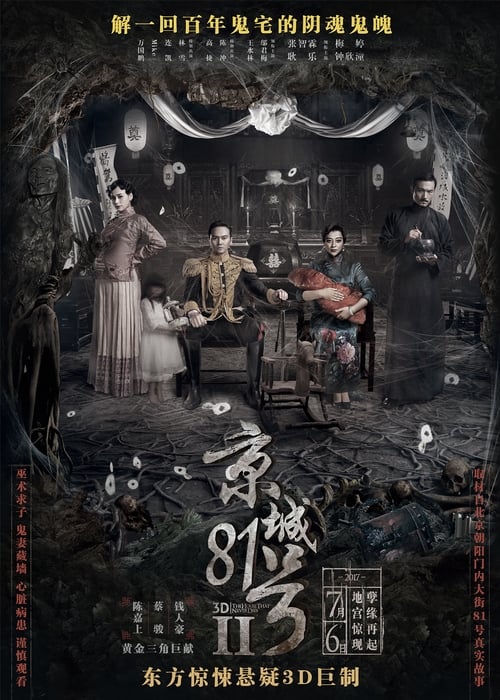
The House That Never Dies II
A cultural relic restorer discovers the skeletons of babies while working in an old mansion. The bloody events of the past drags everyone working on the project into a dark abyss.
The film earned $32.4M at the global box office.









Plot Structure
Story beats plotted across runtime


Narrative Arc
Emotional journey through the story's key moments
Story Circle
Blueprint 15-beat structure
Arcplot Score Breakdown
Weighted: Precision (70%) + Arc (15%) + Theme (15%)
The House That Never Dies II (2017) demonstrates precise plot construction, characteristic of Joe Chien Jen-Hao's storytelling approach. This structural analysis examines how the film's 13-point plot structure maps to proven narrative frameworks across 1 hour and 37 minutes. With an Arcplot score of 7.4, the film balances conventional beats with creative variation.
Structural Analysis
The Status Quo at 1 minutes (1% through the runtime) establishes A young woman arrives at the infamous Chaonei No. 81 mansion in Beijing, establishing her ordinary world before supernatural events begin. The house stands abandoned and foreboding, known for its dark history.. Of particular interest, this early placement immediately immerses viewers in the story world.
The inciting incident occurs at 12 minutes when The first undeniable supernatural encounter occurs—a terrifying manifestation or unexplained phenomenon that shatters any rational explanation and forces the protagonist to confront the reality of the haunting.. At 12% through the film, this Disruption aligns precisely with traditional story structure. This beat shifts the emotional landscape, launching the protagonist into the central conflict.
The First Threshold at 24 minutes marks the transition into Act II, occurring at 25% of the runtime. This demonstrates the protagonist's commitment to The protagonist makes the active choice to enter deeper into the mystery, perhaps staying in the mansion overnight or conducting a ritual that fully commits her to confronting the supernatural forces. There is no turning back., moving from reaction to action.
At 49 minutes, the Midpoint arrives at 50% of the runtime—precisely centered, creating perfect narrative symmetry. Significantly, this crucial beat A false victory turns to false defeat: the protagonist believes she has discovered the truth or found protection, but this revelation actually awakens the full power of the vengeful spirit. The stakes raise dramatically and the true horror begins., fundamentally raising what's at risk. The emotional intensity shifts, dividing the narrative into clear before-and-after phases.
The Collapse moment at 73 minutes (75% through) represents the emotional nadir. Here, The darkest moment: a major character death occurs, the protagonist faces possession or near-death, or she realizes her actions have unleashed something unstoppable. Hope seems lost and the "whiff of death" permeates the scene., shows the protagonist at their lowest point. This beat's placement in the final quarter sets up the climactic reversal.
The Synthesis at 78 minutes initiates the final act resolution at 80% of the runtime. The final confrontation: the protagonist faces the primary malevolent force, performing a ritual, making a sacrifice, or providing the closure needed to break the curse. The climactic supernatural battle or emotional resolution plays out in the mansion., demonstrating the transformation achieved throughout the journey.
Emotional Journey
The House That Never Dies II's emotional architecture traces a deliberate progression across 13 carefully calibrated beats.
Narrative Framework
This structural analysis employs structural analysis methodology used to understand storytelling architecture. By mapping The House That Never Dies II against these established plot points, we can identify how Joe Chien Jen-Hao utilizes or subverts traditional narrative conventions. The plot point approach reveals not only adherence to structural principles but also creative choices that distinguish The House That Never Dies II within the thriller genre.
Comparative Analysis
Additional thriller films include Eye for an Eye, Lake Placid and Operation Finale.
Plot Points by Act
Act I
SetupStatus Quo
A young woman arrives at the infamous Chaonei No. 81 mansion in Beijing, establishing her ordinary world before supernatural events begin. The house stands abandoned and foreboding, known for its dark history.
Theme
A secondary character warns that "the past never truly stays buried" and that "some doors, once opened, can never be closed again," establishing the film's exploration of unresolved trauma and vengeful spirits.
Worldbuilding
Introduction to the main characters, their relationships, and the mansion's haunted reputation. We learn about the house's tragic history and the protagonist's connection to it through family legacy or research interest.
Disruption
The first undeniable supernatural encounter occurs—a terrifying manifestation or unexplained phenomenon that shatters any rational explanation and forces the protagonist to confront the reality of the haunting.
Resistance
The protagonist debates whether to flee or investigate further. She may consult experts, historians, or spiritual advisors who provide backstory about the mansion's curse and previous victims, preparing her for deeper involvement.
Act II
ConfrontationFirst Threshold
The protagonist makes the active choice to enter deeper into the mystery, perhaps staying in the mansion overnight or conducting a ritual that fully commits her to confronting the supernatural forces. There is no turning back.
Mirror World
A relationship forms with another character—perhaps a fellow investigator or a sympathetic spirit—who represents an emotional connection that will teach the protagonist about forgiveness, closure, or the cost of vengeance.
Premise
The horror premise delivers: escalating supernatural encounters, ghostly visions revealing the mansion's tragic past, possession attempts, and creeping dread as the protagonist pieces together the mystery while facing mounting paranormal threats.
Midpoint
A false victory turns to false defeat: the protagonist believes she has discovered the truth or found protection, but this revelation actually awakens the full power of the vengeful spirit. The stakes raise dramatically and the true horror begins.
Opposition
The malevolent forces close in with increasing intensity. Characters are isolated, attacked, or possessed. The protagonist's flaws and past mistakes become vulnerabilities that the spirits exploit. Escape attempts fail and allies may turn against her.
Collapse
The darkest moment: a major character death occurs, the protagonist faces possession or near-death, or she realizes her actions have unleashed something unstoppable. Hope seems lost and the "whiff of death" permeates the scene.
Crisis
In the emotional darkness following the collapse, the protagonist processes her loss and despair. She confronts her own guilt, fear, or connection to the house's tragedy, reaching her lowest point before finding new resolve.
Act III
ResolutionSynthesis
The final confrontation: the protagonist faces the primary malevolent force, performing a ritual, making a sacrifice, or providing the closure needed to break the curse. The climactic supernatural battle or emotional resolution plays out in the mansion.