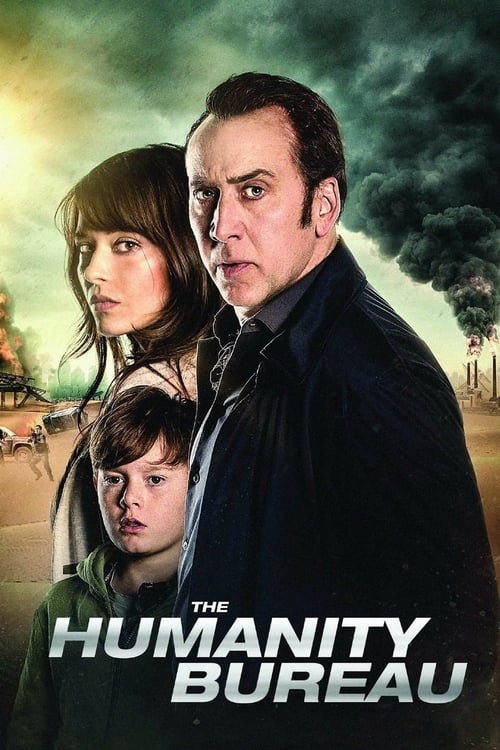
The Humanity Bureau
In 2030 the world is in a permanent state of economic recession and facing serious environmental problems as a result of global warming.
Despite its small-scale budget of $6.0M, The Humanity Bureau became a box office success, earning $17.5M worldwide—a 192% return.


Plot Structure
Story beats plotted across runtime


Narrative Arc
Emotional journey through the story's key moments
Story Circle
Blueprint 15-beat structure
Arcplot Score Breakdown
Weighted: Precision (70%) + Arc (15%) + Theme (15%)
The Humanity Bureau (2017) exhibits meticulously timed narrative design, characteristic of Rob W. King's storytelling approach. This structural analysis examines how the film's 15-point plot structure maps to proven narrative frameworks across 1 hour and 34 minutes. With an Arcplot score of 6.7, the film balances conventional beats with creative variation.
Structural Analysis
The Status Quo at 1 minutes (1% through the runtime) establishes Noah Kross works as a caseworker for the Humanity Bureau in a dystopian 2030 America, determining who is productive enough to remain in society. The opening establishes a grim world of resource scarcity and authoritarian control.. Significantly, this early placement immediately immerses viewers in the story world.
The inciting incident occurs at 11 minutes when Noah is assigned to evaluate Rachel Weller and her son Lucas. During his investigation, he discovers evidence suggesting New Eden may not be the sanctuary the government claims, and that deportees may be killed instead.. At 12% through the film, this Disruption aligns precisely with traditional story structure. This beat shifts the emotional landscape, launching the protagonist into the central conflict.
The First Threshold at 24 minutes marks the transition into Act II, occurring at 25% of the runtime. This shows the protagonist's commitment to Noah makes the active choice to help Rachel and Lucas escape rather than deport them. He abandons his position and commits to getting them across the border to Canada, becoming a fugitive., moving from reaction to action.
At 47 minutes, the Midpoint arrives at 50% of the runtime—precisely centered, creating perfect narrative symmetry. Notably, this crucial beat The Bureau closes in and Noah realizes the full extent of their surveillance and reach. A false defeat: their escape route is compromised and Noah's former colleague is revealed to be hunting them specifically. The stakes escalate dramatically., fundamentally raising what's at risk. The emotional intensity shifts, dividing the narrative into clear before-and-after phases.
The Collapse moment at 71 minutes (75% through) represents the emotional nadir. Here, They are captured or cornered by Bureau forces. Noah faces the apparent failure of his mission and the likely death of Rachel and Lucas. His defiance seems futile against the system's power. This is his darkest moment of despair., illustrates the protagonist at their lowest point. This beat's placement in the final quarter sets up the climactic reversal.
The Second Threshold at 75 minutes initiates the final act resolution at 80% of the runtime. Noah discovers a way out or receives crucial help from an unexpected source. He synthesizes his knowledge of the Bureau with his newfound moral clarity, seeing how to strike back and get Rachel and Lucas to freedom., demonstrating the transformation achieved throughout the journey.
Emotional Journey
The Humanity Bureau's emotional architecture traces a deliberate progression across 15 carefully calibrated beats.
Narrative Framework
This structural analysis employs a 15-point narrative structure framework that maps key story moments. By mapping The Humanity Bureau against these established plot points, we can identify how Rob W. King utilizes or subverts traditional narrative conventions. The plot point approach reveals not only adherence to structural principles but also creative choices that distinguish The Humanity Bureau within the science fiction genre.
Comparative Analysis
Additional science fiction films include The Postman, Mad Max 2 and AVP: Alien vs. Predator.
Plot Points by Act
Act I
SetupStatus Quo
Noah Kross works as a caseworker for the Humanity Bureau in a dystopian 2030 America, determining who is productive enough to remain in society. The opening establishes a grim world of resource scarcity and authoritarian control.
Theme
A character questions what makes someone "worthy" of living in society, introducing the film's central theme about the value of human life and who has the right to judge it.
Worldbuilding
The oppressive society is established: climate change has devastated America, the government deports "unproductive" citizens to New Eden, and Noah dutifully processes cases while beginning to show subtle doubts about the system.
Disruption
Noah is assigned to evaluate Rachel Weller and her son Lucas. During his investigation, he discovers evidence suggesting New Eden may not be the sanctuary the government claims, and that deportees may be killed instead.
Resistance
Noah investigates Rachel's case while wrestling with his conscience. He uncovers more evidence of the Bureau's lies and debates whether to follow orders or protect Rachel and Lucas. His superior pressures him to process the deportation.
Act II
ConfrontationFirst Threshold
Noah makes the active choice to help Rachel and Lucas escape rather than deport them. He abandons his position and commits to getting them across the border to Canada, becoming a fugitive.
Mirror World
Noah's growing bond with Rachel and Lucas, particularly the boy, shows him the human connection he's been missing. Lucas represents innocence and hope, reflecting what Noah has sacrificed by serving the system.
Premise
The journey/chase begins as Noah, Rachel, and Lucas travel toward the Canadian border while evading Bureau agents. They navigate the dangerous wasteland, encounter resistance members, and Noah uses his insider knowledge to stay ahead.
Midpoint
The Bureau closes in and Noah realizes the full extent of their surveillance and reach. A false defeat: their escape route is compromised and Noah's former colleague is revealed to be hunting them specifically. The stakes escalate dramatically.
Opposition
The Bureau tightens its grip. Noah's past choices catch up with him as his former life crumbles. Rachel and Lucas face increasing danger, supplies run low, and the group faces betrayals. The antagonist force gains ground at every turn.
Collapse
They are captured or cornered by Bureau forces. Noah faces the apparent failure of his mission and the likely death of Rachel and Lucas. His defiance seems futile against the system's power. This is his darkest moment of despair.
Crisis
In captivity or on the run, Noah confronts his complicity in the system and processes what he's lost. He must find meaning in his choice to resist, even if it costs him everything. The emotional dark night before the final push.
Act III
ResolutionSecond Threshold
Noah discovers a way out or receives crucial help from an unexpected source. He synthesizes his knowledge of the Bureau with his newfound moral clarity, seeing how to strike back and get Rachel and Lucas to freedom.
Synthesis
The final confrontation and escape. Noah uses everything he's learned to outmaneuver the Bureau, makes a sacrifice to ensure Rachel and Lucas reach Canada, and exposes or strikes against the corrupt system. The finale resolves his arc.
Transformation
The closing image shows the result of Noah's transformation. Whether he survives or not, Rachel and Lucas are free, and Noah has reclaimed his humanity by choosing compassion over compliance. The mirror opposite of the opening's cold bureaucrat.