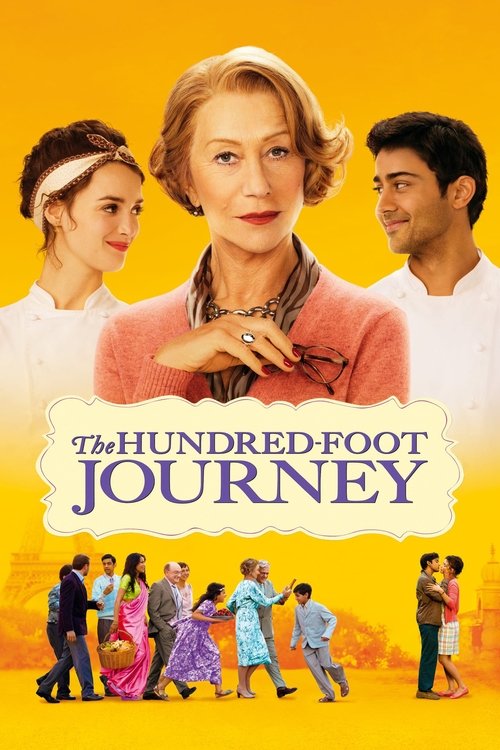
The Hundred-Foot Journey
A story centered around an Indian family who moves to France and opens a restaurant across the street from a Michelin-starred French restaurant.
Despite a mid-range budget of $22.0M, The Hundred-Foot Journey became a commercial success, earning $89.5M worldwide—a 307% return.
2 wins & 4 nominations


Plot Structure
Story beats plotted across runtime


Narrative Arc
Emotional journey through the story's key moments
Story Circle
Blueprint 15-beat structure
Arcplot Score Breakdown
Weighted: Precision (70%) + Arc (15%) + Theme (15%)
The Hundred-Foot Journey (2014) exemplifies deliberately positioned plot construction, characteristic of Lasse Hallström's storytelling approach. This structural analysis examines how the film's 15-point plot structure maps to proven narrative frameworks across 2 hours and 2 minutes. With an Arcplot score of 7.3, the film balances conventional beats with creative variation.
Structural Analysis
The Status Quo at 1 minutes (1% through the runtime) establishes Young Hassan in Mumbai with his mother in their family restaurant. She teaches him to cook by listening to the ingredients, establishing the spiritual connection to food that will drive his journey.. Significantly, this early placement immediately immerses viewers in the story world.
The inciting incident occurs at 14 minutes when The family's brakes fail in the French countryside. Papa declares this "accident" is a sign - they will open a restaurant here, directly across from Madame Mallory's Michelin-starred Le Saule Pleureur.. At 12% through the film, this Disruption aligns precisely with traditional story structure. This beat shifts the emotional landscape, launching the protagonist into the central conflict.
The First Threshold at 31 minutes marks the transition into Act II, occurring at 25% of the runtime. This indicates the protagonist's commitment to Maison Mumbai opens for business. Hassan actively chooses to embrace the challenge, cooking his first meal for French customers despite the hostile environment and Madame Mallory's opposition., moving from reaction to action.
At 61 minutes, the Midpoint arrives at 50% of the runtime—precisely centered, creating perfect narrative symmetry. The analysis reveals that this crucial beat Hassan accepts Madame Mallory's offer and begins training in classical French cuisine. False victory - it seems like the perfect solution, but this choice will pull him away from his roots and from Marguerite., fundamentally raising what's at risk. The emotional intensity shifts, dividing the narrative into clear before-and-after phases.
The Collapse moment at 91 minutes (75% through) represents the emotional nadir. Here, In Paris, Hassan achieves technical mastery but loses his soul. His food is perfect but lifeless. He realizes he's lost the connection to cooking with his heart that his mother taught him. He's dying creatively., indicates the protagonist at their lowest point. This beat's placement in the final quarter sets up the climactic reversal.
The Second Threshold at 99 minutes initiates the final act resolution at 81% of the runtime. Hassan realizes the synthesis: he can blend Indian soul with French technique. He doesn't have to choose between worlds - he can unite them. He returns home to create something new., demonstrating the transformation achieved throughout the journey.
Emotional Journey
The Hundred-Foot Journey's emotional architecture traces a deliberate progression across 15 carefully calibrated beats.
Narrative Framework
This structural analysis employs a 15-point narrative structure framework that maps key story moments. By mapping The Hundred-Foot Journey against these established plot points, we can identify how Lasse Hallström utilizes or subverts traditional narrative conventions. The plot point approach reveals not only adherence to structural principles but also creative choices that distinguish The Hundred-Foot Journey within the drama genre.
Lasse Hallström's Structural Approach
Among the 12 Lasse Hallström films analyzed on Arcplot, the average structural score is 7.0, demonstrating varied approaches to story architecture. The Hundred-Foot Journey represents one of the director's most structurally precise works. For comparative analysis, explore the complete Lasse Hallström filmography.
Comparative Analysis
Additional drama films include After Thomas, South Pacific and Dirty Dancing: Havana Nights. For more Lasse Hallström analyses, see Casanova, A Dog's Purpose and Something to Talk About.
Plot Points by Act
Act I
SetupStatus Quo
Young Hassan in Mumbai with his mother in their family restaurant. She teaches him to cook by listening to the ingredients, establishing the spiritual connection to food that will drive his journey.
Theme
Hassan's mother tells him: "You must cook with your heart, not your head. The ingredients will speak to you." This theme of intuition versus technique, tradition versus innovation, will define the entire story.
Worldbuilding
Establishment of the Kadam family in Mumbai, their restaurant, Hassan's gift for cooking, and the tragic fire that kills his mother and destroys everything, forcing them to flee to Europe seeking a new home.
Disruption
The family's brakes fail in the French countryside. Papa declares this "accident" is a sign - they will open a restaurant here, directly across from Madame Mallory's Michelin-starred Le Saule Pleureur.
Resistance
Papa negotiates for the building despite Hassan's doubts. Hassan meets Marguerite at the market. The family debates whether they can succeed in France. The culture clash builds as they prepare to open.
Act II
ConfrontationFirst Threshold
Maison Mumbai opens for business. Hassan actively chooses to embrace the challenge, cooking his first meal for French customers despite the hostile environment and Madame Mallory's opposition.
Mirror World
Marguerite brings Hassan French cooking books and begins teaching him classical technique. This relationship will bridge the two worlds and teach Hassan what he needs - the fusion of heart and discipline.
Premise
The "war" between the two restaurants escalates, then transforms. After the fire attack on Hassan, Madame Mallory has a change of heart and offers to train him, recognizing his genius.
Midpoint
Hassan accepts Madame Mallory's offer and begins training in classical French cuisine. False victory - it seems like the perfect solution, but this choice will pull him away from his roots and from Marguerite.
Opposition
Hassan excels in French technique, earning a Michelin star. A Paris restaurateur recruits him. He leaves for Paris, abandoning his family, Marguerite, and his Indian roots in pursuit of culinary perfection and fame.
Collapse
In Paris, Hassan achieves technical mastery but loses his soul. His food is perfect but lifeless. He realizes he's lost the connection to cooking with his heart that his mother taught him. He's dying creatively.
Crisis
Hassan wanders Paris in despair, remembering his mother and Marguerite. He understands that technique without heart is empty, but also that he can't go back to who he was before.
Act III
ResolutionSecond Threshold
Hassan realizes the synthesis: he can blend Indian soul with French technique. He doesn't have to choose between worlds - he can unite them. He returns home to create something new.
Synthesis
Hassan returns to Saint-Antonin-Noble-Val and reunites with his family and Marguerite. He cooks a meal that fuses Indian and French cuisines, embodying the theme. He buys Madame Mallory's restaurant to transform it.
Transformation
Hassan and Marguerite cook together in perfect harmony, blending techniques and traditions. The final image shows the unified restaurant thriving, the hundred-foot journey complete - not a distance to cross, but a bridge between worlds.