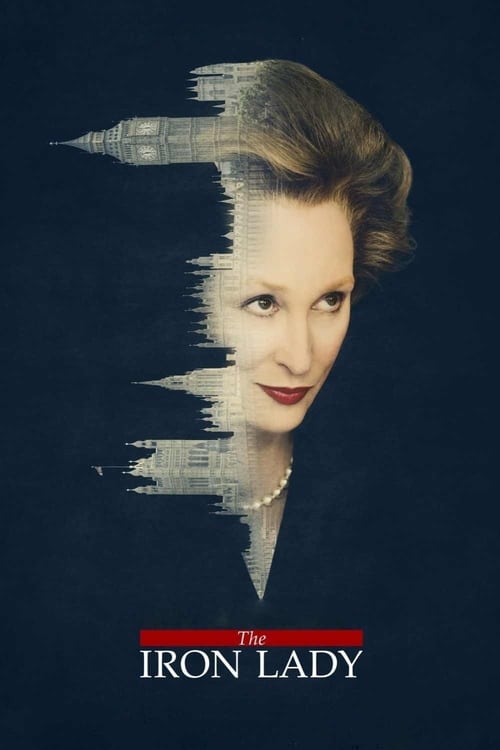
The Iron Lady
A look at the life of Margaret Thatcher, the former Prime Minister of the United Kingdom, with a focus on the price she paid for power.
Despite its limited budget of $13.0M, The Iron Lady became a massive hit, earning $115.9M worldwide—a remarkable 791% return. The film's distinctive approach found its audience, proving that strong storytelling can transcend budget limitations.
2 Oscars. 27 wins & 47 nominations


Plot Structure
Story beats plotted across runtime


Narrative Arc
Emotional journey through the story's key moments
Story Circle
Blueprint 15-beat structure
Arcplot Score Breakdown
Weighted: Precision (70%) + Arc (15%) + Theme (15%)
The Iron Lady (2011) showcases strategically placed narrative architecture, characteristic of Phyllida Lloyd's storytelling approach. This structural analysis examines how the film's 15-point plot structure maps to proven narrative frameworks across 1 hour and 45 minutes. With an Arcplot score of 6.8, the film balances conventional beats with creative variation.
Structural Analysis
The Status Quo at 2 minutes (2% through the runtime) establishes Elderly Margaret Thatcher, diminished by dementia, hallucinates her dead husband Denis in her London home. She struggles with simple tasks like buying milk, establishing her isolated, confused present state.. The analysis reveals that this early placement immediately immerses viewers in the story world.
The inciting incident occurs at 13 minutes when Flashback: Denis Thatcher proposes to Margaret, offering not just love but the means to pursue her political ambitions. He promises she won't have to give up her dreams. This partnership enables her transformation from grocer's daughter to politician.. At 13% through the film, this Disruption is delayed, allowing extended setup of the story world. This beat shifts the emotional landscape, launching the protagonist into the central conflict.
The First Threshold at 26 minutes marks the transition into Act II, occurring at 25% of the runtime. This indicates the protagonist's commitment to Margaret makes the active choice to challenge for Conservative Party leadership in 1975. Despite being told she cannot win, she declares her candidacy, crossing into the world of serious power politics. She commits fully to the battle., moving from reaction to action.
At 51 minutes, the Midpoint arrives at 49% of the runtime—precisely centered, creating perfect narrative symmetry. Of particular interest, this crucial beat Margaret wins the Falklands War and achieves her greatest triumph - re-election and dominance. She is at the peak of her power, seemingly invincible. False victory: she has won the political battle but is increasingly isolated personally., fundamentally raising what's at risk. The emotional intensity shifts, dividing the narrative into clear before-and-after phases.
The Collapse moment at 77 minutes (74% through) represents the emotional nadir. Here, Margaret's cabinet forces her resignation in 1990. She loses everything she fought for - the power, the position, the purpose that defined her. The "whiff of death" - her political life dies. She is removed from Number 10, devastated., shows the protagonist at their lowest point. This beat's placement in the final quarter sets up the climactic reversal.
The Second Threshold at 83 minutes initiates the final act resolution at 79% of the runtime. Margaret begins to let go. She realizes she must release her grip on the past, on power, on Denis's ghost. She understands that thoughts and accomplishments fade, but love remains. She makes peace with her daughter Carol's help., demonstrating the transformation achieved throughout the journey.
Emotional Journey
The Iron Lady's emotional architecture traces a deliberate progression across 15 carefully calibrated beats.
Narrative Framework
This structural analysis employs systematic plot point analysis that identifies crucial turning points. By mapping The Iron Lady against these established plot points, we can identify how Phyllida Lloyd utilizes or subverts traditional narrative conventions. The plot point approach reveals not only adherence to structural principles but also creative choices that distinguish The Iron Lady within the history genre.
Phyllida Lloyd's Structural Approach
Among the 2 Phyllida Lloyd films analyzed on Arcplot, the average structural score is 6.8, demonstrating varied approaches to story architecture. The Iron Lady exemplifies the director's characteristic narrative technique. For comparative analysis, explore the complete Phyllida Lloyd filmography.
Comparative Analysis
Additional history films include The Attacks Of 26/11, Joyeux Noel and Rob Roy. For more Phyllida Lloyd analyses, see Mamma Mia!.
Plot Points by Act
Act I
SetupStatus Quo
Elderly Margaret Thatcher, diminished by dementia, hallucinates her dead husband Denis in her London home. She struggles with simple tasks like buying milk, establishing her isolated, confused present state.
Theme
Denis's ghost asks Margaret, "What do you think?" She replies she doesn't think anymore, she feels. Her doctor suggests she must let go of Denis's belongings. The theme emerges: the tension between thought/power and emotion/connection.
Worldbuilding
Intercut between present-day Margaret's diminished state and flashbacks to young Margaret Roberts in 1950s Grantham. We see her grocer father's influence, her ambition, her Oxford education, and early political aspirations despite gender barriers. Denis Thatcher begins courting her.
Disruption
Flashback: Denis Thatcher proposes to Margaret, offering not just love but the means to pursue her political ambitions. He promises she won't have to give up her dreams. This partnership enables her transformation from grocer's daughter to politician.
Resistance
Margaret navigates the male-dominated political world of the 1960s-70s. She faces dismissal and condescension but persists. Denis supports her. She works on her voice and image. She debates whether she can truly break through the Conservative Party's glass ceiling.
Act II
ConfrontationFirst Threshold
Margaret makes the active choice to challenge for Conservative Party leadership in 1975. Despite being told she cannot win, she declares her candidacy, crossing into the world of serious power politics. She commits fully to the battle.
Mirror World
Margaret becomes Leader of the Opposition. Her relationship with Denis deepens as her mirror - he represents the personal life and emotional connection she increasingly sacrifices. Their marriage embodies the film's central tension between power and intimacy.
Premise
The "promise of the premise" - Margaret as Prime Minister. We see her wielding power: facing down her cabinet, the Falklands War, confronting striking miners, surviving the Brighton bombing. She is formidable, uncompromising, achieving what she set out to do.
Midpoint
Margaret wins the Falklands War and achieves her greatest triumph - re-election and dominance. She is at the peak of her power, seemingly invincible. False victory: she has won the political battle but is increasingly isolated personally.
Opposition
The costs mount. Her poll tax policy becomes deeply unpopular. Her cabinet turns against her. Denis tries to reach her but she won't listen. Present-day sequences show her struggling with dementia, unable to let go of Denis's ghost. Her isolation deepens in both timelines.
Collapse
Margaret's cabinet forces her resignation in 1990. She loses everything she fought for - the power, the position, the purpose that defined her. The "whiff of death" - her political life dies. She is removed from Number 10, devastated.
Crisis
Margaret processes her loss. In present day, she struggles with the reality that Denis is gone and she is alone. She confronts what her ambition cost her - time with her children, genuine connection with Denis. The dark night of examining her choices.
Act III
ResolutionSecond Threshold
Margaret begins to let go. She realizes she must release her grip on the past, on power, on Denis's ghost. She understands that thoughts and accomplishments fade, but love remains. She makes peace with her daughter Carol's help.
Synthesis
Margaret goes through Denis's belongings with Carol. She releases the hallucination of Denis, choosing reality over comfortable illusion. She reclaims her humanity by acknowledging loss and accepting help. The powerful woman allows herself to be vulnerable.
Transformation
Margaret stands alone in her kitchen, lucid and present. Denis's ghost appears one final time, but she lets him go with grace. She is diminished but dignified, no longer the Iron Lady but a woman who loved and was loved. Peace replaces power.