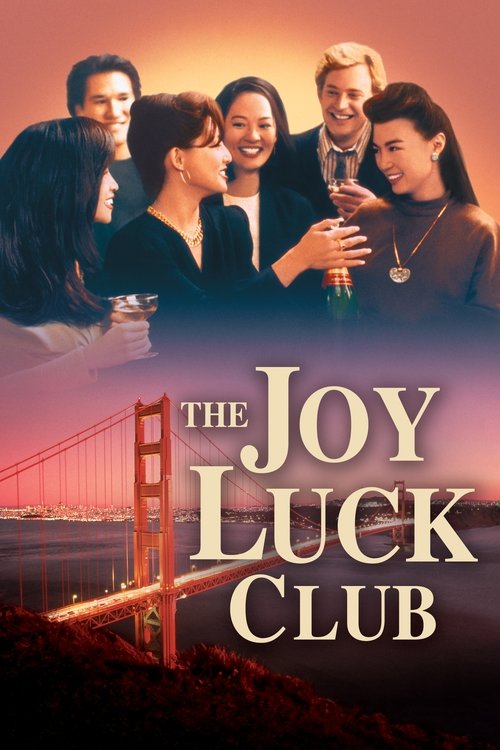
The Joy Luck Club
Through a series of flashbacks, four Chinese women born in America and their respective mothers born in feudal China explore their pasts.
Despite its modest budget of $11.0M, The Joy Luck Club became a solid performer, earning $32.9M worldwide—a 199% return.
Nominated for 1 BAFTA Award4 wins & 5 nominations


Plot Structure
Story beats plotted across runtime


Narrative Arc
Emotional journey through the story's key moments
Story Circle
Blueprint 15-beat structure
Arcplot Score Breakdown
Weighted: Precision (70%) + Arc (15%) + Theme (15%)
The Joy Luck Club (1993) exemplifies deliberately positioned narrative architecture, characteristic of Wayne Wang's storytelling approach. This structural analysis examines how the film's 15-point plot structure maps to proven narrative frameworks across 2 hours and 19 minutes. With an Arcplot score of 7.0, the film balances conventional beats with creative variation.
Structural Analysis
The Status Quo at 1 minutes (1% through the runtime) establishes The swan feather parable opens the film as a Chinese mother arrives in America with hopes for her daughter, clutching a single feather—all that remains of a swan she bought believing it was once a duck who stretched its neck hoping to become a goose.. Notably, this early placement immediately immerses viewers in the story world.
The inciting incident occurs at 17 minutes when The aunties reveal that Suyuan's long-lost twin daughters in China have been found—but Suyuan died before she could reunite with them. They ask June to go to China in her mother's place, disrupting her understanding of her mother's life and her own identity.. At 12% through the film, this Disruption aligns precisely with traditional story structure. This beat shifts the emotional landscape, launching the protagonist into the central conflict.
The First Threshold at 35 minutes marks the transition into Act II, occurring at 25% of the runtime. This indicates the protagonist's commitment to June accepts that she must go to China to meet her half-sisters and tell them about their mother. She commits to understanding Suyuan's story and carrying her mother's memory forward, crossing into a journey of discovery about her heritage and identity., moving from reaction to action.
At 70 minutes, the Midpoint arrives at 50% of the runtime—precisely centered, creating perfect narrative symmetry. Notably, this crucial beat Rose's story reaches its crisis: her marriage to Ted collapses as he asks for divorce, and she realizes she has lost herself entirely in the relationship—becoming a ghost of who she once was. This false defeat marks the point where all the daughters' inherited traumas from their mothers reach a breaking point., fundamentally raising what's at risk. The emotional intensity shifts, dividing the narrative into clear before-and-after phases.
The Collapse moment at 104 minutes (75% through) represents the emotional nadir. Here, Ying-Ying's confession to Lena represents the emotional nadir: she killed her own spirit when she killed her son, and has watched Lena inherit that same invisible erasure. "All my life I was taught to want nothing, and now I realize I have nothing." The whiff of death pervades—spiritual death passed from mother to daughter., reveals the protagonist at their lowest point. This beat's placement in the final quarter sets up the climactic reversal.
The Second Threshold at 111 minutes initiates the final act resolution at 80% of the runtime. Lindo finally tells Waverly she sees her own best qualities reflected in her daughter, not criticism. An-Mei empowers Rose to fight for herself. The mothers' stories transform from wounds into wisdom, and the daughters realize their mothers' sacrifices were acts of fierce love. June understands she must carry this love to China., demonstrating the transformation achieved throughout the journey.
Emotional Journey
The Joy Luck Club's emotional architecture traces a deliberate progression across 15 carefully calibrated beats.
Narrative Framework
This structural analysis employs systematic plot point analysis that identifies crucial turning points. By mapping The Joy Luck Club against these established plot points, we can identify how Wayne Wang utilizes or subverts traditional narrative conventions. The plot point approach reveals not only adherence to structural principles but also creative choices that distinguish The Joy Luck Club within the drama genre.
Wayne Wang's Structural Approach
Among the 5 Wayne Wang films analyzed on Arcplot, the average structural score is 7.2, reflecting strong command of classical structure. The Joy Luck Club takes a more unconventional approach compared to the director's typical style. For comparative analysis, explore the complete Wayne Wang filmography.
Comparative Analysis
Additional drama films include After Thomas, South Pacific and Dirty Dancing: Havana Nights. For more Wayne Wang analyses, see Smoke, Maid in Manhattan and Because of Winn-Dixie.
Plot Points by Act
Act I
SetupStatus Quo
The swan feather parable opens the film as a Chinese mother arrives in America with hopes for her daughter, clutching a single feather—all that remains of a swan she bought believing it was once a duck who stretched its neck hoping to become a goose.
Theme
Auntie Lindo tells June at the party: "Your mother was the one who started the Joy Luck Club—it was her way of holding on to hope." The theme of mothers sacrificing and hoping for their daughters' better lives while struggling to communicate across cultural and generational divides is established.
Worldbuilding
The Joy Luck Club gathering introduces the four mother-daughter pairs: June and the late Suyuan, Waverly and Lindo, Rose and An-Mei, and Lena and Ying-Ying. The intergenerational tensions, cultural displacement, and unspoken grief pervading Chinese-American family dynamics are established.
Disruption
The aunties reveal that Suyuan's long-lost twin daughters in China have been found—but Suyuan died before she could reunite with them. They ask June to go to China in her mother's place, disrupting her understanding of her mother's life and her own identity.
Resistance
June resists the journey, feeling she never truly knew her mother. The aunties begin sharing stories: An-Mei recounts her mother's sacrifice and Suyuan's harrowing escape from Kweilin during WWII, where she was forced to abandon her twin babies. These stories serve as guidance, showing June the weight of her mother's hidden pain.
Act II
ConfrontationFirst Threshold
June accepts that she must go to China to meet her half-sisters and tell them about their mother. She commits to understanding Suyuan's story and carrying her mother's memory forward, crossing into a journey of discovery about her heritage and identity.
Mirror World
Waverly's story with her mother Lindo introduces the mirror world—the parallel mother-daughter conflicts that reflect June's own struggles. Waverly's chess prodigy past and current tension over introducing her fiancé Rich reveals how daughters internalize shame and mothers struggle to express love across cultural barriers.
Premise
The interwoven flashbacks deliver the film's promise: intimate revelations of each mother's traumatic past in China and each daughter's American struggles. Lindo's forced childhood marriage, An-Mei's mother's concubine sacrifice, and Ying-Ying's first marriage tragedy are revealed alongside the daughters' troubled relationships.
Midpoint
Rose's story reaches its crisis: her marriage to Ted collapses as he asks for divorce, and she realizes she has lost herself entirely in the relationship—becoming a ghost of who she once was. This false defeat marks the point where all the daughters' inherited traumas from their mothers reach a breaking point.
Opposition
The weight of generational trauma intensifies. Lena discovers her marriage to Harold is built on false equality that diminishes her. Ying-Ying reveals her darkest secret—she drowned her firstborn son in despair. The mothers' sacrifices and the daughters' inherited wounds threaten to perpetuate cycles of silence and suffering.
Collapse
Ying-Ying's confession to Lena represents the emotional nadir: she killed her own spirit when she killed her son, and has watched Lena inherit that same invisible erasure. "All my life I was taught to want nothing, and now I realize I have nothing." The whiff of death pervades—spiritual death passed from mother to daughter.
Crisis
The daughters sit with the devastating revelations of their mothers' histories. June confronts her deepest fear—that she can never live up to her mother's hopes, that Suyuan died disappointed. The question emerges: can understanding break the cycle, or are they doomed to repeat it?
Act III
ResolutionSecond Threshold
Lindo finally tells Waverly she sees her own best qualities reflected in her daughter, not criticism. An-Mei empowers Rose to fight for herself. The mothers' stories transform from wounds into wisdom, and the daughters realize their mothers' sacrifices were acts of fierce love. June understands she must carry this love to China.
Synthesis
The daughters reclaim their voices: Rose demands her house and dignity from Ted, Lena shatters the table representing her unequal marriage, Waverly introduces Rich to her mother with confidence. June travels to China carrying her mother's story, finally understanding Suyuan's impossible choice and enduring love.
Transformation
June embraces her half-sisters at the Shanghai airport. Through her, they finally know their mother. The Polaroid photograph captures three sisters united—the swan feather's promise fulfilled. June's voiceover: "And now I see her again, in my sisters' faces. And now I tell them my name is Jing-Mei—the best quality of my mother in me."