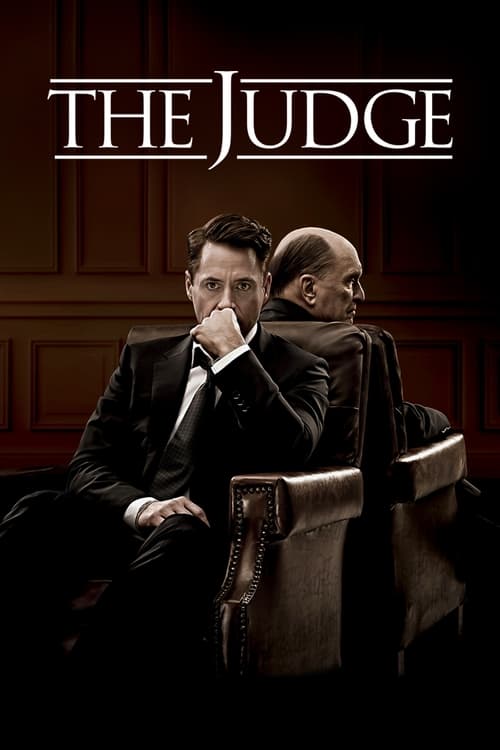
The Judge
A successful lawyer returns to his hometown for his mother's funeral only to discover that his estranged father, the town's judge, is suspected of murder.
Despite a moderate budget of $40.0M, The Judge became a box office success, earning $84.4M worldwide—a 111% return.
Nominated for 1 Oscar. 3 wins & 9 nominations


Plot Structure
Story beats plotted across runtime


Narrative Arc
Emotional journey through the story's key moments
Story Circle
Blueprint 15-beat structure
Arcplot Score Breakdown
Weighted: Precision (70%) + Arc (15%) + Theme (15%)
The Judge (2014) exemplifies meticulously timed plot construction, characteristic of David Dobkin's storytelling approach. This structural analysis examines how the film's 15-point plot structure maps to proven narrative frameworks across 2 hours and 21 minutes. With an Arcplot score of 7.4, the film balances conventional beats with creative variation.
Structural Analysis
The Status Quo at 2 minutes (1% through the runtime) establishes Hank Palmer wins a case defending a guilty client in Chicago, establishing his morally compromised but successful life as a defense attorney. His marriage is falling apart.. Significantly, this early placement immediately immerses viewers in the story world.
The inciting incident occurs at 16 minutes when Hank receives the call that his mother has died. This external event disrupts his status quo and forces him to return home to face his estranged father, Judge Joseph Palmer, and his past.. At 11% through the film, this Disruption aligns precisely with traditional story structure. This beat shifts the emotional landscape, launching the protagonist into the central conflict.
The First Threshold at 35 minutes marks the transition into Act II, occurring at 25% of the runtime. This illustrates the protagonist's commitment to Judge Palmer is arrested for hit-and-run murder. Hank makes the active choice to stay and defend his father, despite their estrangement. This irreversible decision commits him to Act 2., moving from reaction to action.
At 71 minutes, the Midpoint arrives at 50% of the runtime—precisely centered, creating perfect narrative symmetry. Significantly, this crucial beat During trial testimony, it's revealed that the victim (Mark Blackwell) was previously given a lenient sentence by Judge Palmer years ago, then killed a young girl while driving drunk. Stakes raise: Was this premeditated revenge? False defeat as the case seems lost., fundamentally raising what's at risk. The emotional intensity shifts, dividing the narrative into clear before-and-after phases.
The Collapse moment at 106 minutes (75% through) represents the emotional nadir. Here, Judge Palmer admits on the stand that he cannot remember the accident due to his illness, but takes responsibility anyway. The case collapses. Hank realizes he may lose both the trial and his chance to reconcile with his dying father., reveals the protagonist at their lowest point. This beat's placement in the final quarter sets up the climactic reversal.
The Second Threshold at 112 minutes initiates the final act resolution at 79% of the runtime. Hank discovers the truth: his father swerved to avoid a deer, had an accident, but it wasn't murder. New evidence provides hope. More importantly, Hank synthesizes his legal skills with his newfound emotional honesty to make his final argument., demonstrating the transformation achieved throughout the journey.
Emotional Journey
The Judge's emotional architecture traces a deliberate progression across 15 carefully calibrated beats.
Narrative Framework
This structural analysis employs structural analysis methodology used to understand storytelling architecture. By mapping The Judge against these established plot points, we can identify how David Dobkin utilizes or subverts traditional narrative conventions. The plot point approach reveals not only adherence to structural principles but also creative choices that distinguish The Judge within the drama genre.
David Dobkin's Structural Approach
Among the 6 David Dobkin films analyzed on Arcplot, the average structural score is 7.0, reflecting strong command of classical structure. The Judge represents one of the director's most structurally precise works. For comparative analysis, explore the complete David Dobkin filmography.
Comparative Analysis
Additional drama films include After Thomas, South Pacific and Dirty Dancing: Havana Nights. For more David Dobkin analyses, see The Change-Up, Shanghai Knights and Fred Claus.
Plot Points by Act
Act I
SetupStatus Quo
Hank Palmer wins a case defending a guilty client in Chicago, establishing his morally compromised but successful life as a defense attorney. His marriage is falling apart.
Theme
Hank's wife confronts him about their failed relationship, touching on themes of judgment, honesty, and the difficulty of truly knowing someone. "You think you know someone" prefigures the central father-son dynamic.
Worldbuilding
Hank's life in Chicago is established: successful lawyer, failing marriage, daughter he loves, estranged from his family in Indiana. He receives news his mother has died, forcing him to return to the small town he escaped.
Disruption
Hank receives the call that his mother has died. This external event disrupts his status quo and forces him to return home to face his estranged father, Judge Joseph Palmer, and his past.
Resistance
Hank returns to his hometown of Carlinville, Indiana. Reunites with his brothers Glen and Dale. The funeral brings family tensions to the surface. Judge Palmer is cold and distant. Hank discovers his father may be involved in a hit-and-run accident.
Act II
ConfrontationFirst Threshold
Judge Palmer is arrested for hit-and-run murder. Hank makes the active choice to stay and defend his father, despite their estrangement. This irreversible decision commits him to Act 2.
Mirror World
Hank reconnects with Samantha Powell, his high school girlfriend who stayed in town. She represents the life and honesty he abandoned. Their relationship becomes the emotional counterpoint to his cynical lawyer persona.
Premise
Hank investigates the case, works with local lawyer C.P. Kennedy. Father-son tensions erupt. The trial begins. Hank uses his big-city lawyer skills in small-town court. Judge Palmer is diagnosed with cancer and experiencing memory issues.
Midpoint
During trial testimony, it's revealed that the victim (Mark Blackwell) was previously given a lenient sentence by Judge Palmer years ago, then killed a young girl while driving drunk. Stakes raise: Was this premeditated revenge? False defeat as the case seems lost.
Opposition
Prosecutor Dickham closes in. Evidence mounts against Judge Palmer. Hank's flaws catch up with him - his arrogance alienates the jury. Father and son clash violently about the past, including the Judge's abuse and Hank's expelled brother Dale.
Collapse
Judge Palmer admits on the stand that he cannot remember the accident due to his illness, but takes responsibility anyway. The case collapses. Hank realizes he may lose both the trial and his chance to reconcile with his dying father.
Crisis
Hank processes the impending loss. Dark night as he contemplates his failures as a son, lawyer, and man. Confronts his own judgments and realizes he's been as harsh and unforgiving as his father.
Act III
ResolutionSecond Threshold
Hank discovers the truth: his father swerved to avoid a deer, had an accident, but it wasn't murder. New evidence provides hope. More importantly, Hank synthesizes his legal skills with his newfound emotional honesty to make his final argument.
Synthesis
Final arguments. Hank delivers an emotional closing that combines legal skill with authentic vulnerability. Jury deliberates. Verdict: guilty of manslaughter, but with leniency. Father and son finally reconcile. Judge Palmer dies peacefully with his sons present.
Transformation
Hank prepares to leave town but with transformation: he now understands his father, forgiveness, and himself. Says goodbye to Samantha with mutual respect. The closing mirrors the opening but shows a changed man, capable of honesty and connection.