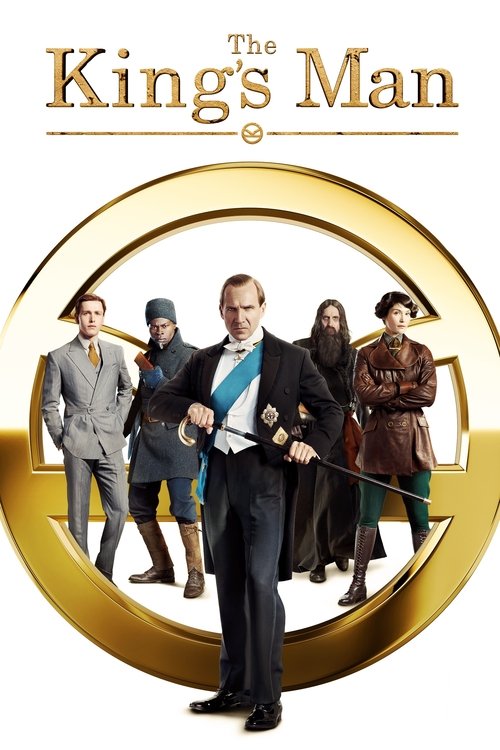
The King's Man
As a collection of history's worst tyrants and criminal masterminds gather to plot a war to wipe out millions, one man must race against time to stop them.
Working with a considerable budget of $100.0M, the film achieved a steady performer with $125.9M in global revenue (+26% profit margin).
1 win & 4 nominations


Plot Structure
Story beats plotted across runtime


Narrative Arc
Emotional journey through the story's key moments
Story Circle
Blueprint 15-beat structure
Arcplot Score Breakdown
Weighted: Precision (70%) + Arc (15%) + Theme (15%)
The King's Man (2021) exemplifies precise dramatic framework, characteristic of Matthew Vaughn's storytelling approach. This structural analysis examines how the film's 15-point plot structure maps to proven narrative frameworks across 2 hours and 11 minutes. With an Arcplot score of 6.7, the film balances conventional beats with creative variation.
Structural Analysis
The Status Quo at 1 minutes (1% through the runtime) establishes South Africa, 1902: Orlando Oxford arrives at a British concentration camp with his wife Emily and young son Conrad during the Boer War, establishing his role as a Red Cross humanitarian.. Significantly, this early placement immediately immerses viewers in the story world.
The inciting incident occurs at 16 minutes when Archduke Franz Ferdinand is assassinated in Sarajevo, triggering the outbreak of World War I and forcing Orlando to confront the very violence he promised to shield Conrad from.. At 12% through the film, this Disruption aligns precisely with traditional story structure. This beat shifts the emotional landscape, launching the protagonist into the central conflict.
The First Threshold at 33 minutes marks the transition into Act II, occurring at 25% of the runtime. This reveals the protagonist's commitment to Orlando decides to take action against the cabal, agreeing to investigate Rasputin's influence over the Russian royal family. He steps out of passive intelligence gathering into active espionage., moving from reaction to action.
At 66 minutes, the Midpoint arrives at 50% of the runtime—precisely centered, creating perfect narrative symmetry. Of particular interest, this crucial beat Conrad secretly switches identity papers with another soldier to get himself sent to the front lines, defying his father's wishes. This false victory of Conrad achieving his goal sets tragedy in motion., fundamentally raising what's at risk. The emotional intensity shifts, dividing the narrative into clear before-and-after phases.
The Collapse moment at 98 minutes (75% through) represents the emotional nadir. Here, Conrad is shot and killed by a sniper in no man's land while trying to save a fellow soldier. Orlando arrives too late and holds his dying son, his worst fear realized despite all his efforts to protect him., shows the protagonist at their lowest point. This beat's placement in the final quarter sets up the climactic reversal.
The Second Threshold at 105 minutes initiates the final act resolution at 80% of the runtime. A recovered intelligence file reveals the Shepherd's identity and location. Orlando chooses to honor Conrad's memory by fighting rather than dying in despair, synthesizing his son's courage with his own skills., demonstrating the transformation achieved throughout the journey.
Emotional Journey
The King's Man's emotional architecture traces a deliberate progression across 15 carefully calibrated beats.
Narrative Framework
This structural analysis employs proven narrative structure principles that track dramatic progression. By mapping The King's Man against these established plot points, we can identify how Matthew Vaughn utilizes or subverts traditional narrative conventions. The plot point approach reveals not only adherence to structural principles but also creative choices that distinguish The King's Man within the action genre.
Matthew Vaughn's Structural Approach
Among the 8 Matthew Vaughn films analyzed on Arcplot, the average structural score is 6.8, demonstrating varied approaches to story architecture. The King's Man takes a more unconventional approach compared to the director's typical style. For comparative analysis, explore the complete Matthew Vaughn filmography.
Comparative Analysis
Additional action films include The Bad Guys, Puss in Boots and Venom: The Last Dance. For more Matthew Vaughn analyses, see Layer Cake, Kick-Ass and Kingsman: The Golden Circle.
Plot Points by Act
Act I
SetupStatus Quo
South Africa, 1902: Orlando Oxford arrives at a British concentration camp with his wife Emily and young son Conrad during the Boer War, establishing his role as a Red Cross humanitarian.
Theme
Emily is mortally wounded by a sniper and extracts a promise from Orlando to keep Conrad safe from war and violence, establishing the central tension between protection and allowing growth.
Worldbuilding
Twelve years later, Conrad has grown into a young man eager to serve his country while Orlando maintains his pacifist stance. We meet Shola and Polly, Orlando's trusted servants, and glimpse the shadowy cabal manipulating world events toward war.
Disruption
Archduke Franz Ferdinand is assassinated in Sarajevo, triggering the outbreak of World War I and forcing Orlando to confront the very violence he promised to shield Conrad from.
Resistance
Orlando debates how to respond to the war, refusing to let Conrad enlist while secretly using his network of domestic servants across Europe to gather intelligence. Conrad grows increasingly frustrated with his father's overprotection.
Act II
ConfrontationFirst Threshold
Orlando decides to take action against the cabal, agreeing to investigate Rasputin's influence over the Russian royal family. He steps out of passive intelligence gathering into active espionage.
Mirror World
Orlando, Shola, and Polly arrive in Russia to confront Rasputin. The team dynamic showcases the proto-Kingsman model of servants and master working as equals, embodying a new approach to intelligence work.
Premise
The team executes the elaborate and darkly comedic mission to kill Rasputin, featuring the infamous dance fight sequence. They uncover evidence of a larger conspiracy orchestrated by a mysterious figure known as the Shepherd.
Midpoint
Conrad secretly switches identity papers with another soldier to get himself sent to the front lines, defying his father's wishes. This false victory of Conrad achieving his goal sets tragedy in motion.
Opposition
Conrad experiences the brutal reality of trench warfare. The Christmas truce offers a moment of humanity before the horrors resume. Orlando races to find his son while the Shepherd's conspiracy continues to manipulate events.
Collapse
Conrad is shot and killed by a sniper in no man's land while trying to save a fellow soldier. Orlando arrives too late and holds his dying son, his worst fear realized despite all his efforts to protect him.
Crisis
Orlando spirals into grief and alcoholism, abandoning his intelligence work and retreating from the world. Shola and Polly watch helplessly as he wastes away, the promise to Emily seeming utterly broken.
Act III
ResolutionSecond Threshold
A recovered intelligence file reveals the Shepherd's identity and location. Orlando chooses to honor Conrad's memory by fighting rather than dying in despair, synthesizing his son's courage with his own skills.
Synthesis
Orlando leads his team to the Shepherd's mountain stronghold. In a climactic confrontation, he defeats the Shepherd and his agents, ending the conspiracy that prolonged the war and killed millions including Conrad.
Transformation
Orlando formally establishes the Kingsman agency with Shola, Polly, and new recruits, transforming his grief into purpose. The organization will protect the world as he could not protect Conrad, fulfilling Emily's wish in a new way.