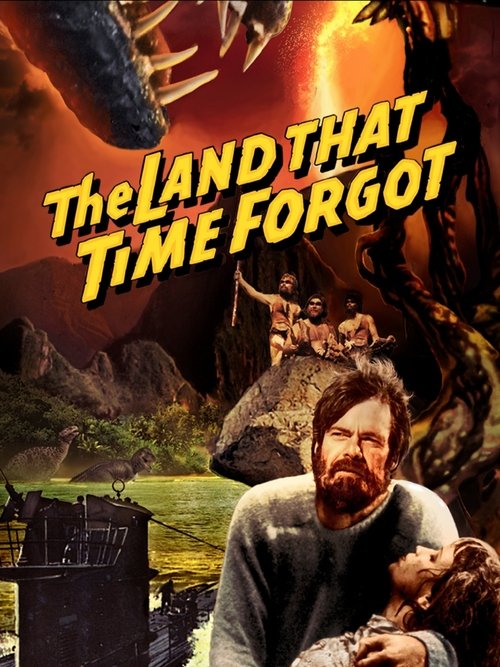
The Land That Time Forgot
During World War I, a German U-boat sinks a British passenger ship and takes the survivors aboard. After getting lost in fog, the submarine surfaces near the unknown island of Caprona, a lost world where they find dinosaurs and Neanderthals.
Despite its extremely modest budget of $625K, The Land That Time Forgot became a massive hit, earning $4.4M worldwide—a remarkable 605% return. The film's bold vision attracted moviegoers, showing that strong storytelling can transcend budget limitations.


Plot Structure
Story beats plotted across runtime


Narrative Arc
Emotional journey through the story's key moments
Story Circle
Blueprint 15-beat structure
Arcplot Score Breakdown
Weighted: Precision (70%) + Arc (15%) + Theme (15%)
The Land That Time Forgot (1974) showcases strategically placed plot construction, characteristic of Kevin Connor's storytelling approach. This structural analysis examines how the film's 15-point plot structure maps to proven narrative frameworks across 1 hour and 30 minutes. With an Arcplot score of 7.2, the film balances conventional beats with creative variation.
Structural Analysis
The Status Quo at 1 minutes (1% through the runtime) establishes A bottle containing a manuscript washes ashore, framing the story as a discovered survival tale. The narrative flashes back to World War I, showing passengers aboard a British passenger ship sailing through dangerous waters.. Notably, this early placement immediately immerses viewers in the story world.
The inciting incident occurs at 11 minutes when The survivors, led by Tyler, manage to board and capture the German U-boat in a daring assault. This desperate act transforms them from victims to captors, but also strands them with enemies aboard a vessel they barely understand how to operate.. At 12% through the film, this Disruption aligns precisely with traditional story structure. This beat shifts the emotional landscape, launching the protagonist into the central conflict.
The First Threshold at 23 minutes marks the transition into Act II, occurring at 25% of the runtime. This reveals the protagonist's commitment to The submarine surfaces near Caprona, the legendary lost continent surrounded by impenetrable cliffs. Tyler makes the decision to search for an entrance rather than turn back, committing everyone to exploring this impossible land that time forgot., moving from reaction to action.
At 45 minutes, the Midpoint arrives at 50% of the runtime—precisely centered, creating perfect narrative symmetry. Notably, this crucial beat Oil is discovered, offering hope of escape from Caprona. This false victory seems to promise salvation—they can refuel and leave this prehistoric nightmare. However, the challenges of refining the oil and escalating dangers from both dinosaurs and hostile natives lie ahead., fundamentally raising what's at risk. The emotional intensity shifts, dividing the narrative into clear before-and-after phases.
The Collapse moment at 68 minutes (75% through) represents the emotional nadir. Here, A devastating attack destroys much of their work and kills several crew members. The submarine is damaged, and escape seems impossible. Betrayal from within their ranks compounds the disaster. The whiff of death is everywhere as their situation becomes desperate., illustrates the protagonist at their lowest point. This beat's placement in the final quarter sets up the climactic reversal.
The Second Threshold at 72 minutes initiates the final act resolution at 80% of the runtime. Tyler realizes they must fully commit to cooperation—abandoning national allegiances entirely—to have any chance. He formulates a desperate plan combining British determination and German engineering skill, synthesizing the lessons of their shared ordeal., demonstrating the transformation achieved throughout the journey.
Emotional Journey
The Land That Time Forgot's emotional architecture traces a deliberate progression across 15 carefully calibrated beats.
Narrative Framework
This structural analysis employs structural analysis methodology used to understand storytelling architecture. By mapping The Land That Time Forgot against these established plot points, we can identify how Kevin Connor utilizes or subverts traditional narrative conventions. The plot point approach reveals not only adherence to structural principles but also creative choices that distinguish The Land That Time Forgot within the science fiction genre.
Kevin Connor's Structural Approach
Among the 2 Kevin Connor films analyzed on Arcplot, the average structural score is 7.3, reflecting strong command of classical structure. The Land That Time Forgot takes a more unconventional approach compared to the director's typical style. For comparative analysis, explore the complete Kevin Connor filmography.
Comparative Analysis
Additional science fiction films include The Postman, Mad Max 2 and AVP: Alien vs. Predator. For more Kevin Connor analyses, see Motel Hell.
Plot Points by Act
Act I
SetupStatus Quo
A bottle containing a manuscript washes ashore, framing the story as a discovered survival tale. The narrative flashes back to World War I, showing passengers aboard a British passenger ship sailing through dangerous waters.
Theme
Lisa Clayton observes that in war, survival depends on unlikely alliances and adaptation. The theme of enemies becoming allies through shared adversity is established—survival transcends national boundaries.
Worldbuilding
The WWI setting is established as the British ship is torpedoed by a German U-boat. Survivors struggle in the water as Bowen Tyler emerges as a capable leader. Lisa Clayton, a biologist, is introduced. The ruthlessness of submarine warfare and the desperation of survivors creates the wartime context.
Disruption
The survivors, led by Tyler, manage to board and capture the German U-boat in a daring assault. This desperate act transforms them from victims to captors, but also strands them with enemies aboard a vessel they barely understand how to operate.
Resistance
Tense negotiations unfold between Tyler and Captain Von Schoenvorts. The Germans are needed to operate the submarine, creating an uneasy alliance. Navigation errors and compass malfunctions drive them far off course. Lisa's scientific curiosity provides insights as strange phenomena occur.
Act II
ConfrontationFirst Threshold
The submarine surfaces near Caprona, the legendary lost continent surrounded by impenetrable cliffs. Tyler makes the decision to search for an entrance rather than turn back, committing everyone to exploring this impossible land that time forgot.
Mirror World
Lisa Clayton's role expands as she studies Caprona's unique ecosystem. Her scientific perspective—seeing wonder where others see threat—mirrors the possibility of transformation. Her growing relationship with Tyler represents hope and connection amid prehistoric dangers.
Premise
The promise of the premise delivers: dinosaurs attack, prehistoric creatures roam, and the crew must navigate this dangerous world. British and Germans work together to survive plesiosaur attacks, pterodactyl assaults, and establish a base camp. They search for oil to refuel the submarine.
Midpoint
Oil is discovered, offering hope of escape from Caprona. This false victory seems to promise salvation—they can refuel and leave this prehistoric nightmare. However, the challenges of refining the oil and escalating dangers from both dinosaurs and hostile natives lie ahead.
Opposition
Primitive human tribes—the savage Sto-Lu—become increasingly aggressive. Dinosaur attacks intensify. Internal tensions between British and Germans resurface as some Germans plot mutiny. The refining operation proves difficult. Crew members are killed by prehistoric predators and hostile natives.
Collapse
A devastating attack destroys much of their work and kills several crew members. The submarine is damaged, and escape seems impossible. Betrayal from within their ranks compounds the disaster. The whiff of death is everywhere as their situation becomes desperate.
Crisis
Tyler and the survivors face the grim reality that they may never escape Caprona. Lisa and Tyler share a moment acknowledging their likely fate. The remaining Germans and British must decide whether to continue fighting each other or unite for one final attempt at survival.
Act III
ResolutionSecond Threshold
Tyler realizes they must fully commit to cooperation—abandoning national allegiances entirely—to have any chance. He formulates a desperate plan combining British determination and German engineering skill, synthesizing the lessons of their shared ordeal.
Synthesis
The survivors execute their final plan, battling dinosaurs and hostile natives in a climactic sequence. The submarine is prepared for departure. Volcanic activity threatens to destroy Caprona. Tyler places the manuscript in the bottle, recording their story for posterity before the final escape attempt.
Transformation
The bottle with Tyler's manuscript floats away as the narrative returns to the present. Though the survivors' ultimate fate remains ambiguous, the story itself has survived. Tyler has transformed from a man at war to one who found common humanity with his enemies in an impossible land.