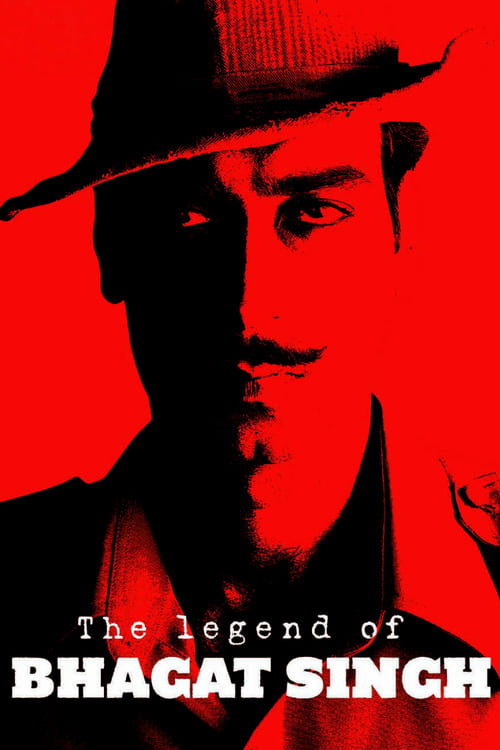
The Legend of Bhagat Singh
Born in British India, Bhagat Singh witnesses numerous atrocities during his childhood and grows up to become one of the most fearless freedom fighters in the country.
Despite its modest budget of $3.0M, The Legend of Bhagat Singh became a box office success, earning $6.0M worldwide—a 100% return.


Plot Structure
Story beats plotted across runtime


Narrative Arc
Emotional journey through the story's key moments
Story Circle
Blueprint 15-beat structure
Arcplot Score Breakdown
Weighted: Precision (70%) + Arc (15%) + Theme (15%)
The Legend of Bhagat Singh (2002) reveals meticulously timed dramatic framework, characteristic of Rajkumar Santoshi's storytelling approach. This structural analysis examines how the film's 15-point plot structure maps to proven narrative frameworks across 2 hours and 35 minutes. With an Arcplot score of 6.7, the film balances conventional beats with creative variation.
Structural Analysis
The Status Quo at 2 minutes (1% through the runtime) establishes Young Bhagat Singh lives in colonial Punjab with his family, surrounded by the oppression of British rule. His uncle Ajit Singh and father Kishan Singh are already involved in the freedom movement, establishing a household steeped in revolutionary ideals.. Significantly, this early placement immediately immerses viewers in the story world.
The inciting incident occurs at 19 minutes when Young Bhagat witnesses the horrific Jallianwala Bagh massacre firsthand, collecting soil soaked with martyrs' blood. This traumatic event shatters his innocence and ignites an unquenchable fire for revolutionary action against British tyranny.. At 12% through the film, this Disruption aligns precisely with traditional story structure. This beat shifts the emotional landscape, launching the protagonist into the central conflict.
The First Threshold at 39 minutes marks the transition into Act II, occurring at 25% of the runtime. This demonstrates the protagonist's commitment to Bhagat Singh fully commits to revolutionary action by joining the Hindustan Socialist Republican Association (HSRA). He leaves behind the possibility of a normal life, including marriage prospects, choosing instead the path of armed resistance against British colonial rule., moving from reaction to action.
At 78 minutes, the Midpoint arrives at 50% of the runtime—precisely centered, creating perfect narrative symmetry. Structural examination shows that this crucial beat Bhagat Singh and Batukeshwar Dutt throw bombs in the Central Legislative Assembly in Delhi and deliberately allow themselves to be arrested. This is a false victory - they achieve their goal of making their voice heard across India, but it begins their path to execution. The slogan "Inquilab Zindabad" echoes through the nation., fundamentally raising what's at risk. The emotional intensity shifts, dividing the narrative into clear before-and-after phases.
The Collapse moment at 116 minutes (75% through) represents the emotional nadir. Here, The death sentence is pronounced on Bhagat Singh, Sukhdev, and Rajguru. Despite massive public protests and appeals for clemency, the British refuse to commute the sentences. Chandrashekhar Azad dies fighting the police at Alfred Park. The revolution appears crushed, its leaders either dead or condemned., indicates the protagonist at their lowest point. This beat's placement in the final quarter sets up the climactic reversal.
The Second Threshold at 124 minutes initiates the final act resolution at 80% of the runtime. Bhagat Singh achieves clarity about his legacy - his death will not end the revolution but ignite it further. He writes his final testament, articulating that ideas cannot be killed. He walks toward execution not as a defeated prisoner but as a triumphant martyr who chose his fate to awaken a nation., demonstrating the transformation achieved throughout the journey.
Emotional Journey
The Legend of Bhagat Singh's emotional architecture traces a deliberate progression across 15 carefully calibrated beats.
Narrative Framework
This structural analysis employs systematic plot point analysis that identifies crucial turning points. By mapping The Legend of Bhagat Singh against these established plot points, we can identify how Rajkumar Santoshi utilizes or subverts traditional narrative conventions. The plot point approach reveals not only adherence to structural principles but also creative choices that distinguish The Legend of Bhagat Singh within the crime genre.
Comparative Analysis
Additional crime films include The Bad Guys, Rustom and The Whole Ten Yards.
Plot Points by Act
Act I
SetupStatus Quo
Young Bhagat Singh lives in colonial Punjab with his family, surrounded by the oppression of British rule. His uncle Ajit Singh and father Kishan Singh are already involved in the freedom movement, establishing a household steeped in revolutionary ideals.
Theme
Bhagat's father tells him about the sacrifice required for freedom, stating that true patriots must be willing to give everything for their motherland. The theme of sacrifice and the cost of liberty is established through this paternal wisdom.
Worldbuilding
The oppressive British colonial rule in India is established through young Bhagat's eyes. We see the Jallianwala Bagh massacre of 1919 where British troops under General Dyer kill hundreds of unarmed Indians. This traumatic event shapes Bhagat's worldview and commitment to revolution.
Disruption
Young Bhagat witnesses the horrific Jallianwala Bagh massacre firsthand, collecting soil soaked with martyrs' blood. This traumatic event shatters his innocence and ignites an unquenchable fire for revolutionary action against British tyranny.
Resistance
Bhagat Singh grows into a young revolutionary, influenced by the writings of Marx, Lenin, and anarchist literature. He debates between Gandhi's non-violence and armed revolution. He connects with revolutionary leaders like Chandrashekhar Azad and Sukhdev, forming the ideological foundation for his path.
Act II
ConfrontationFirst Threshold
Bhagat Singh fully commits to revolutionary action by joining the Hindustan Socialist Republican Association (HSRA). He leaves behind the possibility of a normal life, including marriage prospects, choosing instead the path of armed resistance against British colonial rule.
Mirror World
The deep bond between Bhagat Singh, Sukhdev, and Rajguru is established as they become brothers in revolution. Their friendship and shared idealism represent the emotional core of the story, showing that the revolution is built on love for countrymen and comradeship, not just hatred for oppressors.
Premise
Bhagat and his comrades execute revolutionary activities including the Kakori train robbery aftermath, printing revolutionary pamphlets, and planning actions against British officials. The promise of the premise - a young revolutionary fighting colonial oppression - is fulfilled through daring operations and ideological debates.
Midpoint
Bhagat Singh and Batukeshwar Dutt throw bombs in the Central Legislative Assembly in Delhi and deliberately allow themselves to be arrested. This is a false victory - they achieve their goal of making their voice heard across India, but it begins their path to execution. The slogan "Inquilab Zindabad" echoes through the nation.
Opposition
The British intensify their crackdown. Bhagat Singh, Sukhdev, and Rajguru face trial for the murder of British police officer Saunders. The colonial machinery works to condemn them despite public outcry. Inside prison, Bhagat leads a hunger strike for prisoners' rights, weakening physically but growing stronger as a symbol.
Collapse
The death sentence is pronounced on Bhagat Singh, Sukhdev, and Rajguru. Despite massive public protests and appeals for clemency, the British refuse to commute the sentences. Chandrashekhar Azad dies fighting the police at Alfred Park. The revolution appears crushed, its leaders either dead or condemned.
Crisis
The final days in prison as the execution date approaches. Bhagat's mother and family visit for the last time. The weight of impending death hangs over everything, yet Bhagat, Sukhdev, and Rajguru maintain their revolutionary spirit and refuse to appeal for mercy, accepting martyrdom as their final service.
Act III
ResolutionSecond Threshold
Bhagat Singh achieves clarity about his legacy - his death will not end the revolution but ignite it further. He writes his final testament, articulating that ideas cannot be killed. He walks toward execution not as a defeated prisoner but as a triumphant martyr who chose his fate to awaken a nation.
Synthesis
The execution of Bhagat Singh, Sukhdev, and Rajguru on March 23, 1931. They walk to the gallows singing revolutionary songs. The British secretly cremate the bodies to prevent public unrest, but news spreads across India. Massive protests erupt. The sacrifice transforms into legend, inspiring future generations of freedom fighters.
Transformation
The film closes with the image of Bhagat Singh's legacy living on - India eventually gains independence in 1947. The young boy who collected soil from Jallianwala Bagh has become an immortal symbol of sacrifice. His transformation from mortal revolutionary to eternal inspiration is complete; he lives on in the nation's consciousness.