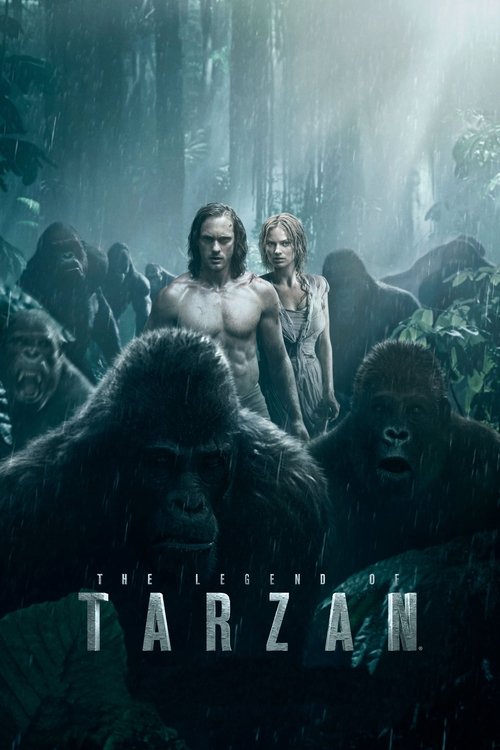
The Legend of Tarzan
Tarzan, having acclimated to life in London, is called back to his former home in the jungle to investigate the activities at a mining encampment.
Working with a blockbuster budget of $180.0M, the film achieved a modest success with $356.7M in global revenue (+98% profit margin).
2 wins & 4 nominations


Plot Structure
Story beats plotted across runtime


Narrative Arc
Emotional journey through the story's key moments
Story Circle
Blueprint 15-beat structure
Structural Analysis
The Status Quo at 1 minutes (1% through the runtime) establishes John Clayton III, Lord Greystoke, lives as a refined English gentleman in his manor with Jane, having left his jungle past behind. He is disconnected from his true nature, living in civilized comfort.. The analysis reveals that this early placement immediately immerses viewers in the story world.
The inciting incident occurs at 13 minutes when Williams reveals that Rom is enslaving the Congolese people and asks John to return to Africa to expose the atrocities. The invitation from King Leopold is actually a trap orchestrated by Rom to capture Tarzan for Chief Mbonga.. At 12% through the film, this Disruption aligns precisely with traditional story structure. This beat shifts the emotional landscape, launching the protagonist into the central conflict.
The First Threshold at 27 minutes marks the transition into Act II, occurring at 25% of the runtime. This demonstrates the protagonist's commitment to John, Jane, and Williams arrive in the Congo and journey to the Kuba village where John was once known as Tarzan. John actively chooses to return to his roots and confront the darkness threatening the land., moving from reaction to action.
At 55 minutes, the Midpoint arrives at 50% of the runtime—precisely centered, creating perfect narrative symmetry. Significantly, this crucial beat Rom attacks the village, captures Jane, and reveals his plan to trade Tarzan to Chief Mbonga. This is a false defeat - Jane is taken hostage and Tarzan realizes the trap was for him all along. The stakes become personal and the game changes completely., fundamentally raising what's at risk. The emotional intensity shifts, dividing the narrative into clear before-and-after phases.
The Collapse moment at 82 minutes (75% through) represents the emotional nadir. Here, Tarzan confronts Akut, his ape brother, and is beaten and rejected by the apes he once called family. He is captured and nearly killed, separated from Williams. Jane remains captive on Rom's steamboat heading toward Boma. All hope seems lost., shows the protagonist at their lowest point. This beat's placement in the final quarter sets up the climactic reversal.
The Second Threshold at 87 minutes initiates the final act resolution at 80% of the runtime. Tarzan makes peace with Akut and the apes, fully embracing his identity as both man and legend. He rallies the animals and the Congolese tribes to stop Rom's army. He synthesizes his civilized intelligence with his primal power., demonstrating the transformation achieved throughout the journey.
Emotional Journey
The Legend of Tarzan's emotional architecture traces a deliberate progression across 15 carefully calibrated beats.
Narrative Framework
This structural analysis employs a 15-point narrative structure framework that maps key story moments. By mapping The Legend of Tarzan against these established plot points, we can identify how David Yates utilizes or subverts traditional narrative conventions. The plot point approach reveals not only adherence to structural principles but also creative choices that distinguish The Legend of Tarzan within the action genre.
David Yates's Structural Approach
Among the 7 David Yates films analyzed on Arcplot, the average structural score is 3.7, showcasing experimental approaches to narrative form. The Legend of Tarzan exemplifies the director's characteristic narrative technique. For comparative analysis, explore the complete David Yates filmography.
Comparative Analysis
Additional action films include The Bad Guys, Puss in Boots and Venom: The Last Dance. For more David Yates analyses, see Harry Potter and the Deathly Hallows – Part 2, Fantastic Beasts: The Secrets of Dumbledore and Harry Potter and the Deathly Hallows – Part 1.
Plot Points by Act
Act I
SetupStatus Quo
John Clayton III, Lord Greystoke, lives as a refined English gentleman in his manor with Jane, having left his jungle past behind. He is disconnected from his true nature, living in civilized comfort.
Theme
George Washington Williams tells John that a man cannot escape what he truly is, foreshadowing Tarzan's eventual return to the jungle and his need to embrace his dual identity to save the Congo.
Worldbuilding
We see John's refined life in England, flashbacks to his origin as the orphaned son of Lord and Lady Greystoke raised by apes, and the political machinations of King Leopold II's exploitation of the Congo through Captain Rom.
Disruption
Williams reveals that Rom is enslaving the Congolese people and asks John to return to Africa to expose the atrocities. The invitation from King Leopold is actually a trap orchestrated by Rom to capture Tarzan for Chief Mbonga.
Resistance
John debates returning to Africa while Williams persuades him of the urgency. Jane insists on accompanying him despite the danger. They prepare for the journey as we learn more of Rom's deal with Chief Mbonga to trade Tarzan for diamonds.
Act II
ConfrontationFirst Threshold
John, Jane, and Williams arrive in the Congo and journey to the Kuba village where John was once known as Tarzan. John actively chooses to return to his roots and confront the darkness threatening the land.
Mirror World
John reconnects with the Kuba tribe and his old friends, while Jane's deep bond with the African people and land is shown. Williams serves as the thematic mirror, representing the human cost of colonialism and the need for justice.
Premise
Tarzan rediscovers his jungle abilities, swinging through trees, communicating with animals. Flashbacks reveal his childhood with the apes and his romance with Jane. The promise of seeing the legend in action unfolds as he begins to reconnect with his wild nature.
Midpoint
Rom attacks the village, captures Jane, and reveals his plan to trade Tarzan to Chief Mbonga. This is a false defeat - Jane is taken hostage and Tarzan realizes the trap was for him all along. The stakes become personal and the game changes completely.
Opposition
Tarzan and Williams pursue Rom's forces. Tarzan must face Chief Mbonga and confront his past - the death of Mbonga's son at Tarzan's hands. Meanwhile, Jane resists Rom's captivity. Rom continues gathering diamonds to fund his mercenary army.
Collapse
Tarzan confronts Akut, his ape brother, and is beaten and rejected by the apes he once called family. He is captured and nearly killed, separated from Williams. Jane remains captive on Rom's steamboat heading toward Boma. All hope seems lost.
Crisis
Tarzan lies defeated, forced to reckon with his past and his dual nature. He must accept both sides of himself - the civilized man and the wild legend - to find the strength to continue. Williams tends to him as Tarzan processes his failure.
Act III
ResolutionSecond Threshold
Tarzan makes peace with Akut and the apes, fully embracing his identity as both man and legend. He rallies the animals and the Congolese tribes to stop Rom's army. He synthesizes his civilized intelligence with his primal power.
Synthesis
Tarzan leads a massive assault on Boma with an army of wildebeest, elephants, and tribal warriors. He confronts Rom on the docks, rescues Jane, and destroys the diamonds and mercenary operation. Rom is killed by crocodiles as justice is served.
Transformation
Tarzan and Jane remain in Africa, now at peace with both worlds. Jane reveals she is pregnant. Tarzan swings through the jungle, no longer denying who he is - the legend lives on, having found balance between civilization and nature.