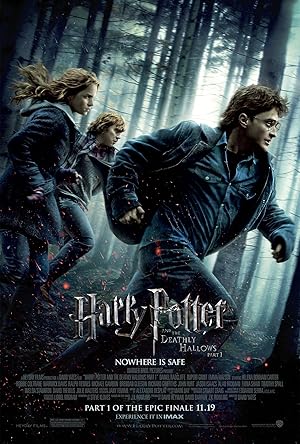
Harry Potter and the Deathly Hallows – Part 1
Voldemort's (Ralph Fiennes') power is growing stronger. He now has control over the Ministry of Magic and Hogwarts. Harry (Daniel Radcliffe), Ron (Rupert Grint), and Hermione (Emma Watson) decide to finish Dumbledore's (Sir Michael Gambon's) work and find the rest of the Horcruxes to defeat the Dark Lord. But little hope remains for the trio and the rest of the Wizarding World, so everything they do must go as planned.
Despite a enormous budget of $250.0M, Harry Potter and the Deathly Hallows – Part 1 became a solid performer, earning $954.3M worldwide—a 282% return. This commercial performance validated the ambitious narrative scope, confirming that audiences embrace unconventional structure even at blockbuster scale.
Nominated for 2 Oscars. 15 wins & 55 nominations


Plot Structure
Story beats plotted across runtime


Narrative Arc
Emotional journey through the story's key moments
Story Circle
Blueprint 15-beat structure
Arcplot Score Breakdown
Weighted: Precision (70%) + Arc (15%) + Theme (15%)
Harry Potter and the Deathly Hallows – Part 1 (2010) showcases deliberately positioned story structure, characteristic of David Yates's storytelling approach. This structural analysis examines how the film's 15-point plot structure maps to proven narrative frameworks across 2 hours and 26 minutes. With an Arcplot score of 3.4, the film takes an unconventional approach to traditional narrative frameworks.
Characters
Cast & narrative archetypes

Harry Potter
Hermione Granger
Ron Weasley
Lord Voldemort
Severus Snape
Albus Dumbledore
Bellatrix Lestrange
Dobby
Main Cast & Characters
Harry Potter
Played by Daniel Radcliffe
The Chosen One who must destroy Voldemort's Horcruxes while evading capture by Death Eaters.
Hermione Granger
Played by Emma Watson
Harry's brilliant and loyal friend who provides strategic planning and magical knowledge for the Horcrux hunt.
Ron Weasley
Played by Rupert Grint
Harry's faithful companion whose loyalty is tested by jealousy and the corrupting influence of the locket Horcrux.
Lord Voldemort
Played by Ralph Fiennes
The Dark Lord seeking the Elder Wand and hunting Harry while consolidating power over the wizarding world.
Severus Snape
Played by Alan Rickman
The enigmatic Headmaster of Hogwarts whose true allegiance remains unclear as he serves Voldemort.
Albus Dumbledore
Played by Michael Gambon
The deceased mentor whose past secrets and cryptic guidance haunt Harry through memories and encounters.
Bellatrix Lestrange
Played by Helena Bonham Carter
Voldemort's most fanatical Death Eater who tortures and kills with sadistic pleasure.
Dobby
Played by Toby Jones
The brave house-elf who helps Harry escape Malfoy Manor, sacrificing himself to save his friends.
Structural Analysis
The Status Quo at 1 minutes (1% through the runtime) establishes Hermione obliviates her parents' memories and removes herself from their lives, establishing the dark, sacrificial tone of the trio's mission. The world they knew is already ending.. The analysis reveals that this early placement immediately immerses viewers in the story world.
The inciting incident occurs at 16 minutes when Death Eaters attack Bill and Fleur's wedding. The Minister of Magic is dead, and the Ministry has fallen to Voldemort. Harry, Ron, and Hermione barely escape, forced to flee into the Muggle world.. At 11% through the film, this Disruption aligns precisely with traditional story structure. This beat shifts the emotional landscape, launching the protagonist into the central conflict.
The First Threshold at 33 minutes marks the transition into Act II, occurring at 23% of the runtime. This shows the protagonist's commitment to The trio disapparates into the wilderness with the Horcrux, beginning their isolation from the wizarding world. They are now completely on their own, hunted, with no safe haven and no clear plan., moving from reaction to action.
At 66 minutes, the Midpoint arrives at 45% of the runtime—arriving early, accelerating into Act IIb complications. The analysis reveals that this crucial beat Harry's wand is destroyed during the escape from Bathilda Bagshot/Nagini. He loses his most trusted tool and protection, leaving him vulnerable and seemingly defenseless against Voldemort., fundamentally raising what's at risk. The emotional intensity shifts, dividing the narrative into clear before-and-after phases.
The Collapse moment at 98 minutes (67% through) represents the emotional nadir. Here, Bellatrix tortures Hermione at Malfoy Manor while Harry and Ron are helpless in the cellar. This is the darkest moment—their capture seems complete, and Hermione's screams represent total defeat and the death of hope., demonstrates the protagonist at their lowest point. This beat's placement in the final quarter sets up the climactic reversal.
The Second Threshold at 104 minutes initiates the final act resolution at 71% of the runtime. Harry buries Dobby and gains clarity about his mission. He chooses to pursue Horcruxes rather than Hallows, rejecting the temptation of the Deathly Hallows and embracing the harder, selfless path Dumbledore intended., demonstrating the transformation achieved throughout the journey.
Emotional Journey
Harry Potter and the Deathly Hallows – Part 1's emotional architecture traces a deliberate progression across 15 carefully calibrated beats.
Narrative Framework
This structural analysis employs proven narrative structure principles that track dramatic progression. By mapping Harry Potter and the Deathly Hallows – Part 1 against these established plot points, we can identify how David Yates utilizes or subverts traditional narrative conventions. The plot point approach reveals not only adherence to structural principles but also creative choices that distinguish Harry Potter and the Deathly Hallows – Part 1 within the adventure genre.
David Yates's Structural Approach
Among the 7 David Yates films analyzed on Arcplot, the average structural score is 3.7, showcasing experimental approaches to narrative form. Harry Potter and the Deathly Hallows – Part 1 takes a more unconventional approach compared to the director's typical style. For comparative analysis, explore the complete David Yates filmography.
Comparative Analysis
Additional adventure films include The Black Stallion, The Bad Guys and Puss in Boots. For more David Yates analyses, see The Legend of Tarzan, Harry Potter and the Deathly Hallows – Part 2 and Fantastic Beasts: The Secrets of Dumbledore.
Plot Points by Act
Act I
SetupStatus Quo
Hermione obliviates her parents' memories and removes herself from their lives, establishing the dark, sacrificial tone of the trio's mission. The world they knew is already ending.
Theme
Rufus Scrimgeour addresses the wizarding community: "These are dark times, there is no denying. Our world has faced no greater threat than it does today." The theme of sacrifice in the face of overwhelming darkness is stated.
Worldbuilding
The wizarding world prepares for war. The Order moves Harry from Privet Drive using Polyjuice Potion decoys. Mad-Eye Moody is killed during the battle. The trio attends Bill and Fleur's wedding. Voldemort's rise to power is complete.
Disruption
Death Eaters attack Bill and Fleur's wedding. The Minister of Magic is dead, and the Ministry has fallen to Voldemort. Harry, Ron, and Hermione barely escape, forced to flee into the Muggle world.
Resistance
The trio hides in London, debates their next move, and infiltrates the Ministry of Magic to retrieve the Horcrux locket from Umbridge. They successfully steal it but are forced to abandon Grimmauld Place when discovered.
Act II
ConfrontationFirst Threshold
The trio disapparates into the wilderness with the Horcrux, beginning their isolation from the wizarding world. They are now completely on their own, hunted, with no safe haven and no clear plan.
Mirror World
Harry and Hermione visit Godric's Hollow on Christmas Eve, seeking answers about Dumbledore and the Deathly Hallows symbol. This subplot explores Harry's need to understand his past and the true nature of his mission beyond destroying Horcruxes.
Premise
The trio camps in the wilderness, unable to destroy the Horcrux. The locket corrupts them, causing paranoia and conflict. Ron abandons Harry and Hermione. They visit Godric's Hollow, are attacked by Nagini, and Harry's wand is broken.
Midpoint
Harry's wand is destroyed during the escape from Bathilda Bagshot/Nagini. He loses his most trusted tool and protection, leaving him vulnerable and seemingly defenseless against Voldemort.
Opposition
Harry and Hermione are alone and demoralized. Ron returns, saves Harry, and destroys the locket Horcrux. They learn about the Deathly Hallows from Xenophilius Lovegood. Captured by Snatchers, they are taken to Malfoy Manor.
Collapse
Bellatrix tortures Hermione at Malfoy Manor while Harry and Ron are helpless in the cellar. This is the darkest moment—their capture seems complete, and Hermione's screams represent total defeat and the death of hope.
Crisis
Dobby appears and helps the prisoners escape from Malfoy Manor. They fight their way out, but Bellatrix kills Dobby as they disapparate. Harry mourns Dobby, digging his grave by hand without magic.
Act III
ResolutionSecond Threshold
Harry buries Dobby and gains clarity about his mission. He chooses to pursue Horcruxes rather than Hallows, rejecting the temptation of the Deathly Hallows and embracing the harder, selfless path Dumbledore intended.
Synthesis
Harry interrogates Ollivander and Griphook about Horcruxes and Gringotts. He sees visions of Voldemort seeking the Elder Wand. Harry makes a deal with Griphook to break into Gringotts, preparing for the next phase of the hunt.
Transformation
Voldemort breaks into Dumbledore's tomb and claims the Elder Wand, achieving a false victory. Harry, now resolved and unified with his friends, faces the reality that their enemy has grown even more powerful, but they are ready to fight.