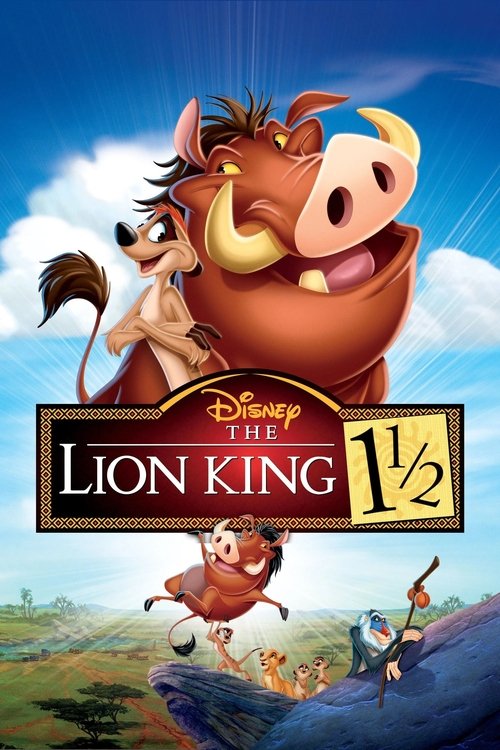
The Lion King 1½
Timon the meerkat and Pumbaa the warthog are best pals and the unsung heroes of the African savanna. This prequel to the smash Disney animated adventure takes you back -- way back -- before Simba's adventure began. You'll find out all about Timon and Pumbaa and tag along as they search for the perfect home and attempt to raise a rambunctious lion cub.
The film earned $1K at the global box office.


Plot Structure
Story beats plotted across runtime


Narrative Arc
Emotional journey through the story's key moments
Story Circle
Blueprint 15-beat structure
Arcplot Score Breakdown
Weighted: Precision (70%) + Arc (15%) + Theme (15%)
The Lion King 1½ (2004) demonstrates meticulously timed story structure, characteristic of Bradley Raymond's storytelling approach. This structural analysis examines how the film's 15-point plot structure maps to proven narrative frameworks across 1 hour and 17 minutes. With an Arcplot score of 7.0, the film balances conventional beats with creative variation.
Structural Analysis
The Status Quo at 1 minutes (1% through the runtime) establishes Timon and Pumbaa are in a theater, interrupting the screening of The Lion King. They establish their roles as comedic sidekicks living carefree lives.. Of particular interest, this early placement immediately immerses viewers in the story world.
The inciting incident occurs at 9 minutes when Timon's catastrophic failure as a sentry causes a hyena attack that nearly destroys the colony. He's ostracized and leaves in shame, exiled from his home.. At 12% through the film, this Disruption aligns precisely with traditional story structure. This beat shifts the emotional landscape, launching the protagonist into the central conflict.
The First Threshold at 19 minutes marks the transition into Act II, occurring at 24% of the runtime. This indicates the protagonist's commitment to Timon decides to actively seek his own paradise and finds Pumbaa being attacked. He chooses to save Pumbaa, forming their partnership and embarking on their journey together to find their dream home., moving from reaction to action.
At 39 minutes, the Midpoint arrives at 50% of the runtime—precisely centered, creating perfect narrative symmetry. Significantly, this crucial beat Simba meets Nala and falls in love, choosing to leave Timon and Pumbaa to reclaim Pride Rock. The trio's perfect life together is shattered, and Timon feels abandoned and betrayed., fundamentally raising what's at risk. The emotional intensity shifts, dividing the narrative into clear before-and-after phases.
The Collapse moment at 57 minutes (74% through) represents the emotional nadir. Here, Pumbaa walks away from Timon after being called a "pig," their friendship apparently dead. Timon is completely alone again, having lost both Simba and his best friend through his own selfishness., indicates the protagonist at their lowest point. This beat's placement in the final quarter sets up the climactic reversal.
The Second Threshold at 61 minutes initiates the final act resolution at 80% of the runtime. Timon chooses to overcome his fear and selfishness. He reconciles with Pumbaa and they decide to go help Simba fight, putting their friends' needs above their own safety and comfort., demonstrating the transformation achieved throughout the journey.
Emotional Journey
The Lion King 1½'s emotional architecture traces a deliberate progression across 15 carefully calibrated beats.
Narrative Framework
This structural analysis employs systematic plot point analysis that identifies crucial turning points. By mapping The Lion King 1½ against these established plot points, we can identify how Bradley Raymond utilizes or subverts traditional narrative conventions. The plot point approach reveals not only adherence to structural principles but also creative choices that distinguish The Lion King 1½ within the family genre.
Comparative Analysis
Additional family films include The Black Stallion, The Bad Guys and Ella Enchanted.
Plot Points by Act
Act I
SetupStatus Quo
Timon and Pumbaa are in a theater, interrupting the screening of The Lion King. They establish their roles as comedic sidekicks living carefree lives.
Theme
Young Timon's Uncle Max warns him about the dangers of not fitting in and trying to be something you're not, establishing the theme: "Find your place in the circle of life by being yourself."
Worldbuilding
Timon's backstory reveals his meerkat colony where he's a misfit sentry who causes disasters. His mother supports him but he doesn't fit the colony's expectations of tunnel-digging conformity.
Disruption
Timon's catastrophic failure as a sentry causes a hyena attack that nearly destroys the colony. He's ostracized and leaves in shame, exiled from his home.
Resistance
Timon wanders alone until he meets Rafiki, who serves as his mentor. Rafiki teaches him to "look beyond what you see" and tells him to find Hakuna Matata, a place where he can be himself.
Act II
ConfrontationFirst Threshold
Timon decides to actively seek his own paradise and finds Pumbaa being attacked. He chooses to save Pumbaa, forming their partnership and embarking on their journey together to find their dream home.
Mirror World
Timon and Pumbaa's friendship deepens as they bond over being outcasts. Pumbaa represents acceptance and genuine friendship, teaching Timon that belonging comes from connection, not conformity.
Premise
Timon and Pumbaa search for the perfect home, facing various obstacles and failed locations. They eventually find Pride Rock and make it their paradise, living their Hakuna Matata lifestyle. They rescue young Simba and raise him.
Midpoint
Simba meets Nala and falls in love, choosing to leave Timon and Pumbaa to reclaim Pride Rock. The trio's perfect life together is shattered, and Timon feels abandoned and betrayed.
Opposition
Timon spirals into bitterness and self-pity over losing Simba. He and Pumbaa argue about whether to help Simba fight Scar. Timon's selfishness threatens to destroy his friendship with Pumbaa.
Collapse
Pumbaa walks away from Timon after being called a "pig," their friendship apparently dead. Timon is completely alone again, having lost both Simba and his best friend through his own selfishness.
Crisis
Timon sits alone in despair, confronting his pattern of running away and pushing others away. He realizes that his dream of paradise means nothing without the friends who made it meaningful.
Act III
ResolutionSecond Threshold
Timon chooses to overcome his fear and selfishness. He reconciles with Pumbaa and they decide to go help Simba fight, putting their friends' needs above their own safety and comfort.
Synthesis
Timon and Pumbaa join the battle at Pride Rock, using their unique skills to help Simba defeat Scar. Timon rallies his meerkat colony, combining his old world with his new identity. They save the day through teamwork and courage.
Transformation
Timon stands with his meerkat family, Pumbaa, and Simba at Pride Rock, finally understanding his place. He's found his true home: not a location, but belonging with those who accept him. He watches Simba's cub presentation with genuine joy.