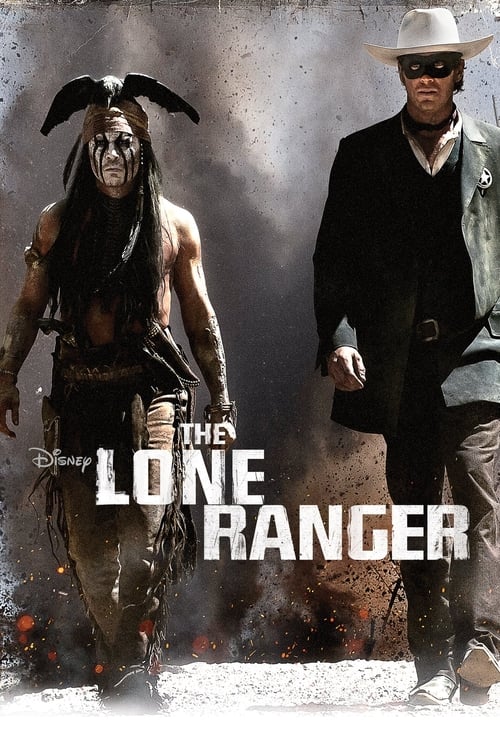
The Lone Ranger
The Texas Rangers chase down a gang of outlaws led by Butch Cavendish, but the gang ambushes the Rangers, seemingly killing them all. One survivor is found, however, by an American Indian named Tonto, who nurses him back to health. The Ranger, donning a mask and riding a white stallion named Silver, teams up with Tonto to bring the unscrupulous gang and others of that ilk to justice.
Working with a massive budget of $215.0M, the film achieved a steady performer with $260.5M in global revenue (+21% profit margin).
Nominated for 2 Oscars. 6 wins & 23 nominations


Plot Structure
Story beats plotted across runtime


Narrative Arc
Emotional journey through the story's key moments
Story Circle
Blueprint 15-beat structure
Arcplot Score Breakdown
Weighted: Precision (70%) + Arc (15%) + Theme (15%)
The Lone Ranger (2013) showcases carefully calibrated story structure, characteristic of Gore Verbinski's storytelling approach. This structural analysis examines how the film's 15-point plot structure maps to proven narrative frameworks across 2 hours and 29 minutes. With an Arcplot score of 6.8, the film balances conventional beats with creative variation.
Structural Analysis
The Status Quo at 1 minutes (1% through the runtime) establishes A young boy in 1933 San Francisco visits a Wild West exhibit and encounters an aged Tonto, who begins recounting the tale of the Lone Ranger, establishing the framing device of a legendary hero whose story must be told.. Structural examination shows that this early placement immediately immerses viewers in the story world.
The inciting incident occurs at 18 minutes when Butch Cavendish's gang attacks the train to free their leader, resulting in chaos and destruction. Tonto and John Reid are thrown together in the violence as Cavendish escapes, disrupting Reid's peaceful return and his belief that law alone can maintain order.. At 12% through the film, this Disruption aligns precisely with traditional story structure. This beat shifts the emotional landscape, launching the protagonist into the central conflict.
The First Threshold at 37 minutes marks the transition into Act II, occurring at 25% of the runtime. This demonstrates the protagonist's commitment to John Reid, resurrected by Tonto and the mystical white spirit horse, accepts the mask and becomes the Lone Ranger. He makes the active choice to pursue justice outside the law by letting the world believe he is dead, crossing the threshold into his new identity as a masked vigilante., moving from reaction to action.
At 75 minutes, the Midpoint arrives at 50% of the runtime—precisely centered, creating perfect narrative symmetry. Notably, this crucial beat The Lone Ranger discovers that railroad tycoon Latham Cole is the true mastermind behind everything—he orchestrated the Ranger massacre and is working with Cavendish to steal Comanche silver. This false defeat reveals the conspiracy goes far deeper than a simple outlaw, and Reid's faith in civilization's institutions is shattered., fundamentally raising what's at risk. The emotional intensity shifts, dividing the narrative into clear before-and-after phases.
The Collapse moment at 112 minutes (75% through) represents the emotional nadir. Here, The Comanche are massacred by the cavalry in a devastating attack. Tonto is captured and sentenced to hang. Reid is beaten and left for dead in the desert. Everything Reid tried to protect has been destroyed, and the corrupt system he once believed in has become the instrument of genocide and injustice., demonstrates the protagonist at their lowest point. This beat's placement in the final quarter sets up the climactic reversal.
The Second Threshold at 119 minutes initiates the final act resolution at 80% of the runtime. Reid fully embraces his identity as the Lone Ranger, synthesizing his legal knowledge with Tonto's understanding of true justice. He rides to Promontory Summit where Cole's railroad ceremony will take place, ready to operate outside the law to bring real justice—becoming the legendary hero Tonto always believed he could be., demonstrating the transformation achieved throughout the journey.
Emotional Journey
The Lone Ranger's emotional architecture traces a deliberate progression across 15 carefully calibrated beats.
Narrative Framework
This structural analysis employs proven narrative structure principles that track dramatic progression. By mapping The Lone Ranger against these established plot points, we can identify how Gore Verbinski utilizes or subverts traditional narrative conventions. The plot point approach reveals not only adherence to structural principles but also creative choices that distinguish The Lone Ranger within the action genre.
Gore Verbinski's Structural Approach
Among the 9 Gore Verbinski films analyzed on Arcplot, the average structural score is 7.1, reflecting strong command of classical structure. The Lone Ranger takes a more unconventional approach compared to the director's typical style. For comparative analysis, explore the complete Gore Verbinski filmography.
Comparative Analysis
Additional action films include The Bad Guys, Puss in Boots and Venom: The Last Dance. For more Gore Verbinski analyses, see MouseHunt, Pirates of the Caribbean: The Curse of the Black Pearl and A Cure for Wellness.
Plot Points by Act
Act I
SetupStatus Quo
A young boy in 1933 San Francisco visits a Wild West exhibit and encounters an aged Tonto, who begins recounting the tale of the Lone Ranger, establishing the framing device of a legendary hero whose story must be told.
Theme
Tonto tells the young boy that John Reid believed that a man could not wear a mask and be a hero, that justice must work within the law. This establishes the central thematic tension between law and true justice that Reid must resolve.
Worldbuilding
The world of 1869 Texas is established through the framing device. John Reid returns home by train as a newly-minted lawyer, believing in civilization and the power of law. His brother Dan is a Texas Ranger, and the railroad is transforming the West. Butch Cavendish is being transported as a prisoner on the same train.
Disruption
Butch Cavendish's gang attacks the train to free their leader, resulting in chaos and destruction. Tonto and John Reid are thrown together in the violence as Cavendish escapes, disrupting Reid's peaceful return and his belief that law alone can maintain order.
Resistance
John joins his brother Dan and the Texas Rangers to pursue Cavendish. Reid debates with Tonto about justice and the nature of evil. Dan is ambushed and the Rangers are massacred in Bryant's Gap. John is left for dead with his brother, a bullet in his chest. Tonto discovers John is a spirit walker who cannot be killed.
Act II
ConfrontationFirst Threshold
John Reid, resurrected by Tonto and the mystical white spirit horse, accepts the mask and becomes the Lone Ranger. He makes the active choice to pursue justice outside the law by letting the world believe he is dead, crossing the threshold into his new identity as a masked vigilante.
Mirror World
Tonto reveals his tragic backstory and his belief that Cavendish is a wendigo, a creature of evil that must be destroyed. This establishes their partnership as more than convenience—Tonto becomes Reid's spiritual guide, teaching him that some evils cannot be addressed through courts and paperwork.
Premise
The Lone Ranger and Tonto pursue Cavendish across the frontier. They encounter Red Harrington at her brothel, learn about silver mines, and begin uncovering the conspiracy. Reid protects his sister-in-law Rebecca and nephew Danny while struggling with Tonto's unconventional methods and his own rigid beliefs about justice.
Midpoint
The Lone Ranger discovers that railroad tycoon Latham Cole is the true mastermind behind everything—he orchestrated the Ranger massacre and is working with Cavendish to steal Comanche silver. This false defeat reveals the conspiracy goes far deeper than a simple outlaw, and Reid's faith in civilization's institutions is shattered.
Opposition
Cole manipulates events to start a war with the Comanche, framing them for attacks. Reid and Tonto are captured and separated. The cavalry attacks the Comanche village. Cole reveals his plan to control all the silver and the railroad. Rebecca is held captive, and Reid is increasingly isolated as Cole's power grows.
Collapse
The Comanche are massacred by the cavalry in a devastating attack. Tonto is captured and sentenced to hang. Reid is beaten and left for dead in the desert. Everything Reid tried to protect has been destroyed, and the corrupt system he once believed in has become the instrument of genocide and injustice.
Crisis
Reid lies broken in the desert, his faith in law and civilization utterly destroyed. He must confront the truth that Tonto was right—some evil cannot be fought with writs and warrants. The white spirit horse returns to him, offering a choice between death and transformation.
Act III
ResolutionSecond Threshold
Reid fully embraces his identity as the Lone Ranger, synthesizing his legal knowledge with Tonto's understanding of true justice. He rides to Promontory Summit where Cole's railroad ceremony will take place, ready to operate outside the law to bring real justice—becoming the legendary hero Tonto always believed he could be.
Synthesis
The Lone Ranger and Tonto execute a spectacular plan to stop Cole's trains carrying the stolen silver. In an extended action sequence set to the William Tell Overture, Reid rescues Rebecca and Danny, defeats Cavendish, and exposes Cole's crimes. The corrupt railroad baron falls to his death, and justice is finally served outside the courtroom.
Transformation
John Reid rides off into the sunset with Tonto, choosing to remain "dead" and continue as the Lone Ranger. The framing story concludes with old Tonto walking into the desert. Reid has transformed from a man who believed only in law to a legend who embodies true justice—a masked rider who will defend the innocent when corrupt systems fail.