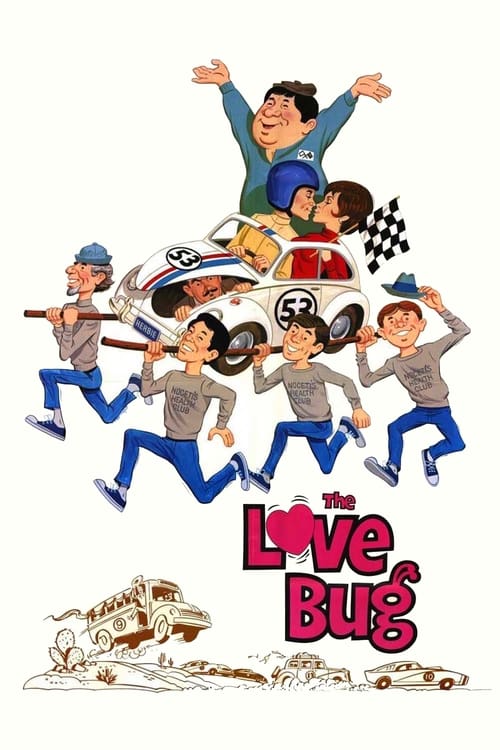
The Love Bug
Down-on-his-luck race car driver Jim Douglas teams up with a little VW Bug that has a mind of its own, not realizing Herbie's worth until a sneaky rival plots to steal him.
The film earned $51.3M at the global box office.
1 win & 2 nominations


Plot Structure
Story beats plotted across runtime


Narrative Arc
Emotional journey through the story's key moments
Story Circle
Blueprint 15-beat structure
Arcplot Score Breakdown
Weighted: Precision (70%) + Arc (15%) + Theme (15%)
The Love Bug (1968) exemplifies precise story structure, characteristic of Robert Stevenson's storytelling approach. This structural analysis examines how the film's 15-point plot structure maps to proven narrative frameworks across 1 hour and 48 minutes. With an Arcplot score of 7.0, the film balances conventional beats with creative variation.
Structural Analysis
The Status Quo at 1 minutes (1% through the runtime) establishes Jim Douglas, a struggling race car driver, lives in a converted firehouse with his friend Tennessee. He's broke, frustrated, and his racing career is stalled after repeated failures against champion Peter Thorndyke.. Structural examination shows that this early placement immediately immerses viewers in the story world.
The inciting incident occurs at 12 minutes when After Jim insults and rejects the VW, Herbie follows Jim home on his own, appearing in Jim's garage unbidden. This impossible event disrupts Jim's rational worldview and creates an unwanted problem.. At 12% through the film, this Disruption aligns precisely with traditional story structure. This beat shifts the emotional landscape, launching the protagonist into the central conflict.
The First Threshold at 26 minutes marks the transition into Act II, occurring at 24% of the runtime. This shows the protagonist's commitment to Jim actively chooses to race Herbie in his first competitive event, committing to this new partnership. This is his decision to enter the "new world" of believing in and working with the magical car., moving from reaction to action.
At 53 minutes, the Midpoint arrives at 49% of the runtime—precisely centered, creating perfect narrative symmetry. Significantly, this crucial beat False victory: Jim wins a major race and qualifies for the El Dorado Road Race. He's at the peak of success, but his ego is growing and he starts taking credit for the victories, forgetting Herbie's role. The stakes raise as Thorndyke schemes to steal Herbie., fundamentally raising what's at risk. The emotional intensity shifts, dividing the narrative into clear before-and-after phases.
The Collapse moment at 79 minutes (73% through) represents the emotional nadir. Here, Herbie, heartbroken by Jim's betrayal and plan to sell him to Thorndyke, attempts suicide by driving off a bridge. Herbie is "killed" (splits in half), representing the death of the magical partnership and Jim's dreams due to his own selfishness., demonstrates the protagonist at their lowest point. This beat's placement in the final quarter sets up the climactic reversal.
The Second Threshold at 85 minutes initiates the final act resolution at 79% of the runtime. Jim has an epiphany: he must truly believe in and respect Herbie as a partner, not a tool. He lovingly repairs Herbie, apologizes, and commits to racing the El Dorado with humility and faith - combining his skills with genuine belief in the impossible., demonstrating the transformation achieved throughout the journey.
Emotional Journey
The Love Bug's emotional architecture traces a deliberate progression across 15 carefully calibrated beats.
Narrative Framework
This structural analysis employs proven narrative structure principles that track dramatic progression. By mapping The Love Bug against these established plot points, we can identify how Robert Stevenson utilizes or subverts traditional narrative conventions. The plot point approach reveals not only adherence to structural principles but also creative choices that distinguish The Love Bug within the comedy genre.
Robert Stevenson's Structural Approach
Among the 5 Robert Stevenson films analyzed on Arcplot, the average structural score is 7.1, reflecting strong command of classical structure. The Love Bug takes a more unconventional approach compared to the director's typical style. For comparative analysis, explore the complete Robert Stevenson filmography.
Comparative Analysis
Additional comedy films include The Bad Guys, Ella Enchanted and The Evening Star. For more Robert Stevenson analyses, see That Darn Cat!, Herbie Rides Again and Bedknobs and Broomsticks.
Plot Points by Act
Act I
SetupStatus Quo
Jim Douglas, a struggling race car driver, lives in a converted firehouse with his friend Tennessee. He's broke, frustrated, and his racing career is stalled after repeated failures against champion Peter Thorndyke.
Theme
Tennessee suggests that Jim needs to believe in something beyond himself and stop being so cynical. "You gotta have faith in something, Jimmy boy" - hinting at the film's theme about believing in the seemingly impossible.
Worldbuilding
Jim visits Thorndyke's luxury car dealership to confront his rival. We meet arrogant Peter Thorndyke, sweet saleswoman Carole Bennett, and witness Jim's hostile encounter with a small Volkswagen Beetle (Herbie) that seems to have a mind of its own.
Disruption
After Jim insults and rejects the VW, Herbie follows Jim home on his own, appearing in Jim's garage unbidden. This impossible event disrupts Jim's rational worldview and creates an unwanted problem.
Resistance
Jim resists believing Herbie is sentient despite mounting evidence. Tennessee acts as guide, encouraging Jim to accept the car. Thorndyke demands payment. Jim reluctantly agrees to racing Herbie to earn money, still skeptical of the car's abilities.
Act II
ConfrontationFirst Threshold
Jim actively chooses to race Herbie in his first competitive event, committing to this new partnership. This is his decision to enter the "new world" of believing in and working with the magical car.
Mirror World
Jim's relationship with Carole deepens as they bond over Herbie. Carole represents the thematic counterpoint - she naturally believes in Herbie's sentience and treats him with respect, modeling the faith and openness Jim needs to learn.
Premise
The "fun and games" of racing with a magical car. Herbie wins race after race, making Jim famous. Comic sequences include Herbie's jealousy, the car's personality quirks, and the growing Jim-Carole romance, all while Thorndyke seethes with envy.
Midpoint
False victory: Jim wins a major race and qualifies for the El Dorado Road Race. He's at the peak of success, but his ego is growing and he starts taking credit for the victories, forgetting Herbie's role. The stakes raise as Thorndyke schemes to steal Herbie.
Opposition
Jim's arrogance alienates Herbie, who feels unappreciated. Thorndyke intensifies his sabotage efforts. The Jim-Carole relationship strains as Jim becomes self-centered. Herbie's performance suffers due to hurt feelings, and Jim considers selling the car.
Collapse
Herbie, heartbroken by Jim's betrayal and plan to sell him to Thorndyke, attempts suicide by driving off a bridge. Herbie is "killed" (splits in half), representing the death of the magical partnership and Jim's dreams due to his own selfishness.
Crisis
Jim experiences genuine remorse and grief. He realizes how badly he's treated both Herbie and those who believed in him. Tennessee and Carole help him understand that success meant nothing without heart and respect for others.
Act III
ResolutionSecond Threshold
Jim has an epiphany: he must truly believe in and respect Herbie as a partner, not a tool. He lovingly repairs Herbie, apologizes, and commits to racing the El Dorado with humility and faith - combining his skills with genuine belief in the impossible.
Synthesis
The El Dorado Road Race finale. Jim and Herbie race as true partners against Thorndyke. Despite Thorndyke's cheating and sabotage, Jim's newfound humility and faith in Herbie enable them to overcome obstacles and win together, defeating the antagonist.
Transformation
Jim, Tennessee, Carole, and Herbie celebrate together as equals and family. Jim is now humble, open-hearted, and believes in magic. The final image shows them driving off together - Jim transformed from cynical loner to faithful partner.