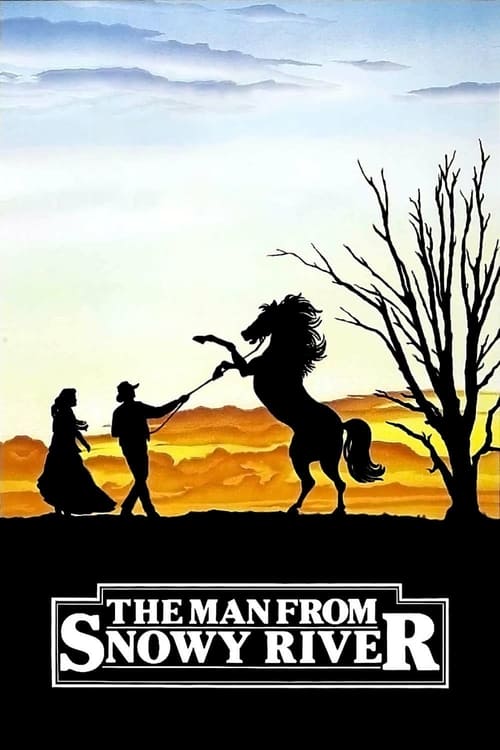
The Man from Snowy River
Jim Craig has lived his first 18 years in the mountains of Australia on his father's farm. The death of his father forces him to go to the lowlands to earn enough money to get the farm back on its feet.
Despite its limited budget of $3.5M, The Man from Snowy River became a financial success, earning $20.7M worldwide—a 490% return. The film's unconventional structure connected with viewers, demonstrating that strong storytelling can transcend budget limitations.
2 wins & 3 nominations


Plot Structure
Story beats plotted across runtime


Narrative Arc
Emotional journey through the story's key moments
Story Circle
Blueprint 15-beat structure
Arcplot Score Breakdown
Weighted: Precision (70%) + Arc (15%) + Theme (15%)
The Man from Snowy River (1982) exemplifies carefully calibrated dramatic framework, characteristic of George T. Miller's storytelling approach. This structural analysis examines how the film's 15-point plot structure maps to proven narrative frameworks across 1 hour and 44 minutes. With an Arcplot score of 7.7, the film showcases strong structural fundamentals.
Structural Analysis
The Status Quo at 2 minutes (2% through the runtime) establishes Jim Craig rides freely through the high country mountains with his father, living as a cattleman in the rugged Australian highlands. The opening establishes Jim's skill as a horseman and his belonging to this wild, untamed world.. Significantly, this early placement immediately immerses viewers in the story world.
The inciting incident occurs at 12 minutes when Jim's father dies in a tragic accident during a wild horse chase. Jim loses everything: his father, his home, his position in the mountain community, and must leave the high country he loves.. At 12% through the film, this Disruption aligns precisely with traditional story structure. This beat shifts the emotional landscape, launching the protagonist into the central conflict.
The First Threshold at 25 minutes marks the transition into Act II, occurring at 25% of the runtime. This illustrates the protagonist's commitment to Jim chooses to stay and work for Harrison despite the degrading conditions, determined to prove himself worthy and earn enough money to return to the high country as a landowner. He accepts the challenge to become a man on his own terms., moving from reaction to action.
At 51 minutes, the Midpoint arrives at 49% of the runtime—precisely centered, creating perfect narrative symmetry. Of particular interest, this crucial beat The prized colt escapes and joins the brumby mob led by the legendary stallion. Harrison organizes a hunt with lowland riders, dismissing the mountain men. This raises the stakes: if Jim can't help recapture the colt, Harrison will lose a fortune and Jim will never prove the worth of mountain men., fundamentally raising what's at risk. The emotional intensity shifts, dividing the narrative into clear before-and-after phases.
The Collapse moment at 76 minutes (74% through) represents the emotional nadir. Here, Harrison fires Jim, banishing him from the station and from Jessica. Jim has lost everything again: his job, his chance with Jessica, his opportunity to prove himself. He must return to the mountains empty-handed, still landless, still not a man in society's eyes., shows the protagonist at their lowest point. This beat's placement in the final quarter sets up the climactic reversal.
The Second Threshold at 82 minutes initiates the final act resolution at 78% of the runtime. Jim accepts the invitation to join the mountain men's hunt. Harrison reluctantly agrees, having no other options. Jim realizes he doesn't need Harrison's approval—he needs to prove himself to the mountain men and to himself by attempting what no rider has done: bringing down the brumbies from the terrible descent., demonstrating the transformation achieved throughout the journey.
Emotional Journey
The Man from Snowy River's emotional architecture traces a deliberate progression across 15 carefully calibrated beats.
Narrative Framework
This structural analysis employs systematic plot point analysis that identifies crucial turning points. By mapping The Man from Snowy River against these established plot points, we can identify how George T. Miller utilizes or subverts traditional narrative conventions. The plot point approach reveals not only adherence to structural principles but also creative choices that distinguish The Man from Snowy River within the drama genre.
Comparative Analysis
Additional drama films include After Thomas, South Pacific and Dirty Dancing: Havana Nights.
Plot Points by Act
Act I
SetupStatus Quo
Jim Craig rides freely through the high country mountains with his father, living as a cattleman in the rugged Australian highlands. The opening establishes Jim's skill as a horseman and his belonging to this wild, untamed world.
Theme
Spur, the mountain cattleman, tells Jim: "A man's worth is measured by the horse he rides and the mettle he shows." This establishes the film's central theme about proving manhood and earning respect through courage and skill.
Worldbuilding
Introduction to the mountain cattlemen community, the wild brumbies led by the legendary stallion, and the class divide between the lowland wealthy (Harrison) and highland cattlemen. Jim's father is killed when his horse stumbles during a brumby chase, leaving Jim orphaned and landless.
Disruption
Jim's father dies in a tragic accident during a wild horse chase. Jim loses everything: his father, his home, his position in the mountain community, and must leave the high country he loves.
Resistance
Jim seeks work from the wealthy Harrison on the lowlands. Harrison condescendingly offers Jim menial jobs, doubting a mountain boy can handle real work. Clancy, an old friend of Jim's father, becomes his mentor. Jim meets Jessica Harrison and is drawn to her, but the class divide is stark.
Act II
ConfrontationFirst Threshold
Jim chooses to stay and work for Harrison despite the degrading conditions, determined to prove himself worthy and earn enough money to return to the high country as a landowner. He accepts the challenge to become a man on his own terms.
Mirror World
Jim and Jessica's relationship deepens. She represents the refined world he must navigate, but also someone who sees his true worth beyond his station. Their romance embodies the film's theme: true worth isn't determined by wealth or class.
Premise
Jim works on Harrison's station, proving his skills and earning grudging respect. He breaks wild horses, handles dangerous cattle work, and demonstrates mountain-bred toughness. His romance with Jessica grows despite Harrison's disapproval and his brother Spur's interference.
Midpoint
The prized colt escapes and joins the brumby mob led by the legendary stallion. Harrison organizes a hunt with lowland riders, dismissing the mountain men. This raises the stakes: if Jim can't help recapture the colt, Harrison will lose a fortune and Jim will never prove the worth of mountain men.
Opposition
Harrison's lowland riders fail to catch the brumbies. Tensions rise between Jim and Harrison, and between Jim and Spur over Jessica. Harrison forbids the relationship and threatens Jim's employment. The hunt becomes desperate, and Harrison finally must consider using the mountain cattlemen he previously scorned.
Collapse
Harrison fires Jim, banishing him from the station and from Jessica. Jim has lost everything again: his job, his chance with Jessica, his opportunity to prove himself. He must return to the mountains empty-handed, still landless, still not a man in society's eyes.
Crisis
Jim retreats to the high country in defeat. However, Clancy and the mountain men approach him: they're organizing a final hunt for the brumbies, and they want Jim to ride with them. This represents acceptance from his father's peers, the true measure of manhood in his world.
Act III
ResolutionSecond Threshold
Jim accepts the invitation to join the mountain men's hunt. Harrison reluctantly agrees, having no other options. Jim realizes he doesn't need Harrison's approval—he needs to prove himself to the mountain men and to himself by attempting what no rider has done: bringing down the brumbies from the terrible descent.
Synthesis
The climactic brumby hunt. Jim pursues the wild horses down the treacherous mountain slope that killed his father's horse. In a breathtaking ride combining his father's horsemanship with his own courage, Jim successfully brings the mob down, recovering Harrison's colt and capturing the legendary stallion. He proves himself the greatest horseman in the mountains.
Transformation
Jim returns to the high country riding the great stallion he has earned, with Jessica joining him. He has achieved manhood not through wealth or Harrison's approval, but through courage and skill. He belongs to the mountains again, this time as a man of proven worth, with the woman he loves and the respect of the mountain cattlemen.