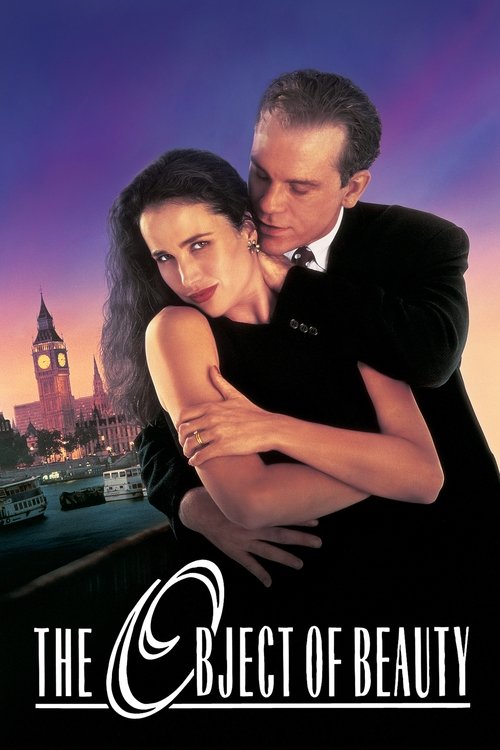
The Object of Beauty
American couple Jake and Tina are living in an expensive London hotel above their means, incurring a sizeable debt. When they are asked to pay a lavish dinner bill and Jake's card is declined, he suggests they sell Tina's tiny, expensive Henry Moore sculpture to cover the debt. After they hatch a scheme to claim the sculpture was stolen in order to collect insurance on it, the sculpture mysteriously goes missing.
The film earned $5.1M at the global box office.


Plot Structure
Story beats plotted across runtime


Narrative Arc
Emotional journey through the story's key moments
Story Circle
Blueprint 15-beat structure
Arcplot Score Breakdown
Weighted: Precision (70%) + Arc (15%) + Theme (15%)
The Object of Beauty (1991) exhibits carefully calibrated plot construction, characteristic of Michael Lindsay-Hogg's storytelling approach. This structural analysis examines how the film's 15-point plot structure maps to proven narrative frameworks across 1 hour and 43 minutes. With an Arcplot score of 7.0, the film balances conventional beats with creative variation.
Structural Analysis
The Status Quo at 1 minutes (1% through the runtime) establishes Jake and Tina live luxuriously in a London hotel suite, financially dependent on Jake's brother and surrounded by expensive things including Tina's prized Henry Moore sculpture.. The analysis reveals that this early placement immediately immerses viewers in the story world.
The inciting incident occurs at 12 minutes when Jake's brother cuts off financial support. The couple faces eviction from the hotel and has no means to pay their mounting bills.. At 11% through the film, this Disruption aligns precisely with traditional story structure. This beat shifts the emotional landscape, launching the protagonist into the central conflict.
The First Threshold at 25 minutes marks the transition into Act II, occurring at 24% of the runtime. This demonstrates the protagonist's commitment to Jake and Tina decide to fake the theft of the sculpture to collect insurance money, keeping the sculpture hidden to sell later. They cross into criminal territory., moving from reaction to action.
At 50 minutes, the Midpoint arrives at 49% of the runtime—precisely centered, creating perfect narrative symmetry. The analysis reveals that this crucial beat The sculpture actually goes missing for real - the chambermaid has taken it. Jake and Tina's scheme collapses as they realize they've lost control of the situation., fundamentally raising what's at risk. The emotional intensity shifts, dividing the narrative into clear before-and-after phases.
The Collapse moment at 76 minutes (74% through) represents the emotional nadir. Here, Jake and Tina hit rock bottom - they're separated, broke, and facing exposure for fraud. The sculpture represents everything wrong with their values and relationship., indicates the protagonist at their lowest point. This beat's placement in the final quarter sets up the climactic reversal.
The Second Threshold at 82 minutes initiates the final act resolution at 79% of the runtime. Discovery of what happened to the sculpture and understanding the chambermaid's motivation - she valued it for beauty, not money. This realization shifts their perspective., demonstrating the transformation achieved throughout the journey.
Emotional Journey
The Object of Beauty's emotional architecture traces a deliberate progression across 15 carefully calibrated beats.
Narrative Framework
This structural analysis employs proven narrative structure principles that track dramatic progression. By mapping The Object of Beauty against these established plot points, we can identify how Michael Lindsay-Hogg utilizes or subverts traditional narrative conventions. The plot point approach reveals not only adherence to structural principles but also creative choices that distinguish The Object of Beauty within the drama genre.
Comparative Analysis
Additional drama films include After Thomas, South Pacific and Dirty Dancing: Havana Nights.
Plot Points by Act
Act I
SetupStatus Quo
Jake and Tina live luxuriously in a London hotel suite, financially dependent on Jake's brother and surrounded by expensive things including Tina's prized Henry Moore sculpture.
Theme
Discussion about the value of art versus necessity. Someone remarks on what things are really worth beyond their price tags.
Worldbuilding
Establishment of Jake and Tina's parasitic lifestyle, their relationship dynamics, the hotel staff who serve them, and their mounting debt. The Henry Moore sculpture is prominently featured as Tina's most precious possession.
Disruption
Jake's brother cuts off financial support. The couple faces eviction from the hotel and has no means to pay their mounting bills.
Resistance
Jake and Tina debate their options. They consider selling possessions, but Tina refuses to part with her sculpture. They discuss various schemes to get money and avoid the hotel bill.
Act II
ConfrontationFirst Threshold
Jake and Tina decide to fake the theft of the sculpture to collect insurance money, keeping the sculpture hidden to sell later. They cross into criminal territory.
Mirror World
Introduction of the deaf chambermaid who admires the sculpture and represents a contrasting value system - she sees beauty where they see money.
Premise
The sculpture is reported stolen. Jake and Tina navigate the insurance claim while secretly hiding the piece. Their plan appears to be working as they play the victims.
Midpoint
The sculpture actually goes missing for real - the chambermaid has taken it. Jake and Tina's scheme collapses as they realize they've lost control of the situation.
Opposition
Jake and Tina try to locate the sculpture while maintaining the insurance fraud. Their relationship deteriorates under pressure. They must find the piece before the insurance pays out or they'll be exposed.
Collapse
Jake and Tina hit rock bottom - they're separated, broke, and facing exposure for fraud. The sculpture represents everything wrong with their values and relationship.
Crisis
Jake and Tina separately reflect on what matters. The dark night forces them to confront whether their materialistic lifestyle and relationship are worth saving.
Act III
ResolutionSecond Threshold
Discovery of what happened to the sculpture and understanding the chambermaid's motivation - she valued it for beauty, not money. This realization shifts their perspective.
Synthesis
Resolution of the sculpture situation and the insurance fraud. Jake and Tina must decide what to do with their newfound understanding about value, beauty, and their relationship.
Transformation
Final image showing Jake and Tina's changed circumstances and relationship to material possessions. They've learned something about real value versus monetary worth.