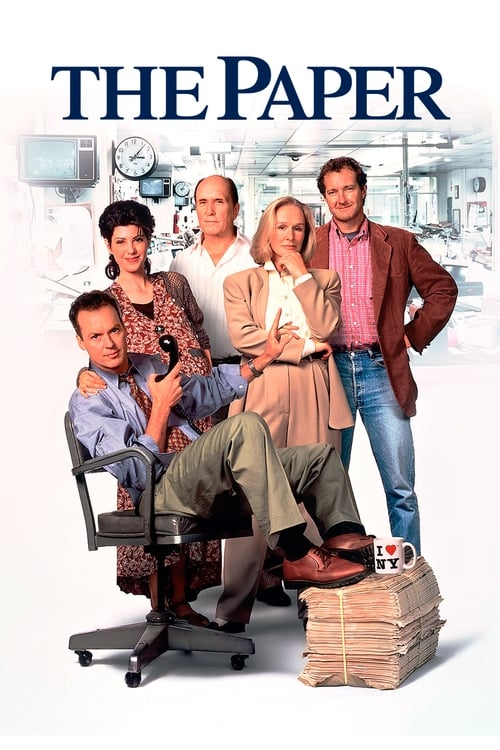
The Paper
Henry Hackett is the workaholic editor of a New York City tabloid. He loves his job, but the long hours and low pay are leading to discontent. Also, publisher Bernie White faces financial straits, and has hatchet-man Alicia Clark—Henry's nemesis—impose unpopular cutbacks.
Despite its modest budget of $6.0M, The Paper became a massive hit, earning $48.4M worldwide—a remarkable 707% return. The film's unique voice attracted moviegoers, proving that strong storytelling can transcend budget limitations.
Nominated for 1 Oscar. 1 nomination


Plot Structure
Story beats plotted across runtime


Narrative Arc
Emotional journey through the story's key moments
Story Circle
Blueprint 15-beat structure
Arcplot Score Breakdown
Weighted: Precision (70%) + Arc (15%) + Theme (15%)
The Paper (1994) reveals meticulously timed plot construction, characteristic of Ron Howard's storytelling approach. This structural analysis examines how the film's 15-point plot structure maps to proven narrative frameworks across 1 hour and 52 minutes. With an Arcplot score of 6.9, the film balances conventional beats with creative variation.
Structural Analysis
The Status Quo at 1 minutes (1% through the runtime) establishes Henry Hackett racing through New York on his commute, establishing him as a driven metro editor at the New York Sun, passionate about news but stressed by the chaos of daily journalism.. Significantly, this early placement immediately immerses viewers in the story world.
The inciting incident occurs at 12 minutes when Henry learns about the double homicide case and begins to suspect the two arrested young men may be innocent, creating the central investigative drive of the story.. At 11% through the film, this Disruption aligns precisely with traditional story structure. This beat shifts the emotional landscape, launching the protagonist into the central conflict.
The First Threshold at 27 minutes marks the transition into Act II, occurring at 25% of the runtime. This illustrates the protagonist's commitment to Henry commits to investigating the story and proving the arrested men's innocence, choosing his journalistic mission over the easier path, despite Martha's objections., moving from reaction to action.
At 55 minutes, the Midpoint arrives at 49% of the runtime—precisely centered, creating perfect narrative symmetry. Structural examination shows that this crucial beat Henry gets crucial evidence suggesting the young men are innocent - a false victory as he thinks he's cracked the case, but the real battle with his editor and the deadline is just beginning. Stakes raised., fundamentally raising what's at risk. The emotional intensity shifts, dividing the narrative into clear before-and-after phases.
The Collapse moment at 83 minutes (75% through) represents the emotional nadir. Here, Henry misses the birth of his child while chasing the story. His marriage appears destroyed, his career in jeopardy, and he still hasn't stopped the false story from running. His obsession has cost him everything., indicates the protagonist at their lowest point. This beat's placement in the final quarter sets up the climactic reversal.
The Second Threshold at 89 minutes initiates the final act resolution at 79% of the runtime. Henry gets the final proof he needs and realizes how to stop the presses and save both the truth and what remains of his relationships. He synthesizes his journalistic skills with new understanding of what matters., demonstrating the transformation achieved throughout the journey.
Emotional Journey
The Paper's emotional architecture traces a deliberate progression across 15 carefully calibrated beats.
Narrative Framework
This structural analysis employs proven narrative structure principles that track dramatic progression. By mapping The Paper against these established plot points, we can identify how Ron Howard utilizes or subverts traditional narrative conventions. The plot point approach reveals not only adherence to structural principles but also creative choices that distinguish The Paper within the comedy genre.
Ron Howard's Structural Approach
Among the 24 Ron Howard films analyzed on Arcplot, the average structural score is 7.0, demonstrating varied approaches to story architecture. The Paper takes a more unconventional approach compared to the director's typical style. For comparative analysis, explore the complete Ron Howard filmography.
Comparative Analysis
Additional comedy films include The Bad Guys, Ella Enchanted and The Evening Star. For more Ron Howard analyses, see Apollo 13, Solo: A Star Wars Story and Cinderella Man.
Plot Points by Act
Act I
SetupStatus Quo
Henry Hackett racing through New York on his commute, establishing him as a driven metro editor at the New York Sun, passionate about news but stressed by the chaos of daily journalism.
Theme
Martha tells Henry about priorities and what really matters in life, hinting at the central conflict between career ambition and family responsibilities.
Worldbuilding
Introduction to the newsroom culture, Henry's pregnant wife Martha, the job offer from the Sentinel, and the two young African American men arrested for a double homicide that will become the day's major story.
Disruption
Henry learns about the double homicide case and begins to suspect the two arrested young men may be innocent, creating the central investigative drive of the story.
Resistance
Henry debates pursuing the story versus taking the safer Sentinel job. Martha pressures him about their future and baby. He wrestles with his journalistic instincts versus practical considerations.
Act II
ConfrontationFirst Threshold
Henry commits to investigating the story and proving the arrested men's innocence, choosing his journalistic mission over the easier path, despite Martha's objections.
Mirror World
Henry's relationship with Martha deepens as subplot - she represents what he needs (family, stability) versus what he wants (the big story, journalistic glory).
Premise
The promise of a newsroom thriller: Henry chases leads, interviews sources, battles deadlines, deals with colorful newsroom characters, and races against the clock to prove innocence before the paper goes to print.
Midpoint
Henry gets crucial evidence suggesting the young men are innocent - a false victory as he thinks he's cracked the case, but the real battle with his editor and the deadline is just beginning. Stakes raised.
Opposition
Managing editor Alicia refuses to hold the presses. Publisher wants the sensational story. Martha goes into labor. Henry must fight on multiple fronts as everything closes in - career, marriage, truth all at risk.
Collapse
Henry misses the birth of his child while chasing the story. His marriage appears destroyed, his career in jeopardy, and he still hasn't stopped the false story from running. His obsession has cost him everything.
Crisis
Henry faces the consequences of his choices in the dark night of his soul, confronting what his priorities have cost him and whether the truth was worth losing his family.
Act III
ResolutionSecond Threshold
Henry gets the final proof he needs and realizes how to stop the presses and save both the truth and what remains of his relationships. He synthesizes his journalistic skills with new understanding of what matters.
Synthesis
Henry executes his plan to stop the false story, confronts his editor, ensures the truth gets printed, and rushes to the hospital to meet his newborn child and reconcile with Martha.
Transformation
Henry at the hospital with his newborn and Martha, having saved the innocent men and proven the truth, but now understanding the balance between his calling and his family - transformed from obsessive journalist to father.