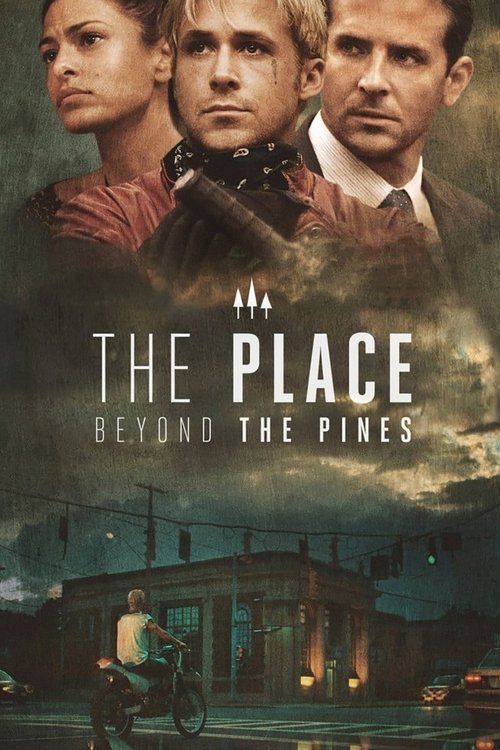
The Place Beyond the Pines
A motorcycle stunt rider considers committing a crime in order to provide for his wife and child, an act that puts him on a collision course with a cop-turned-politician.
Despite a respectable budget of $15.0M, The Place Beyond the Pines became a financial success, earning $47.1M worldwide—a 214% return.
5 wins & 22 nominations


Plot Structure
Story beats plotted across runtime


Narrative Arc
Emotional journey through the story's key moments
Story Circle
Blueprint 15-beat structure
Arcplot Score Breakdown
Weighted: Precision (70%) + Arc (15%) + Theme (15%)
The Place Beyond the Pines (2013) exhibits deliberately positioned plot construction, characteristic of Derek Cianfrance's storytelling approach. This structural analysis examines how the film's 15-point plot structure maps to proven narrative frameworks across 2 hours and 20 minutes. With an Arcplot score of 6.1, the film takes an unconventional approach to traditional narrative frameworks.
Structural Analysis
The Status Quo at 1 minutes (1% through the runtime) establishes Luke Glanton rides his motorcycle in the carnival's Globe of Death, living a transient, rootless existence as a stunt performer with no permanent ties or responsibilities.. Structural examination shows that this early placement immediately immerses viewers in the story world.
The inciting incident occurs at 15 minutes when Luke quits the carnival to stay in Schenectady for his son. Robin offers him work as a mechanic, disrupting his entire nomadic way of life for an impossible dream of being a provider father.. At 11% through the film, this Disruption aligns precisely with traditional story structure. This beat shifts the emotional landscape, launching the protagonist into the central conflict.
The First Threshold at 35 minutes marks the transition into Act II, occurring at 25% of the runtime. This demonstrates the protagonist's commitment to Luke commits his first bank robbery using a motorcycle for the getaway. He actively chooses crime, crossing an irreversible threshold into the criminal world to fund his fatherhood., moving from reaction to action.
At 66 minutes, the Midpoint arrives at 47% of the runtime—precisely centered, creating perfect narrative symmetry. Of particular interest, this crucial beat Police close in on Luke's operation. Robin wants to quit, but Luke demands one more job. False defeat: the stakes raise dramatically as rookie cop Avery Cross enters the investigation. The hunters become the hunted., fundamentally raising what's at risk. The emotional intensity shifts, dividing the narrative into clear before-and-after phases.
The Collapse moment at 76 minutes (54% through) represents the emotional nadir. Here, Avery shoots and kills Luke in an attic confrontation. Literal death - the first protagonist dies at the midpoint of the film's runtime, leaving his son fatherless despite all his criminal efforts to provide., indicates the protagonist at their lowest point. This beat's placement in the final quarter sets up the climactic reversal.
The Second Threshold at 103 minutes initiates the final act resolution at 74% of the runtime. Fifteen years later: the sons Jason (Luke's son) and AJ (Avery's son) meet in high school. New synthesis - the narrative jumps to the next generation, revealing how the fathers' choices echo through their sons' lives., demonstrating the transformation achieved throughout the journey.
Emotional Journey
The Place Beyond the Pines's emotional architecture traces a deliberate progression across 15 carefully calibrated beats.
Narrative Framework
This structural analysis employs a 15-point narrative structure framework that maps key story moments. By mapping The Place Beyond the Pines against these established plot points, we can identify how Derek Cianfrance utilizes or subverts traditional narrative conventions. The plot point approach reveals not only adherence to structural principles but also creative choices that distinguish The Place Beyond the Pines within the drama genre.
Derek Cianfrance's Structural Approach
Among the 3 Derek Cianfrance films analyzed on Arcplot, the average structural score is 6.5, demonstrating varied approaches to story architecture. The Place Beyond the Pines takes a more unconventional approach compared to the director's typical style. For comparative analysis, explore the complete Derek Cianfrance filmography.
Comparative Analysis
Additional drama films include After Thomas, South Pacific and Dirty Dancing: Havana Nights. For more Derek Cianfrance analyses, see The Light Between Oceans, Blue Valentine.
Plot Points by Act
Act I
SetupStatus Quo
Luke Glanton rides his motorcycle in the carnival's Globe of Death, living a transient, rootless existence as a stunt performer with no permanent ties or responsibilities.
Theme
Romina tells Luke about their son: "If you want to be a part of his life, you have to actually be here." Theme stated: fatherhood requires presence and sacrifice, not just biology.
Worldbuilding
Luke discovers he has a baby son with Romina. We see his carnival life, Romina's relationship with Kofi, Luke's desperate desire to provide for his child despite having no skills beyond riding motorcycles.
Disruption
Luke quits the carnival to stay in Schenectady for his son. Robin offers him work as a mechanic, disrupting his entire nomadic way of life for an impossible dream of being a provider father.
Resistance
Robin mentors Luke in mechanics but reveals his criminal past robbing banks with motorcycles. Luke debates whether to cross this line, driven by desperation to provide money for his son and win over Romina.
Act II
ConfrontationFirst Threshold
Luke commits his first bank robbery using a motorcycle for the getaway. He actively chooses crime, crossing an irreversible threshold into the criminal world to fund his fatherhood.
Mirror World
Luke successfully provides money to Romina and spends time with his baby son, experiencing genuine moments of fatherhood. The theme is reflected: he's present, but his presence is built on lies and crime.
Premise
Luke executes multiple successful bank robberies, building a nest egg for his son. The premise: a criminal trying to be a good father. He gets closer to Romina while evading police, living the dangerous life he chose.
Midpoint
Police close in on Luke's operation. Robin wants to quit, but Luke demands one more job. False defeat: the stakes raise dramatically as rookie cop Avery Cross enters the investigation. The hunters become the hunted.
Opposition
Luke plans a final robbery despite increased police presence. Avery Cross, an ambitious rookie cop and new father himself, closes in. Opposition intensifies as Luke's crimes catch up with him and he becomes reckless.
Collapse
Avery shoots and kills Luke in an attic confrontation. Literal death - the first protagonist dies at the midpoint of the film's runtime, leaving his son fatherless despite all his criminal efforts to provide.
Crisis
Narrative baton passes to Avery. He processes the shooting aftermath, dealing with trauma while discovering massive police corruption. The emotional darkness: Avery realizes the department wants to cover up their crimes using Luke's death.
Act III
ResolutionSecond Threshold
Fifteen years later: the sons Jason (Luke's son) and AJ (Avery's son) meet in high school. New synthesis - the narrative jumps to the next generation, revealing how the fathers' choices echo through their sons' lives.
Synthesis
Jason discovers his father's identity and confronts the cycle of violence and abandonment. AJ deals with his father Avery's political ambitions and moral compromises. The sons must choose whether to repeat their fathers' mistakes or break the cycle.
Transformation
Jason rides away on a motorcycle into the open road, but unlike his father, he's riding toward freedom and possibility, not running from responsibility. The cycle can be broken. The place beyond the pines is finally reachable.