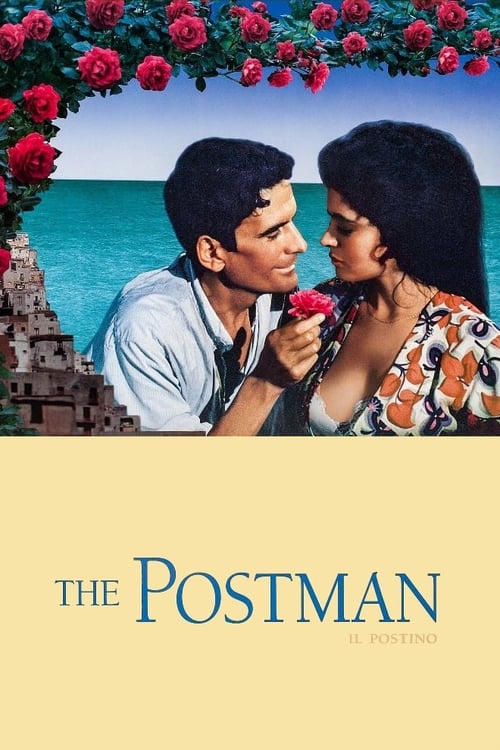
The Postman
Simple Italian postman learns to love poetry while delivering mail to a famous poet; he uses this to woo local beauty Beatrice.
Despite its small-scale budget of $3.0M, The Postman became a box office phenomenon, earning $33.0M worldwide—a remarkable 1000% return. The film's bold vision found its audience, illustrating how strong storytelling can transcend budget limitations.
1 Oscar. 31 wins & 20 nominations
Plot Structure
Story beats plotted across runtime


Narrative Arc
Emotional journey through the story's key moments
Story Circle
Blueprint 15-beat structure
Arcplot Score Breakdown
Weighted: Precision (70%) + Arc (15%) + Theme (15%)
The Postman (1994) demonstrates deliberately positioned narrative architecture, characteristic of Michael Radford's storytelling approach. This structural analysis examines how the film's 15-point plot structure maps to proven narrative frameworks across 1 hour and 49 minutes. With an Arcplot score of 7.0, the film balances conventional beats with creative variation.
Structural Analysis
The Status Quo at 1 minutes (1% through the runtime) establishes Mario, an unemployed fisherman's son, lives a simple, aimless life on a small Italian island, spending time at the local bar with no prospects or ambition.. Of particular interest, this early placement immediately immerses viewers in the story world.
The inciting incident occurs at 11 minutes when Mario learns that the post office needs a postman to deliver mail exclusively to Neruda, offering him an escape from fishing and a connection to the famous poet.. At 11% through the film, this Disruption aligns precisely with traditional story structure. This beat shifts the emotional landscape, launching the protagonist into the central conflict.
The First Threshold at 26 minutes marks the transition into Act II, occurring at 24% of the runtime. This indicates the protagonist's commitment to Mario actively chooses to pursue poetry and a deeper friendship with Neruda, asking him to teach him about metaphors so he can express himself and win over Beatrice, the woman he loves., moving from reaction to action.
At 55 minutes, the Midpoint arrives at 50% of the runtime—precisely centered, creating perfect narrative symmetry. Significantly, this crucial beat Mario and Beatrice marry in a joyful celebration, representing his apparent success in transformation, but Neruda receives news he may return to Chile, raising stakes and introducing the cost of this relationship., fundamentally raising what's at risk. The emotional intensity shifts, dividing the narrative into clear before-and-after phases.
The Collapse moment at 82 minutes (75% through) represents the emotional nadir. Here, Neruda leaves for Chile without properly saying goodbye to Mario, who feels abandoned and realizes the poet may have used him for inspiration without truly seeing him as an equal—a death of innocence and the mentor relationship., shows the protagonist at their lowest point. This beat's placement in the final quarter sets up the climactic reversal.
The Second Threshold at 89 minutes initiates the final act resolution at 82% of the runtime. Mario is invited to read his own poetry at a political rally, representing his realization that he has found his own voice and doesn't need Neruda's validation—he has become a poet in his own right., demonstrating the transformation achieved throughout the journey.
Emotional Journey
The Postman's emotional architecture traces a deliberate progression across 15 carefully calibrated beats.
Narrative Framework
This structural analysis employs proven narrative structure principles that track dramatic progression. By mapping The Postman against these established plot points, we can identify how Michael Radford utilizes or subverts traditional narrative conventions. The plot point approach reveals not only adherence to structural principles but also creative choices that distinguish The Postman within the comedy genre.
Michael Radford's Structural Approach
Among the 3 Michael Radford films analyzed on Arcplot, the average structural score is 7.3, reflecting strong command of classical structure. The Postman takes a more unconventional approach compared to the director's typical style. For comparative analysis, explore the complete Michael Radford filmography.
Comparative Analysis
Additional comedy films include The Bad Guys, Ella Enchanted and The Evening Star. For more Michael Radford analyses, see The Merchant of Venice, Flawless.
Plot Points by Act
Act I
SetupStatus Quo
Mario, an unemployed fisherman's son, lives a simple, aimless life on a small Italian island, spending time at the local bar with no prospects or ambition.
Theme
Neruda discusses with his wife how poetry belongs to those who need it, foreshadowing Mario's transformation through the power of words and expression.
Worldbuilding
Introduction to island life, Mario's relationship with his father who wants him to be a fisherman, the arrival of famous poet Pablo Neruda in political exile, and the establishment of the mundane world Mario inhabits.
Disruption
Mario learns that the post office needs a postman to deliver mail exclusively to Neruda, offering him an escape from fishing and a connection to the famous poet.
Resistance
Mario takes the postman job and begins tentative interactions with Neruda, initially starstruck and nervous, asking basic questions about poetry and metaphors while delivering daily mail.
Act II
ConfrontationFirst Threshold
Mario actively chooses to pursue poetry and a deeper friendship with Neruda, asking him to teach him about metaphors so he can express himself and win over Beatrice, the woman he loves.
Mirror World
Mario meets and becomes enchanted by Beatrice Russo at her aunt's tavern, beginning the romantic subplot that will teach him about beauty, expression, and finding his own voice.
Premise
Mario explores the world of poetry and romance, learning metaphors from Neruda, courting Beatrice with poetic language, recording island sounds for the poet, and discovering his own creative voice.
Midpoint
Mario and Beatrice marry in a joyful celebration, representing his apparent success in transformation, but Neruda receives news he may return to Chile, raising stakes and introducing the cost of this relationship.
Opposition
Neruda prepares to leave Italy, their friendship deepens but also becomes strained, Mario becomes a father and faces adult responsibilities, and the poet's departure looms as Mario struggles to articulate his own identity beyond Neruda's influence.
Collapse
Neruda leaves for Chile without properly saying goodbye to Mario, who feels abandoned and realizes the poet may have used him for inspiration without truly seeing him as an equal—a death of innocence and the mentor relationship.
Crisis
Mario processes his hurt and disappointment, feeling betrayed as years pass without word from Neruda, while he continues his humble life, raising his son and working, questioning the value of their friendship.
Act III
ResolutionSecond Threshold
Mario is invited to read his own poetry at a political rally, representing his realization that he has found his own voice and doesn't need Neruda's validation—he has become a poet in his own right.
Synthesis
Mario prepares to read at the rally, but suffers a fatal heart attack before he can share his poetry publicly, while Neruda finally returns to the island only to learn of Mario's death and hear his recorded poem.
Transformation
Neruda stands on the beach where he and Mario once recorded sounds, listening to Mario's voice on tape reading his final poem about the island, recognizing too late the poet his friend had become.