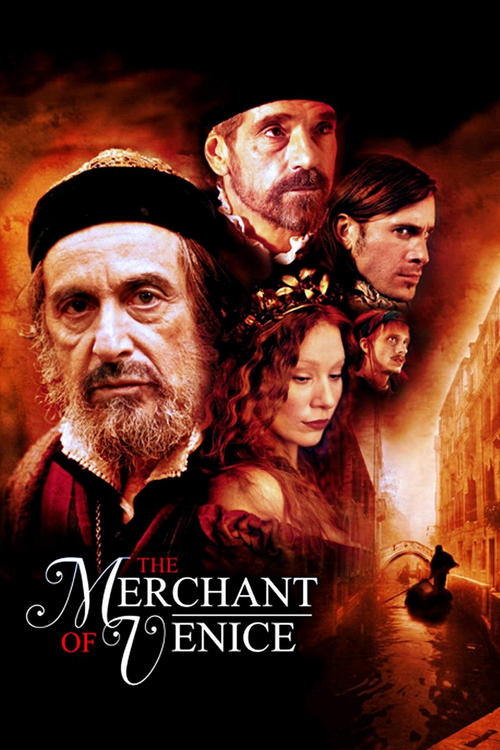
The Merchant of Venice
Venice, 1596. Bassanio begs his friend Antonio, a prosperous merchant, to lend him a large sum of money so that he can woo Portia, a very wealthy heiress; but Antonio has invested his fortune abroad, so they turn to Shylock, a Jewish moneylender, and ask him for a loan.
The film struggled financially against its moderate budget of $30.0M, earning $21.6M globally (-28% loss). While initial box office returns were modest, the film has gained appreciation for its fresh perspective within the drama genre.
Nominated for 1 BAFTA Award2 wins & 7 nominations


Plot Structure
Story beats plotted across runtime


Narrative Arc
Emotional journey through the story's key moments
Story Circle
Blueprint 15-beat structure
Arcplot Score Breakdown
Weighted: Precision (70%) + Arc (15%) + Theme (15%)
The Merchant of Venice (2004) showcases meticulously timed dramatic framework, characteristic of Michael Radford's storytelling approach. This structural analysis examines how the film's 15-point plot structure maps to proven narrative frameworks across 2 hours and 12 minutes. With an Arcplot score of 7.1, the film balances conventional beats with creative variation.
Structural Analysis
The Status Quo at 1 minutes (1% through the runtime) establishes Venice, 1596. Text cards establish the persecution of Jews in the Ghetto. Antonio, a wealthy merchant, is melancholic and cannot explain his sadness to his friends Salarino and Solanio. His ships are at sea, his fortune at risk.. Significantly, this early placement immediately immerses viewers in the story world.
The inciting incident occurs at 16 minutes when Bassanio proposes going to Shylock the Jewish moneylender for a loan using Antonio's credit. Antonio agrees despite his hatred of Shylock, setting the central conflict in motion. This request will bind Antonio to the infamous pound-of-flesh bond.. At 12% through the film, this Disruption aligns precisely with traditional story structure. This beat shifts the emotional landscape, launching the protagonist into the central conflict.
The First Threshold at 33 minutes marks the transition into Act II, occurring at 25% of the runtime. This illustrates the protagonist's commitment to Antonio signs the bond with Shylock, wagering a pound of his flesh against 3000 ducats for three months. This irreversible decision locks all parties into the tragic mechanism. Bassanio departs for Belmont with the borrowed money to woo Portia., moving from reaction to action.
At 66 minutes, the Midpoint arrives at 50% of the runtime—precisely centered, creating perfect narrative symmetry. The analysis reveals that this crucial beat Bassanio chooses the lead casket correctly, winning Portia's hand. A false victory - at this moment of supreme happiness, news arrives that Antonio's ships have been lost and Shylock demands his bond. Joy turns to dread as the stakes become life and death., fundamentally raising what's at risk. The emotional intensity shifts, dividing the narrative into clear before-and-after phases.
The Collapse moment at 99 minutes (75% through) represents the emotional nadir. Here, In the courtroom, Shylock sharpens his knife as Antonio bares his chest. The Duke and all present believe Antonio will die. Shylock refuses 6000 ducats, then 9000. "I stand here for law." Antonio makes his peace, asking Bassanio to remember him to his wife. Death seems certain., indicates the protagonist at their lowest point. This beat's placement in the final quarter sets up the climactic reversal.
The Second Threshold at 106 minutes initiates the final act resolution at 80% of the runtime. Portia finds the legal loophole: the bond specifies flesh but no blood. "Shed thou no blood." Shylock cannot take his pound without spilling blood, which would forfeit his lands and life. The tables turn completely through wit and law, the very tools Shylock demanded., demonstrating the transformation achieved throughout the journey.
Emotional Journey
The Merchant of Venice's emotional architecture traces a deliberate progression across 15 carefully calibrated beats.
Narrative Framework
This structural analysis employs structural analysis methodology used to understand storytelling architecture. By mapping The Merchant of Venice against these established plot points, we can identify how Michael Radford utilizes or subverts traditional narrative conventions. The plot point approach reveals not only adherence to structural principles but also creative choices that distinguish The Merchant of Venice within the drama genre.
Michael Radford's Structural Approach
Among the 3 Michael Radford films analyzed on Arcplot, the average structural score is 7.3, reflecting strong command of classical structure. The Merchant of Venice takes a more unconventional approach compared to the director's typical style. For comparative analysis, explore the complete Michael Radford filmography.
Comparative Analysis
Additional drama films include After Thomas, South Pacific and Dirty Dancing: Havana Nights. For more Michael Radford analyses, see The Postman, Flawless.
Plot Points by Act
Act I
SetupStatus Quo
Venice, 1596. Text cards establish the persecution of Jews in the Ghetto. Antonio, a wealthy merchant, is melancholic and cannot explain his sadness to his friends Salarino and Solanio. His ships are at sea, his fortune at risk.
Theme
Shylock articulates the theme of prejudice and hypocrisy when he notes how Christians condemn usury yet benefit from it. "The devil can cite Scripture for his purpose" - the theme of mercy versus justice, and the masks people wear to hide their true nature, is established.
Worldbuilding
The world of Venice is established: the Rialto where merchants trade, the Jewish Ghetto, the casual antisemitism of Christian society. Bassanio's financial troubles and his love for Portia are introduced. Antonio's deep bond with Bassanio is shown as he offers to help despite his ships being at sea.
Disruption
Bassanio proposes going to Shylock the Jewish moneylender for a loan using Antonio's credit. Antonio agrees despite his hatred of Shylock, setting the central conflict in motion. This request will bind Antonio to the infamous pound-of-flesh bond.
Resistance
The negotiation with Shylock unfolds. Shylock recounts Antonio's abuse and offers the bond as a "merry sport." Despite warnings, Antonio accepts the pound-of-flesh condition. Simultaneously, Portia explains her father's casket test to Nerissa, establishing her own trapped situation.
Act II
ConfrontationFirst Threshold
Antonio signs the bond with Shylock, wagering a pound of his flesh against 3000 ducats for three months. This irreversible decision locks all parties into the tragic mechanism. Bassanio departs for Belmont with the borrowed money to woo Portia.
Mirror World
Portia and Bassanio meet at Belmont. Their growing attraction represents the love story that mirrors and contrasts with the harsh world of Venice's commerce. Jessica and Lorenzo's elopement also begins, providing another mirror to the central themes of loyalty, love, and betrayal.
Premise
The casket scenes play out at Belmont as the Prince of Morocco and Prince of Arragon fail their tests. In Venice, Jessica elopes with Lorenzo, stealing Shylock's money and his dead wife's ring. Shylock's grief and rage deepen. The romantic comedy of Belmont contrasts with Venice's growing darkness.
Midpoint
Bassanio chooses the lead casket correctly, winning Portia's hand. A false victory - at this moment of supreme happiness, news arrives that Antonio's ships have been lost and Shylock demands his bond. Joy turns to dread as the stakes become life and death.
Opposition
Shylock refuses all offers of repayment, demanding his pound of flesh. His "Hath not a Jew eyes?" speech reveals his wounded humanity even as he pursues vengeance. Antonio prepares for death. Portia and Nerissa secretly plan to intervene, disguising themselves as a lawyer and clerk.
Collapse
In the courtroom, Shylock sharpens his knife as Antonio bares his chest. The Duke and all present believe Antonio will die. Shylock refuses 6000 ducats, then 9000. "I stand here for law." Antonio makes his peace, asking Bassanio to remember him to his wife. Death seems certain.
Crisis
Portia, disguised as Balthasar, delivers her "quality of mercy" speech, pleading with Shylock to show compassion. He refuses, insisting on the letter of the law. The tension reaches its peak as legal arguments fail and Shylock prepares to cut.
Act III
ResolutionSecond Threshold
Portia finds the legal loophole: the bond specifies flesh but no blood. "Shed thou no blood." Shylock cannot take his pound without spilling blood, which would forfeit his lands and life. The tables turn completely through wit and law, the very tools Shylock demanded.
Synthesis
Shylock is stripped of his wealth and forced to convert to Christianity - a devastating "mercy" that destroys his identity. Antonio is saved. The ring subplot plays out as Portia and Nerissa test their husbands' faithfulness. The characters return to Belmont as word arrives that Antonio's ships have miraculously survived.
Transformation
At Belmont, the lovers are reconciled and fortunes restored - but the final image is Jessica, alone, holding her dead mother's ring that she stole from Shylock. Her face reflects the ambiguous cost of her freedom. The "happy" ending is shadowed by the destruction of her father.