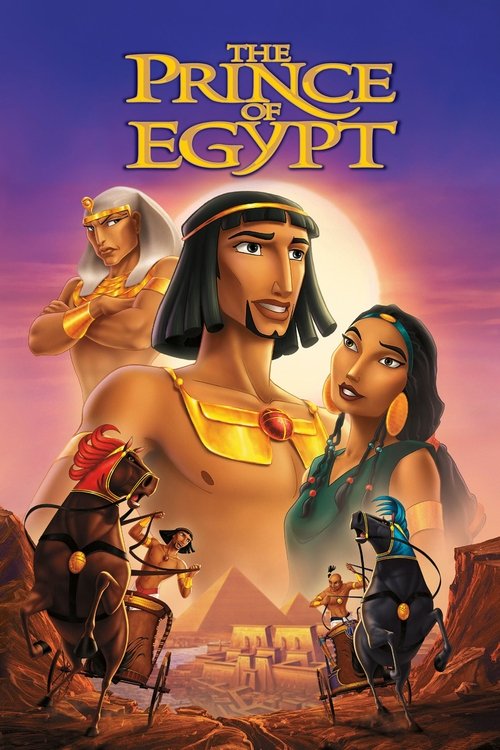
The Prince of Egypt
The strong bond between two brothers is challenged when their chosen responsibilities set them at odds, with extraordinary consequences.
Despite a respectable budget of $70.0M, The Prince of Egypt became a commercial success, earning $218.6M worldwide—a 212% return.
1 Oscar. 12 wins & 27 nominations


Plot Structure
Story beats plotted across runtime


Narrative Arc
Emotional journey through the story's key moments
Story Circle
Blueprint 15-beat structure
Arcplot Score Breakdown
Weighted: Precision (70%) + Arc (15%) + Theme (15%)
The Prince of Egypt (1998) showcases meticulously timed dramatic framework, characteristic of Steve Hickner's storytelling approach. This structural analysis examines how the film's 15-point plot structure maps to proven narrative frameworks across 1 hour and 39 minutes. With an Arcplot score of 6.8, the film balances conventional beats with creative variation.
Structural Analysis
The Status Quo at 1 minutes (1% through the runtime) establishes The Hebrew slaves toil under Egyptian oppression as Yocheved places baby Moses in a basket on the Nile to save him from Pharaoh's decree, while "Deliver Us" establishes their desperate hope for freedom.. Of particular interest, this early placement immediately immerses viewers in the story world.
The inciting incident occurs at 12 minutes when Miriam reveals to Moses that he is her brother, born Hebrew. Moses dismisses her but later discovers hieroglyphics depicting the slaughter of Hebrew babies, shattering his identity as an Egyptian prince.. At 12% through the film, this Disruption aligns precisely with traditional story structure. This beat shifts the emotional landscape, launching the protagonist into the central conflict.
The First Threshold at 25 minutes marks the transition into Act II, occurring at 25% of the runtime. This demonstrates the protagonist's commitment to Moses rescues Tzipporah's sisters at the well and is welcomed by Jethro into the Midianite community. He chooses to stay, actively leaving behind his Egyptian identity to begin a new life as a shepherd., moving from reaction to action.
At 50 minutes, the Midpoint arrives at 50% of the runtime—precisely centered, creating perfect narrative symmetry. The analysis reveals that this crucial beat Moses turns the Nile to blood in the first plague. The Egyptian priests replicate it through magic, and Rameses hardens his heart, refusing to free the slaves. The battle between brothers and between gods has truly begun., fundamentally raising what's at risk. The emotional intensity shifts, dividing the narrative into clear before-and-after phases.
The Collapse moment at 74 minutes (75% through) represents the emotional nadir. Here, God announces the final plague: death of every firstborn in Egypt. Moses pleads with Rameses one last time, warning him of his son's fate. Rameses refuses, and Moses leaves devastated, knowing the horror that must come., indicates the protagonist at their lowest point. This beat's placement in the final quarter sets up the climactic reversal.
The Second Threshold at 79 minutes initiates the final act resolution at 80% of the runtime. A broken Rameses, cradling his dead son, finally relents: "You and your people have my permission to go." The Hebrews are free at last, and Moses must now lead them out of the only home they've known., demonstrating the transformation achieved throughout the journey.
Emotional Journey
The Prince of Egypt's emotional architecture traces a deliberate progression across 15 carefully calibrated beats.
Narrative Framework
This structural analysis employs a 15-point narrative structure framework that maps key story moments. By mapping The Prince of Egypt against these established plot points, we can identify how Steve Hickner utilizes or subverts traditional narrative conventions. The plot point approach reveals not only adherence to structural principles but also creative choices that distinguish The Prince of Egypt within the adventure genre.
Comparative Analysis
Additional adventure films include The Black Stallion, The Bad Guys and Puss in Boots.
Plot Points by Act
Act I
SetupStatus Quo
The Hebrew slaves toil under Egyptian oppression as Yocheved places baby Moses in a basket on the Nile to save him from Pharaoh's decree, while "Deliver Us" establishes their desperate hope for freedom.
Theme
Pharaoh Seti tells Rameses that "one weak link can break the chain of a mighty dynasty," establishing the theme of destiny, legacy, and the weight of identity that will define both brothers' journeys.
Worldbuilding
Moses and Rameses grow up as Egyptian princes, enjoying privilege and brotherhood. Their chariot race through Memphis reveals their bond while the palace world of wealth and power contrasts sharply with Hebrew suffering below.
Disruption
Miriam reveals to Moses that he is her brother, born Hebrew. Moses dismisses her but later discovers hieroglyphics depicting the slaughter of Hebrew babies, shattering his identity as an Egyptian prince.
Resistance
Moses struggles with his shattered identity. Queen Tuya confirms the truth through lullaby. Witnessing an overseer brutalize a slave, Moses accidentally kills him. Rameses offers to cover it up, but Moses flees Egypt in shame and confusion.
Act II
ConfrontationFirst Threshold
Moses rescues Tzipporah's sisters at the well and is welcomed by Jethro into the Midianite community. He chooses to stay, actively leaving behind his Egyptian identity to begin a new life as a shepherd.
Mirror World
Moses marries Tzipporah and finds peace as a shepherd in Midian. "Through Heaven's Eyes" shows his transformation through Jethro's wisdom, learning that a man's worth is not measured by worldly status but by faith and purpose.
Premise
Moses encounters God in the burning bush and receives his calling to free the Hebrews. He returns to Egypt with Tzipporah, reunites with Miriam and Aaron, and confronts Rameses demanding "Let my people go," initiating the divine confrontation.
Midpoint
Moses turns the Nile to blood in the first plague. The Egyptian priests replicate it through magic, and Rameses hardens his heart, refusing to free the slaves. The battle between brothers and between gods has truly begun.
Opposition
The plagues escalate dramatically—frogs, lice, flies, livestock death, boils, hail, locusts, darkness. Each devastation hardens Rameses further. "The Plagues" montage shows Egypt's destruction while the brothers' relationship fractures beyond repair.
Collapse
God announces the final plague: death of every firstborn in Egypt. Moses pleads with Rameses one last time, warning him of his son's fate. Rameses refuses, and Moses leaves devastated, knowing the horror that must come.
Crisis
Moses grieves the coming destruction. The Hebrews mark their doors with lamb's blood as the angel of death approaches. Moses and Tzipporah hold each other through the night as screams echo across Egypt and innocent children die.
Act III
ResolutionSecond Threshold
A broken Rameses, cradling his dead son, finally relents: "You and your people have my permission to go." The Hebrews are free at last, and Moses must now lead them out of the only home they've known.
Synthesis
The Exodus begins as thousands of Hebrews leave Egypt. Rameses pursues with his army. At the Red Sea, Moses parts the waters through faith, leading his people to freedom while the Egyptian army is destroyed. Moses says goodbye to his brother forever.
Transformation
Moses descends from Mount Sinai carrying the tablets of the Ten Commandments, his face radiant with divine light. The former prince who fled his identity has become the prophet who delivered his people and received God's law.