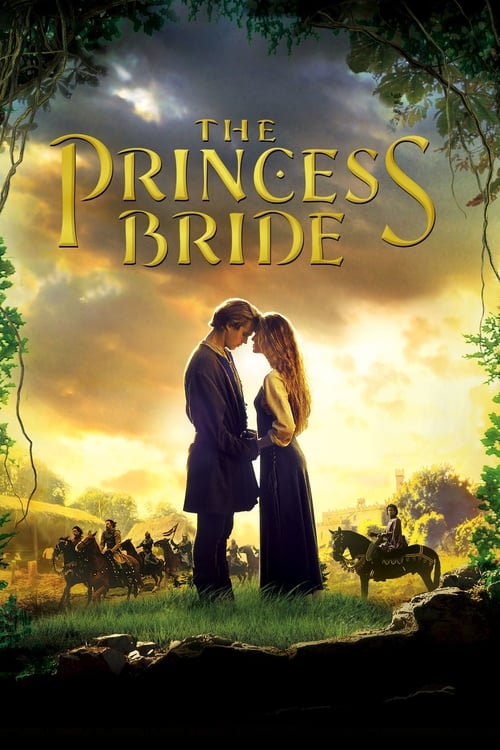
The Princess Bride
In this enchantingly cracked fairy tale, the beautiful Princess Buttercup and the dashing Westley must overcome staggering odds to find happiness amid six-fingered swordsmen, murderous princes, Sicilians and rodents of unusual size. But even death can't stop these true lovebirds from triumphing.
Working with a respectable budget of $16.0M, the film achieved a respectable showing with $30.9M in global revenue (+93% profit margin).
Nominated for 1 Oscar. 7 wins & 11 nominations


Plot Structure
Story beats plotted across runtime


Narrative Arc
Emotional journey through the story's key moments
Story Circle
Blueprint 15-beat structure
Arcplot Score Breakdown
Weighted: Precision (70%) + Arc (15%) + Theme (15%)
The Princess Bride (1987) exemplifies meticulously timed dramatic framework, characteristic of Rob Reiner's storytelling approach. This structural analysis examines how the film's 15-point plot structure maps to proven narrative frameworks across 1 hour and 39 minutes. With an Arcplot score of 7.6, the film showcases strong structural fundamentals.
Structural Analysis
The Status Quo at 1 minutes (1% through the runtime) establishes A sick grandson reluctantly accepts his grandfather's offer to read him a story. The frame story establishes a cynical modern kid who doesn't believe in fairy tales or true love.. The analysis reveals that this early placement immediately immerses viewers in the story world.
The inciting incident occurs at 11 minutes when Five years later, Buttercup is engaged to Prince Humperdinck, whom she does not love. She is kidnapped by Vizzini, Inigo, and Fezzik while riding her horse, disrupting her miserable status quo and launching the adventure.. At 12% through the film, this Disruption aligns precisely with traditional story structure. This beat shifts the emotional landscape, launching the protagonist into the central conflict.
The First Threshold at 24 minutes marks the transition into Act II, occurring at 24% of the runtime. This indicates the protagonist's commitment to The Man in Black is revealed to be Westley. Buttercup pushes him down the hill, then realizes who he is and throws herself after him. She actively chooses love over resignation, entering the adventure as an active participant rather than a captive., moving from reaction to action.
At 48 minutes, the Midpoint arrives at 48% of the runtime—precisely centered, creating perfect narrative symmetry. Of particular interest, this crucial beat False defeat: Westley surrenders to Prince Humperdinck to save Buttercup's life, trusting the Prince's word. Buttercup believes she's secured Westley's safety, but the Prince has no intention of keeping his promise. The stakes escalate dramatically; the honeymoon is over., fundamentally raising what's at risk. The emotional intensity shifts, dividing the narrative into clear before-and-after phases.
The Collapse moment at 73 minutes (74% through) represents the emotional nadir. Here, Westley is tortured to death on the Machine. Inigo and Fezzik find him dead (or mostly dead). The hero literally dies—the lowest possible point. All hope for true love appears lost. The whiff of death is literal., illustrates the protagonist at their lowest point. This beat's placement in the final quarter sets up the climactic reversal.
The Second Threshold at 79 minutes initiates the final act resolution at 80% of the runtime. Westley is revived by the miracle pill. Though barely able to move, he can still think and plan. New information (he's alive) combines with his wit and his allies' skills. Westley devises the plan to storm the castle. Act 3 begins., demonstrating the transformation achieved throughout the journey.
Emotional Journey
The Princess Bride's emotional architecture traces a deliberate progression across 15 carefully calibrated beats.
Narrative Framework
This structural analysis employs systematic plot point analysis that identifies crucial turning points. By mapping The Princess Bride against these established plot points, we can identify how Rob Reiner utilizes or subverts traditional narrative conventions. The plot point approach reveals not only adherence to structural principles but also creative choices that distinguish The Princess Bride within the adventure genre.
Rob Reiner's Structural Approach
Among the 17 Rob Reiner films analyzed on Arcplot, the average structural score is 6.9, demonstrating varied approaches to story architecture. The Princess Bride represents one of the director's most structurally precise works. For comparative analysis, explore the complete Rob Reiner filmography.
Comparative Analysis
Additional adventure films include The Black Stallion, The Bad Guys and Puss in Boots. For more Rob Reiner analyses, see The Sure Thing, The American President and The Story of Us.
Plot Points by Act
Act I
SetupStatus Quo
A sick grandson reluctantly accepts his grandfather's offer to read him a story. The frame story establishes a cynical modern kid who doesn't believe in fairy tales or true love.
Theme
The grandfather says, "This is a special book. It was the book my father used to read to me when I was sick, and I used to read it to your father. And today I'm gonna read it to you." Theme: True love and classic stories endure across generations.
Worldbuilding
Buttercup and Westley's romance is established in the storybook world. She orders him around as a farm boy, he always responds "As you wish," which means "I love you." They fall in love, but he leaves to seek his fortune and is reportedly killed by the Dread Pirate Roberts.
Disruption
Five years later, Buttercup is engaged to Prince Humperdinck, whom she does not love. She is kidnapped by Vizzini, Inigo, and Fezzik while riding her horse, disrupting her miserable status quo and launching the adventure.
Resistance
Buttercup is debated as property between her kidnappers. The Man in Black pursues them. Inigo reveals his backstory and motivation (avenging his father). Each kidnapper is defeated: Inigo in a sword fight, Fezzik in hand-to-hand combat, Vizzini in a battle of wits.
Act II
ConfrontationFirst Threshold
The Man in Black is revealed to be Westley. Buttercup pushes him down the hill, then realizes who he is and throws herself after him. She actively chooses love over resignation, entering the adventure as an active participant rather than a captive.
Mirror World
Buttercup and Westley are reunited in the Fire Swamp. Their relationship—the thematic heart of true love—becomes the emotional center. Westley forgives her for her engagement, they navigate dangers together as partners.
Premise
The promise of the premise: adventure, true love, sword fights, giants, pirates, and ROUSs. Westley and Buttercup navigate the Fire Swamp together, showcase their wit and courage, and emerge only to be captured by Humperdinck. The fun romantic adventure we came for.
Midpoint
False defeat: Westley surrenders to Prince Humperdinck to save Buttercup's life, trusting the Prince's word. Buttercup believes she's secured Westley's safety, but the Prince has no intention of keeping his promise. The stakes escalate dramatically; the honeymoon is over.
Opposition
Humperdinck plans to murder Buttercup and frame Guilder. Count Rugen tortures Westley to death in the Pit of Despair. Buttercup realizes she's been betrayed. Inigo and Fezzik search for the Man in Black to help storm the castle. The bad guys close in on all fronts.
Collapse
Westley is tortured to death on the Machine. Inigo and Fezzik find him dead (or mostly dead). The hero literally dies—the lowest possible point. All hope for true love appears lost. The whiff of death is literal.
Crisis
Inigo and Fezzik carry Westley's corpse to Miracle Max. The dark night: can he be saved? Miracle Max determines Westley is only "mostly dead" and creates a miracle pill. The emotional processing of loss before new hope emerges.
Act III
ResolutionSecond Threshold
Westley is revived by the miracle pill. Though barely able to move, he can still think and plan. New information (he's alive) combines with his wit and his allies' skills. Westley devises the plan to storm the castle. Act 3 begins.
Synthesis
The finale: They storm the castle using Westley's brains, Fezzik's strength, and Inigo's sword skills. Inigo defeats Count Rugen and avenges his father. Westley outwits Humperdinck through bluff despite being helpless. Buttercup and Westley escape together. True love wins.
Transformation
The grandfather finishes the story. The grandson, initially cynical about kissing and romance, now asks, "Maybe you could come over and read it again to me tomorrow?" He's been transformed from a skeptic to a believer in true love and timeless stories.