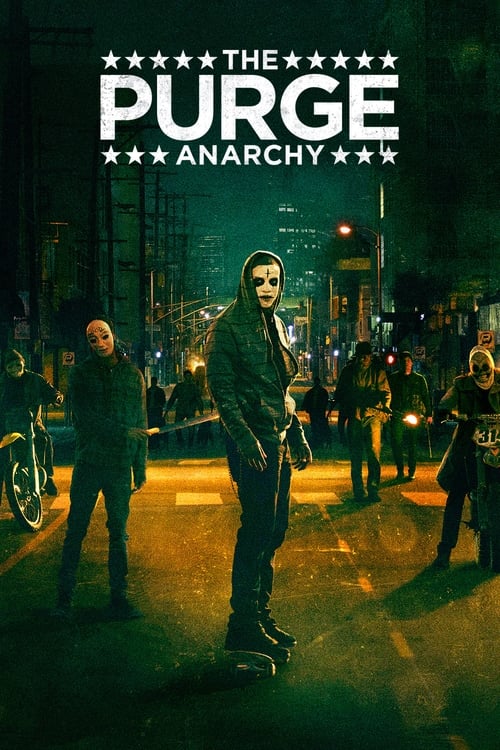
The Purge: Anarchy
One night per year, the government sanctions a 12-hour period in which citizens can commit any crime they wish -- including murder -- without fear of punishment or imprisonment. Leo, a sergeant who lost his son, plans a vigilante mission of revenge during the mayhem. However, instead of a death-dealing avenger, he becomes the unexpected protector of four innocent strangers who desperately need his help if they are to survive the night.
Despite its limited budget of $9.0M, The Purge: Anarchy became a box office phenomenon, earning $111.9M worldwide—a remarkable 1144% return. The film's unconventional structure attracted moviegoers, illustrating how strong storytelling can transcend budget limitations.
3 wins & 6 nominations


Plot Structure
Story beats plotted across runtime


Narrative Arc
Emotional journey through the story's key moments
Story Circle
Blueprint 15-beat structure
Arcplot Score Breakdown
Weighted: Precision (70%) + Arc (15%) + Theme (15%)
The Purge: Anarchy (2014) exhibits deliberately positioned plot construction, characteristic of James DeMonaco's storytelling approach. This structural analysis examines how the film's 15-point plot structure maps to proven narrative frameworks across 1 hour and 43 minutes. With an Arcplot score of 6.7, the film balances conventional beats with creative variation.
Structural Analysis
The Status Quo at 1 minutes (1% through the runtime) establishes News broadcasts and civilians prepare for the annual Purge. We see ordinary Americans stocking up, boarding windows, and bracing for the night of legalized violence. The calm before the storm establishes a society that has normalized horror.. The analysis reveals that this early placement immediately immerses viewers in the story world.
The inciting incident occurs at 12 minutes when The Purge commencement siren sounds. All crime is legal for twelve hours. Leo leaves his fortified apartment on his revenge mission. Shane and Liz's car mysteriously breaks down on the street. Papa Rico leaves to sell himself to wealthy Purgers.. At 12% through the film, this Disruption aligns precisely with traditional story structure. This beat shifts the emotional landscape, launching the protagonist into the central conflict.
The First Threshold at 26 minutes marks the transition into Act II, occurring at 25% of the runtime. This demonstrates the protagonist's commitment to Leo makes the choice to rescue Eva and Cali from Big Daddy's truck, abandoning his solo revenge mission. Shane and Liz join them as the group flees together. Leo becomes reluctant protector, his personal vendetta now complicated by responsibility., moving from reaction to action.
At 52 minutes, the Midpoint arrives at 50% of the runtime—precisely centered, creating perfect narrative symmetry. Of particular interest, this crucial beat The group is captured by a tractor-trailer full of masked soldiers. They are taken to a wealthy estate where rich elites hunt poor people for sport in a controlled environment. The true face of the Purge is revealed: systematic class genocide disguised as chaos., fundamentally raising what's at risk. The emotional intensity shifts, dividing the narrative into clear before-and-after phases.
The Collapse moment at 77 minutes (75% through) represents the emotional nadir. Here, Shane is shot and killed protecting Liz. The group is cornered by Big Daddy's forces. Leo is wounded. All hope seems lost as they are trapped with no escape and diminishing ammunition. Death surrounds them on all sides., illustrates the protagonist at their lowest point. This beat's placement in the final quarter sets up the climactic reversal.
The Second Threshold at 82 minutes initiates the final act resolution at 80% of the runtime. Carmelo Johns and his anti-Purge resistance fighters arrive, saving the group in a hail of gunfire. They offer sanctuary and reveal a larger movement fighting back against the New Founding Fathers. Hope exists beyond mere survival., demonstrating the transformation achieved throughout the journey.
Emotional Journey
The Purge: Anarchy's emotional architecture traces a deliberate progression across 15 carefully calibrated beats.
Narrative Framework
This structural analysis employs structural analysis methodology used to understand storytelling architecture. By mapping The Purge: Anarchy against these established plot points, we can identify how James DeMonaco utilizes or subverts traditional narrative conventions. The plot point approach reveals not only adherence to structural principles but also creative choices that distinguish The Purge: Anarchy within the horror genre.
James DeMonaco's Structural Approach
Among the 2 James DeMonaco films analyzed on Arcplot, the average structural score is 7.1, reflecting strong command of classical structure. The Purge: Anarchy takes a more unconventional approach compared to the director's typical style. For comparative analysis, explore the complete James DeMonaco filmography.
Comparative Analysis
Additional horror films include Thinner, A Nightmare on Elm Street and Mary Reilly. For more James DeMonaco analyses, see The Purge.
Plot Points by Act
Act I
SetupStatus Quo
News broadcasts and civilians prepare for the annual Purge. We see ordinary Americans stocking up, boarding windows, and bracing for the night of legalized violence. The calm before the storm establishes a society that has normalized horror.
Theme
Cali watches Carmelo Johns' anti-Purge broadcast where he declares that the Purge targets the poor and minorities: "The Purge is not about cleansing - it's about money." This frames the film's class warfare theme.
Worldbuilding
Multiple storylines established: Leo prepares his weapons and photo of his target; Eva and Cali secure their apartment while Papa Rico acts strangely; Shane and Liz argue about their failing marriage. The countdown to Purge commencement builds tension.
Disruption
The Purge commencement siren sounds. All crime is legal for twelve hours. Leo leaves his fortified apartment on his revenge mission. Shane and Liz's car mysteriously breaks down on the street. Papa Rico leaves to sell himself to wealthy Purgers.
Resistance
Shane and Liz flee from masked bikers who sabotaged their car. Eva and Cali are attacked by a paramilitary squad led by Big Daddy who abducts them from their apartment. Leo witnesses the abduction and debates whether to intervene or continue his mission.
Act II
ConfrontationFirst Threshold
Leo makes the choice to rescue Eva and Cali from Big Daddy's truck, abandoning his solo revenge mission. Shane and Liz join them as the group flees together. Leo becomes reluctant protector, his personal vendetta now complicated by responsibility.
Mirror World
The five survivors bond in hiding. Eva reveals Papa Rico sold himself to wealthy Purgers for money to help his family. This father's sacrifice mirrors Leo's grief as a father. Eva and Cali represent what Leo is fighting for - family, connection, protecting the innocent.
Premise
The group navigates the deadly streets of Los Angeles during the Purge. They encounter various threats: gangs, masked killers, burning buildings. They find temporary refuge with Eva's friend Tanya, only to discover Tanya's sister has been keeping her husband hostage to Purge him.
Midpoint
The group is captured by a tractor-trailer full of masked soldiers. They are taken to a wealthy estate where rich elites hunt poor people for sport in a controlled environment. The true face of the Purge is revealed: systematic class genocide disguised as chaos.
Opposition
The group is hunted through the mansion by wealthy patrons paying for the privilege. They fight back, killing some hunters. Outside, Big Daddy continues hunting them. Leo gets closer to his revenge target but must constantly choose between vengeance and protecting the group.
Collapse
Shane is shot and killed protecting Liz. The group is cornered by Big Daddy's forces. Leo is wounded. All hope seems lost as they are trapped with no escape and diminishing ammunition. Death surrounds them on all sides.
Crisis
Pinned down and outnumbered, the survivors face certain death. Liz grieves Shane. Leo must confront whether his quest for revenge has doomed them all. The weight of responsibility versus vengeance reaches its breaking point.
Act III
ResolutionSecond Threshold
Carmelo Johns and his anti-Purge resistance fighters arrive, saving the group in a hail of gunfire. They offer sanctuary and reveal a larger movement fighting back against the New Founding Fathers. Hope exists beyond mere survival.
Synthesis
Leo gets the group to safety but then locates his son's killer. Gun to the man's head, he chooses not to pull the trigger - refusing to become what the Purge wants him to be. Big Daddy attacks one final time, and Leo kills him in defense of Eva. Dawn approaches.
Transformation
The Purge ends. Sirens announce the ceasefire. Leo sits wounded but alive with Eva, Cali, and Liz as dawn breaks. He chose protection over revenge, connection over isolation. The man who set out to kill became a man who saved lives.